How to Choose Your Fragrance Profile: A Complete Guide to Finding Your Signature Scent
Are you struggling to choose fragrance profile matches that actually feel like “you” amid endless perfume launches and confusing reviews? With so much exaggerated marketing and conflicting information online, finding a signature scent can feel overwhelming. You need a reliable framework to filter out the noise and find a perfume that perfectly aligns with your personality, lifestyle, and body chemistry.
To choose your fragrance profile, start by identifying your preferred core scent family—such as floral, woody, fresh, or amber. Next, test the perfume directly on your skin to observe how the top, heart, and base notes interact with your unique body chemistry over several hours. This prevents blind-buying mistakes and ensures long-lasting satisfaction.
Whether you are building a perfume wardrobe from scratch or simply refining your current collection, mastering the basics is essential. To get a complete overview of how perfumes are structured before you choose fragrance profile categories, we highly recommend reading our foundational Complete Guide to Perfume & Fragrance Fundamentals Explained.
What It Means to Choose Fragrance Profile Categories
Your olfactory profile is essentially your scent identity. It is a combination of the fragrance families you naturally gravitate toward, the specific notes that smell best on your skin, and the emotional resonance a perfume has with your memory. When you set out to choose fragrance profile options, you are deciding how you want the world to perceive you.
Understanding this profile helps you navigate crowded perfume counters and online descriptions with ease. Instead of relying on celebrity endorsements or viral trends, you can look at a perfume’s composition and instantly know if it is worth testing. For more on navigating this initial discovery phase, check out our Perfume Discovery Guide. Whether you are looking into The Ultimate Guide to Women’s Fragrance or The Ultimate Guide to Men’s Fragrance, the foundational step remains the same: you must know what you actually like.
Remember that a profile is not rigid. Many people develop a warm-weather profile and a cold-weather profile, adapting their scents to the climate and the occasion. To truly choose fragrance profile versatility, you should consider building a small wardrobe of scents rather than relying on just one bottle for every single day of your life.

How to Choose Fragrance Profile Preferences by Scent Family
The easiest way to begin narrowing down your choices is to understand the traditional fragrance wheel. According to the globally recognized Fragrance Wheel concept pioneered by Michael Edwards, scents are divided into four main categories. When you choose fragrance profile families, you are selecting the dominant character of your perfume.
The Floral Family
Floral fragrances are the most widely recognized and popular category in the perfume world. They range from delicate, powdery single notes (soliflores) to complex, rich bouquets featuring jasmine, rose, tuberose, and ylang-ylang. If you love the smell of fresh blooms or elegant, romantic atmospheres, this is your starting point.
Sub-Categories of Florals
- Fruity Florals: Sweet and playful, blending berries or peach with soft petals.
- Soft Florals: Powdery and vintage-leaning, often featuring iris or violet.
- Floral Orientals: Rich and spicy, mixing orange blossom with sweet spices.
Floral scents are timeless and versatile. They are especially popular when preparing for romantic milestones, as detailed in our Wedding Beauty Guide.
The Fresh Family
Fresh fragrances encompass citrus, aquatic, and green notes. These are vibrant, uplifting, and incredibly clean-smelling, often featuring lemon, bergamot, sea salt, or freshly cut grass. They are universally loved for everyday wear and hot climates. When you choose fragrance profile options for the gym or a casual weekend, fresh scents are ideal.
Sub-Categories of Fresh
- Citrus: Zesty and energizing, dominated by grapefruit, lemon, and mandarin.
- Water/Aquatic: Marine notes that evoke the ocean, sea salt, and fresh rain.
- Green: Crisp and herbal, smelling of crushed leaves, galbanum, and mint.
These uplifting profiles are perfect for transitioning your routine into warmer months. Discover more in our guides on Spring Beauty and Summer Beauty.
The Woody Family
Grounding and deeply sophisticated, woody fragrances are built around elements like sandalwood, cedar, patchouli, and vetiver. They offer a luxurious, earthy depth that exudes confidence and warmth. To dive deeper into these categories before you choose fragrance profile families, explore our detailed Fragrance Families Guide.
Sub-Categories of Woody
- Woods: Straightforward timber scents like cedarwood and creamy sandalwood.
- Mossy Woods: Earthy, damp, and classic (chypre), featuring oakmoss and patchouli.
- Dry Woods: Smoky, leathery, and rugged, often featuring tobacco and burnt wood.
Woody profiles are excellent for cooler weather. Learn how to incorporate them into your autumn rotation with our Autumn Beauty Guide.
The Amber (Oriental) Family
Amber fragrances are rich, spicy, and seductive. They rely on heavy, resinous notes like vanilla, myrrh, cinnamon, and incense to create a deeply sensual aura. These are perfect for evening wear or those who want a scent with massive projection and presence. If you choose fragrance profile characteristics to stand out in a crowd, amber is your best friend.
Sub-Categories of Amber
- Soft Amber: Warm and sensual, blending gentle spices with delicate flowers.
- Spicy Amber: Bold and fiery, leaning heavily on nutmeg, clove, and cinnamon.
- Woody Amber: Deep and resinous, marrying sweet vanilla with dark patchouli.
Because of their incredible staying power and warmth, amber fragrances are the stars of our Winter Beauty Guide and our Party Beauty Guide.

Decoding the Fragrance Pyramid to Choose Fragrance Profile Accords
When you look at a perfume’s description, you will see it broken down into top, heart, and base notes. This structure dictates how the scent will evolve on your skin over time. You cannot successfully choose fragrance profile matches without understanding this evaporation process.
- Top Notes: The initial burst you smell immediately after spraying. These are usually light, volatile citrus or fruity notes that evaporate within 15 to 30 minutes.
- Heart (Middle) Notes: The core of the fragrance that emerges once the top notes fade. These are often floral or spicy and last for several hours. This is the true personality of the perfume.
- Base Notes: The rich, heavy ingredients that linger on your skin for the rest of the day. Vanilla, musk, and woods typically make up this foundation.
Do not judge a perfume by its opening blast. Many buyers make the mistake of purchasing a scent based on the first five minutes. If you want to understand how these layers truly function, read our comprehensive breakdown in Fragrance Notes Explained, and for the chemistry behind the bottle, see How Perfume Is Made. You must wait for the base notes to reveal themselves before deciding to choose fragrance profile compatibility.

How to Choose Fragrance Profile Options by Lifestyle and Occasion
Your lifestyle plays a massive role in how you should choose fragrance profile categories. A powerful, room-filling oud might be a masterpiece, but it is rarely appropriate for a crowded hospital elevator. When you choose fragrance profile nuances, consider where you spend most of your time.
For the workplace, you want a scent that is pleasant but non-intrusive. Fresh, soft floral, or light woody profiles work best. Discover how to build a professional routine in our Office Beauty Guide. Conversely, for romantic evenings, you might want to choose fragrance profile families that lean toward amber or spicy woods, as explored in our Date Night Beauty Guide.
To master the art of matching scent to situation, we highly recommend browsing our Complete Guide to Seasonal and Occasion Beauty and our specific Perfume Recommendations by Occasion.
The Role of Skin Chemistry When You Choose Fragrance Profile Elements
No two people smell exactly the same wearing the identical perfume. Your skin’s pH balance, diet, and natural oil levels all dramatically impact how a fragrance projects and develops. A fragrance might smell divine on your best friend but turn sour or flat on your own skin.
Understanding your skin is crucial. If you have dry skin, perfumes will evaporate much faster. Ensuring a healthy, moisturized base is key to longevity. You can learn more about caring for your skin’s foundation in The Science of the Skin Barrier and how to prep your skin in our Complete Body Care & Grooming Routine.
Additionally, temperature and humidity play massive roles in fragrance performance. Heat amplifies scent, making heavy perfumes cloying, while cold weather mutes lighter fragrances. When you choose fragrance profile matches, you must factor in your local climate.
Quick Comparison: Matching Profile to Climate
| Climate / Season | Best Fragrance Families | Ideal Key Notes |
|---|---|---|
| Hot & Humid (Summer) | Fresh, Aquatic, Light Citrus | Bergamot, Neroli, Sea Salt, Lemon |
| Cool & Crisp (Autumn) | Woody, Spicy, Earthy | Cedar, Cardamom, Vetiver, Patchouli |
| Cold & Dry (Winter) | Amber, Gourmand, Heavy Woods | Vanilla, Oud, Cinnamon, Sandalwood |
| Warm & Mild (Spring) | Floral, Green, Soft Fruity | Peony, Lily of the Valley, Fig, Pear |
For a complete breakdown of how to rotate your scents throughout the year, see our Perfume Recommendations by Season.
Navigating Perfume Concentrations and Sillage
Once you narrow down your scent preferences, you must decide on the concentration. This dictates both the longevity and the projection (sillage) of your chosen profile. You can learn more about ingredient standards and safety through the International Fragrance Association (IFRA).
When you choose fragrance profile concentrations, you are choosing how loud you want your perfume to be. An Eau de Cologne (EDC) is incredibly light and fleeting. An Eau de Toilette (EDT) is slightly more concentrated, projecting strongly for the first few hours before fading gracefully. An Eau de Parfum (EDP) has a higher oil concentration, sits closer to the skin, and lasts much longer. Finally, an Extrait de Parfum is the most concentrated, rich, and long-lasting format.
For a deep dive into choosing the right strength, read our guide on Eau de Parfum vs Eau de Toilette and our detailed breakdown in Perfume Concentration Explained. If you want to understand how these concentrations affect the scent trail you leave behind, read Perfume Sillage Explained and Perfume Longevity & Projection.

How to Test and Choose Fragrance Profile Finalists
Knowing the theory is excellent, but you must practice proper testing methods to choose fragrance profile perfection. The worst thing you can do is walk into a department store, spray ten perfumes into the air, and buy one based on the first sniff.
Instead, follow this rigorous testing method:
- Use Blotters First: Spray a few options on paper tester strips (blotters) to narrow down your favorites.
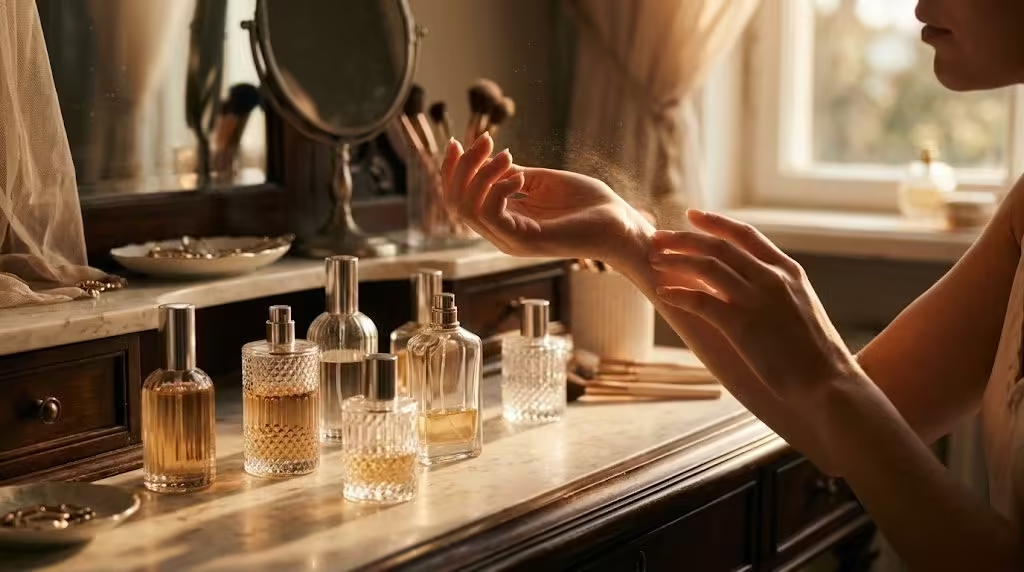
- Skin Test: Select a maximum of two favorites. Spray one on your left wrist and one on your right wrist.
- Walk Away: Leave the store. Do not buy anything yet.
- Monitor the Dry-Down: Smell your wrists every hour to observe how the heart and base notes interact with your skin chemistry.
- Evaluate Longevity: Note which fragrance lasts longer and which one brings you more joy at the end of the day.
If you prefer testing at home, purchasing discovery sets from niche or designer brands is a brilliant strategy. It allows you to wear a scent for several days before committing to a full bottle. As you test, be sure to read our guide on How to Read and Evaluate Perfume Reviews Like a Pro so you can accurately compare your experience with experts.
Finding Your Perfume Personality
Fragrance is incredibly subjective and deeply tied to personality. A bold, outgoing person might choose fragrance profile categories filled with spicy amber and rich leather, while a quiet, minimalist person might choose fragrance profile options centered around clean musk and white tea.
If you are struggling to match a scent to your personal vibe, we have curated specific recommendations. Explore our guide on Perfume Recommendations by Personality. We also offer dedicated lists to help you sift through the market, such as Best Perfumes for Women, Best Perfumes for Men, and Men’s Perfume Reviews. If you are entirely new to this world, start softly with Perfume Basics for Beginners.
Key Takeaways to Choose Fragrance Profile Success
- Identify your core scent family (Floral, Fresh, Woody, or Amber) to narrow down your options and choose fragrance profile directions immediately.
- Always test a fragrance on your skin, not just a paper blotter, to see how it reacts with your natural chemistry over time.
- Wait at least two to four hours before buying a perfume to ensure you enjoy the dry-down and base notes.
- Adjust your fragrance choices based on the climate, the occasion, and your skin type for optimal projection and longevity.
- Build a fragrance wardrobe over time rather than stressing over finding one single signature scent for every day of the year.
Continue Your Fragrance Journey
Finding your perfect scent is an intimate, rewarding process that shouldn’t be rushed. Now that you understand the fundamentals of identifying your scent profile, we invite you to explore more of our expert guides at Golden Hour. Whether you want to master skincare in our Skincare Layering Guide, refine your cosmetics with Demystifying Makeup and Cosmetics, or dive deeper into perfumery, we are here to help. Take your time, test thoughtfully, and choose a fragrance that makes you feel confident, beautiful, and entirely authentic.
Frequently Asked Questions
How do I find out what my scent profile is?
You find your scent profile by analyzing the perfumes, body lotions, and natural smells you already love. Look up the key notes of your favorite products online to see which of the four main fragrance families (floral, fresh, woody, amber) they belong to. Then, test fragrances in those families directly on your skin to see how you respond to them.
Why does perfume smell different on me than in the bottle?
Perfume smells different on your skin because of your unique body chemistry, pH levels, and natural oils. A fragrance in the bottle or on a paper strip is a static chemical composition, but once applied to skin, it mixes with your body heat and oils, altering the way the notes evaporate and project.
Should I choose an EDT or an EDP for daily wear?
You should choose an Eau de Toilette (EDT) if you prefer a lighter, fresher scent for the office or daytime, and an Eau de Parfum (EDP) for richer, longer-lasting wear. EDPs contain more perfume oil, making them last longer on the skin with a more subtle, intimate projection compared to the bright burst of an EDT.
How many perfumes should make up a fragrance wardrobe?
A functional fragrance wardrobe typically needs three to five perfumes to cover all bases. Ideally, you should have one fresh, inoffensive scent for work, one rich scent for evenings or dates, one casual weekend scent, and seasonal variations to adapt to summer heat and winter cold.
Can you wear a winter perfume in the summer?
You can wear a winter perfume in the summer, but you must apply it very sparingly. Heavy amber, woody, and gourmand notes are drastically amplified by summer heat and humidity, which can easily become overpowering or cloying to both you and the people around you if over-sprayed.
How long should I test a perfume before buying?
You should test a perfume on your skin for at least four to six hours before purchasing. This allows the top and heart notes to completely evaporate, revealing the base notes—which is the scent that will actually linger on your skin for the majority of the day.
What is a blind buy, and should I do it?
A blind buy is purchasing a fragrance without ever smelling it, usually based on online reviews or note breakdowns. You should generally avoid blind buying to choose fragrance profile matches accurately, as skin chemistry varies wildly and what smells amazing on a reviewer might not work on your skin.