Demystifying Makeup and Cosmetics: How to Build a Flawless Routine for Your Skin Type
Navigating the world of makeup and cosmetics can feel like learning a new language. With thousands of product launches, conflicting influence advice, and endless complex formulations, building a reliable beauty routine is often more overwhelming than enjoyable. Whether you are walking down the beauty aisle or browsing online, the sheer volume of choices from blurring primers to setting sprays leaves many wondering where to even begin.
At Golden Hour, we believe that cosmetics should empower you, not confuse you. High-quality makeup is about enhancing your natural features and expressing your personal style, grounded in a clear understanding of what works specifically for your skin.
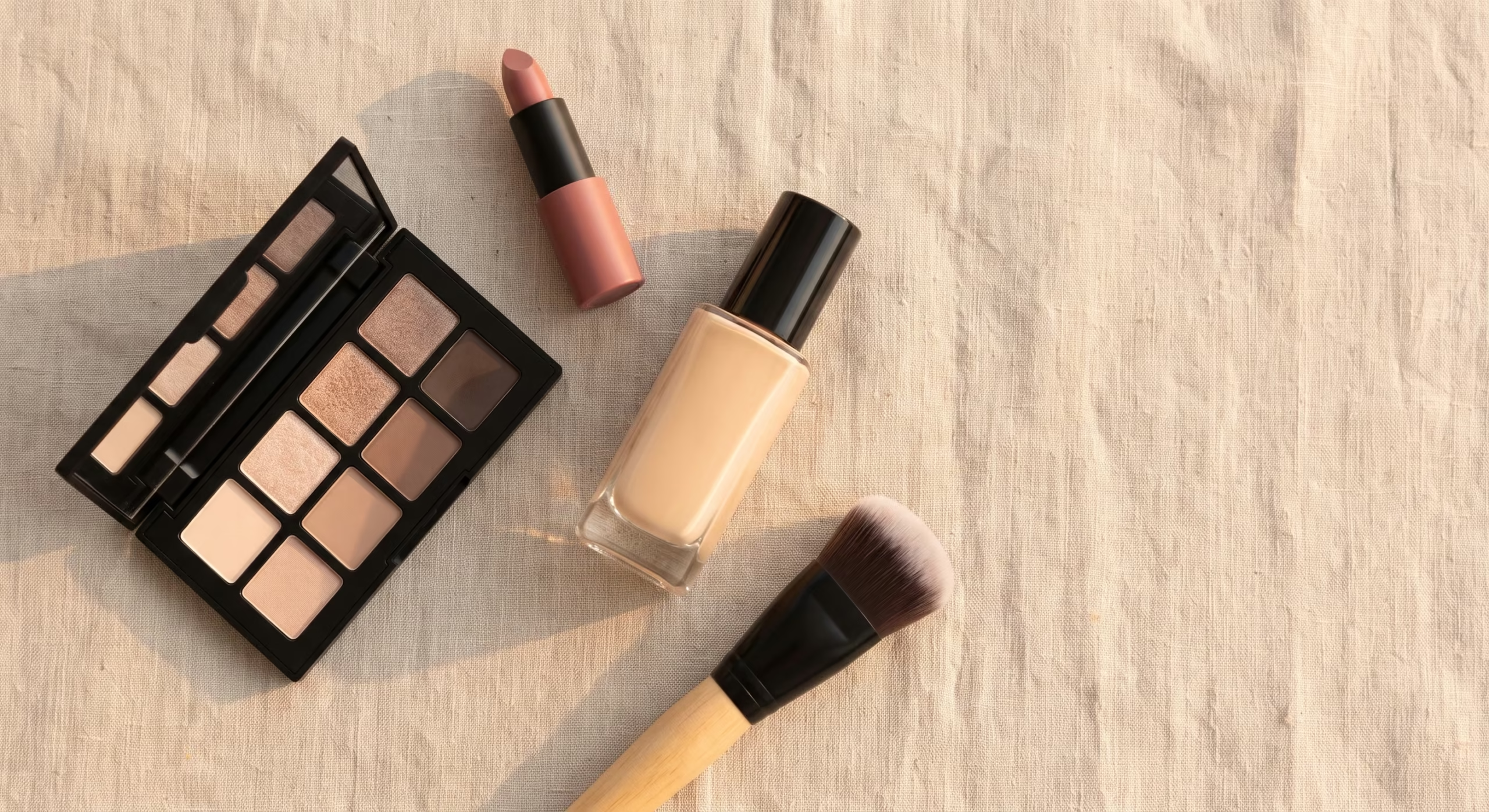
This comprehensive guide breaks down everything you need to know about makeup and cosmetics. We will explore how to identify your skin’s unique needs, decode the essential product categories, and build a step-by-step everyday makeup routine that looks flawless and lasts from your morning coffee to your evening commute.
Understanding Your Canvas Skin Types and Undertones
The secret to beautiful makeup actually has very little to do with the makeup itself—it is entirely dependent on your skin. Applying the most expensive foundation in the world on improperly prepped skin will yield underwhelming results. Before selecting any cosmetic products, you must identify two crucial factors: your skin type and your skin undertone.
Identifying Your Skin Type
Your skin type dictates the formulations (liquids, creams, or powders) that will perform best on your face.
- Oily Skin: Characterized by excess sebum production, particularly in the T-zone (forehead, nose, and chin). If you have oily skin, your makeup may tend to slide off or become excessively shiny by midday. Look for oil-free, mattifying formulations, and prioritize setting powders and gripping primers.
- Dry Skin: Prone to flakiness, tightness, and a lack of natural oils. Powders can emphasize dry patches and settle into fine lines. Cream and liquid formulations infused with hydrating ingredients like hyaluronic acid or squalane are ideal for creating a luminous, healthy finish.
- Combination Skin: Features both oily and dry areas—typically an oily T-zone and dry cheeks. Combination skin often requires a customized approach, using mattifying products in the center of the face and hydrating products on the perimeter.
- Sensitive Skin: Prone to redness, irritation, or allergic reactions. When selecting cosmetics for sensitive skin, prioritize fragrance-free, non-comedogenic (won’t clog pores), and hypoallergenic formulas.
Cracking the Code on Skin Undertones
While your skin tone (fair, medium, deep) can change with sun exposure, your undertone remains constant. Knowing your undertone is the key to shade-matching foundation, concealer, and even lipstick perfectly.
- Cool Undertones: Your skin has hints of pink, red, or blue. (Silver jewelry flatters you best, and your veins appear blue or purple).
- Warm Undertones: Your skin has hints of yellow, peach, or gold. (Gold jewelry looks most harmonious on your skin, and your veins appear green).
- Neutral Undertones: You have a balance of both warm and cool tones, or an olive hue. (Both silver and gold jewelry look great, and your veins are a mix of blue and green).
Golden Hour Tip: When browsing our complexion collections, look for the shade indicators (C for Cool, W for Warm, N for Neutral) to find your perfect match instantly.
The Essential Makeup Categories Explained
A well-rounded makeup bag does not need to contain fifty items. Understanding the core cosmetic categories allows you to curate a collection that serves your specific needs.
Complexion and Base
The base is the foundation of your entire look. Getting this right ensures everything else sits beautifully.
- Primer: Applied after skincare and before makeup, primer acts as a barrier that smooths the skin’s texture. Gripping primers lock makeup in place, illuminating primers add glow, and pore-filling primers blur texture.
- Foundation: Designed to even out your overall skin tone. It comes in various coverages: sheer (looks like real skin), medium (covers minor redness and blemishes), and full (provides a completely opaque canvas).
- Concealer: A highly pigmented product used for targeted coverage. You generally need two types: a hydrating, slightly lighter concealer to brighten the under-eye area, and a matte, exact-match concealer to cover blemishes and hyperpigmentation.
Color and Dimension
Once your foundation has unified your skin tone, color cosmetics bring life and dimension back to your face.
- Bronzer: Used to mimic a natural sun-kissed glow. It is applied to the high points of the face where the sun naturally hits (forehead, cheekbones, bridge of the nose).
- Contour: Unlike bronzer, contour is cool-toned and matte. It is used to create shadows, carving out cheekbones and defining the jawline.
- Blush: Adds a youthful flush of color to the cheeks. Cream blushes melt beautifully into dry skin, while powder blushes offer superior longevity for oily skin.
- Highlighter: A light-reflecting product applied to the very highest points of the face (tops of cheekbones, brow bone, cupid’s bow) to create a radiant, lifted effect.
Eye Enhancements
Eye makeup can range from a simple coat of mascara to intricate, multi-dimensional artistry.
- Eyeshadow: Pigmented powders or creams used to add depth and color to the eyelids. Mattes create shadows and define the crease, while shimmers highlight the lid and inner corner.
- Eyeliner: Defines the lash line. Pencil liners are great for soft, smudged looks, while liquid liners offer precision for sharp cat-eyes.
- Mascara: Darkens, lengthens, and volumizes the eyelashes. Tubing mascaras are excellent for preventing smudging, while waterproof formulas hold a curl effectively.
- Brow Products: Frame the face. Pencils create hair-like strokes, pomades offer bold definition, and clear or tinted gels hold the hairs in place.
Lip Essentials
- Lip Liner: Prevents lipstick from feathering and can be used to slightly overline the lips for a fuller appearance.
- Lipstick/Liquid Lip: Provides the main color. Matte formulas are incredibly long-lasting but can be drying; satin or cream formulas are comfortable and hydrating.
- Lip Gloss: Adds high shine and the illusion of plumpness.
Step-by-Step: The Foolproof Everyday Makeup Routine
While makeup has no rigid rules, following a logical order of application ensures your products layer smoothly without pilling or separating.
Step 1: Skincare and Prep Always start with a cleansed, moisturized face. Allow your moisturizer and sunscreen to absorb fully (wait about 3–5 minutes) before applying a primer suited to your skin type.
Step 2: Base Application Apply your foundation starting from the center of your face and blending outward. Use a damp beauty sponge for a sheer, airbrushed finish, or a dense synthetic brush for fuller coverage.
Step 3: Conceal and Brighten Dot concealer only where needed. Place a small amount at the inner and outer corners of the under-eyes to lift the face, and tap gently over any blemishes. Blend carefully with your ring finger or a small brush.
Step 4: Cream Color (Optional) If you are using cream bronzer or cream blush, apply them now. A vital rule of cosmetic chemistry is that creams must be applied before powders. Applying a liquid over a set powder will cause muddy patches and texture.
Step 5: Set the Base Use a translucent setting powder to lock your liquid products in place. Focus on areas prone to creasing (under the eyes) and oiliness (the T-zone).
Step 6: Powder Color Apply your powder bronzer, blush, and highlighter to bring warmth and glow back to your complexion.
Step 7: Eyes and Brows Fill in your brows, apply a simple wash of eyeshadow if desired, line your eyes, and finish with two coats of mascara.
Step 8: Lips Line the perimeter of your lips, fill them in with your chosen lipstick, and top with gloss if you prefer a shiny finish.
Step 9: Lock it Down Mist your face with a setting spray to melt all the powder layers together and seal the makeup against sweat and humidity.
The Science of Formulations Liquids, Creams, and Powders
Understanding how different cosmetic formulations interact is the secret to avoiding cakey makeup.
Silicone vs. Water-Based Products: One of the most common makeup mistakes is mixing water-based primers with silicone-based foundations (or vice versa). Silicone and water repel each other. If you apply a silicone foundation over a water-based primer, the foundation will pill, separate, and slide off your face. Always check your ingredient lists: if the first few ingredients end in “-cone,” “-siloxane,” or “-methicone,” the product is silicone-based. Match silicone to silicone, and water to water.
The Golden Rule of Layering: Always apply cream and liquid products before powder products. Powders act as a seal; once applied, they lock the base in place. If you try to blend a cream blush over a set powder foundation, it will disrupt the seal and lift the makeup underneath.
Maximizing Longevity How to Make Your Makeup Last All Day
If your makeup disappears by 2:00 PM, you likely need to adjust your setting techniques.
- Use an Eyeshadow Primer: Eyelids are naturally oily. A dedicated eyeshadow primer prevents shadows from creasing and fading much better than standard concealer.
- The “Sandwich” Technique: For extremely oily skin, try applying a light layer of translucent powder under your foundation, followed by foundation, and then set again with powder. This absorbs oil at the base level.
- Setting Powder vs. Finishing Powder: Setting powders are designed to absorb oil and lock makeup in place. Finishing powders are extremely finely milled and are meant to be dusted on at the very end to blur pores and add a soft-focus filter—they do not control oil.
- Setting Spray: Think of setting spray as hairspray for your face. Formulas containing film-formers will physically bind your makeup together and lock it to your skin, preventing transfer and fading.
Cosmetic Hygiene Expiration Dates and Tool Maintenance
Makeup products do not last forever, and poor cosmetic hygiene can lead to breakouts, skin irritation, and eye infections.
Understanding Expiration Dates: Look for the PAO (Period After Opening) symbol on your cosmetic packaging it looks like a tiny open jar with a number inside (e.g., “12M”). This indicates how many months the product is safe to use after opening.
- Mascara and Liquid Eyeliner: Replace every 3 to 6 months. (These are highly susceptible to bacterial growth).
- Liquid Foundation and Concealer: Replace every 6 to 12 months.
- Powder Products (Eyeshadow, Blush): Can last 1 to 2 years if kept dry and clean.
- Lipsticks: Replace every 12 to 18 months.
Cleaning Your Tools: Your makeup brushes and sponges harbor dead skin cells, oil, and bacteria.
- Sponges: Wash after every single use with a gentle soap and warm water. Replace every 3 months.
- Brushes: Wash liquid/cream brushes (foundation, concealer) once a week. Wash powder brushes (blush, eyeshadow) every two weeks. Swirl them in a gentle brush cleanser, rinse with the bristles pointing downward to prevent water from degrading the glue, and lay them flat to dry.
The Importance of Proper Makeup Removal
Sleeping in your makeup is one of the most damaging things you can do to your skin. It clogs pores, accelerates premature aging by trapping free radicals, and prevents your skin from performing its natural overnight regeneration process.
The Double Cleanse Method: A simple splash of face wash or a swipe of a makeup wipe is rarely enough to remove long-wearing cosmetics and SPF. To protect your skin barrier, adopt the double-cleansing method:
- First Cleanse (Oil-Based): Massage a cleansing balm or cleansing oil onto dry skin. Oil breaks down oil, easily melting away waterproof mascara, long-wear foundation, and sebum without aggressive scrubbing.
- Second Cleanse (Water-Based): Follow up with a gentle, water-based gel or cream cleanser to wash away the emulsified oil, makeup residue, and sweat, leaving your pores completely clean.
By understanding your unique skin canvas, decoding cosmetic formulations, and practicing proper application and hygiene, makeup transforms from a daunting chore into a powerful tool for self-expression. Building your ideal routine takes a little experimentation, but armed with this knowledge, you are ready to curate a makeup collection that makes you look and feel your absolute best.
(Explore Golden Hour’s curated collections to find high-performance formulas tailored to your unique skin type and undertone.)
Makeup and Cosmetics Guide FAQ Section
1. What is the difference between BB cream, CC cream, and foundation?
BB (Beauty Balm) cream offers sheer coverage with added skincare benefits like hydration and SPF. CC (Color Correcting) cream provides slightly more coverage to neutralize redness or sallowness. Foundation provides the widest range of coverage (sheer to full) and shade options, focusing primarily on evening out the skin tone.
2. How do I know if my foundation is water-based or silicone-based?
Check the ingredient list. If the first few ingredients include words ending in “-cone,” “-methicone,” or “-siloxane” (like Dimethicone or Cyclopentasiloxane), it is silicone-based. If water (Aqua) is the first ingredient and there are no silicones near the top, it is water-based.
3. Do I really need to use a makeup primer?
Primer is not strictly mandatory, but it is highly beneficial. A good primer acts as a targeted problem-solver: it can control excess oil, hydrate dry patches, blur large pores, or simply provide a smooth, gripping canvas that extends the wear time of your foundation.
4. How can I stop my under-eye concealer from creasing?
First, ensure your under-eye area is properly hydrated with an eye cream, but let it fully absorb. Apply only a thin layer of concealer (less is more). Immediately set the concealer with a finely milled translucent powder using a small, fluffy brush or a damp beauty sponge to lock it in place before it has a chance to settle into fine lines.
5. In what order should I apply my makeup?
A standard, effective order is: Skincare → Primer → Foundation → Concealer → Cream Bronzer/Blush → Setting Powder → Powder Bronzer/Blush → Eyeshadow → Eyeliner → Mascara → Brows → Lips → Setting Spray. Always apply liquids/creams before powders.
6. What is the purpose of color correcting makeup?
Color correction uses color theory to neutralize unwanted tones on the skin. Green neutralizes redness (acne, rosacea), peach/orange neutralizes dark, blueish circles (under eyes), and lavender brightens sallow, yellow tones. You apply color correctors under your foundation or concealer.
7. Why does my makeup look cakey and how do I fix it?
Cakey makeup is usually caused by applying too much product, layering powder over wet cream, or applying makeup to dry, unexfoliated skin. Fix it in the moment by pressing a damp beauty sponge over the face to absorb excess product, then mist thoroughly with a hydrating setting spray to melt the layers together.
8. Can I wear makeup if I have acne-prone skin?
Yes, but formulation is key. Look for products labeled “non-comedogenic” (which means they are formulated not to clog pores). Avoid heavy, oil-based foundations. Thoroughly double-cleansing your skin at the end of the day and washing your makeup brushes regularly are crucial steps to prevent worsening breakouts.