
The Ultimate Guide to Skincare Layering How to Build an Effective Routine
With countless serums, acids, essences, and creams flooding our feeds daily, modern skincare has never been more advanced or more confusing. If you have ever stared at your bathroom shelf wondering whether your vitamin C serum goes before or after your moisturizer, or why your products are suddenly rolling off your face in tiny flakes, you are not alone.

Building a skincare routine is not just about choosing high-quality products; it is about applying them in a way that allows your skin to actually absorb them. Applying an expensive water-based serum over a heavy facial oil is like trying to pour water through a raincoat—the active ingredients will never reach their intended destination.
In this comprehensive guide, we will break down the science of skincare layering, provide step-by-step morning and evening routines, and demystify which ingredients play nicely together. Whether you are building your first regimen or refining a ten-step ritual, this framework will help you maximize the efficacy of every drop.
Why the Order of Your Skincare Routine Matters
Your skin’s primary function is to act as a barrier. It is designed by nature to keep things out—including pollution, bacteria, and, ironically, the skincare products you are trying to coax into it. To bypass this barrier effectively, we must respect the physical properties of the products we use.

The “Thinnest to Thickest” Rule
The golden rule of skincare layering is to apply products in order of consistency, from the most lightweight and watery to the heaviest and richest.
Why? Products with a thin, watery consistency have smaller molecular structures. They are formulated to penetrate deeply and quickly. Thicker creams and oils contain larger molecules designed to sit closer to the surface, creating an occlusive seal that locks in moisture. If you apply a heavy cream first, it creates a physical blockade that lighter serums simply cannot penetrate.
Water-Based vs. Oil-Based Formulations
Beyond texture, it is crucial to understand solubility. Water and oil do not mix. Because oil is occlusive (meaning it creates a seal), an oil-based product applied over a water-based product will lock it in. However, a water-based product applied over an oil will simply sit on the surface, unable to bypass the lipid layer. Always apply water-based serums before oil-rich creams or facial oils.
How to Determine Your True Skin Type
Before you can layer your products effectively, you need to ensure you are layering the right products. While the structure of a routine remains consistent, the specific formulas you choose depend entirely on your skin type.
- Normal Skin: Well-balanced, neither excessively oily nor tight and flaky. Pores are generally small, and texture is smooth.
- Dry Skin: Lacks oil (sebum). Often feels tight, particularly after cleansing. May experience flaking, dullness, or rough texture. Requires rich emollients and occlusives.
- Oily Skin: Produces excess sebum. Prone to visible pores, shine, and congestion or breakouts. Requires lightweight, water-based hydration.
- Combination Skin: Exhibits both dry and oily traits, typically oily through the T-zone (forehead, nose, chin) and dry or normal on the cheeks.
- Sensitive / Sensitized Skin: Prone to redness, stinging, or irritation. Note: “Sensitive” is a skin type, while “sensitized” is a temporary condition often caused by a compromised skin barrier from over-exfoliation.
If you are unsure of your type, try the “bare-faced test.” Cleanse your face with a gentle cleanser, pat it dry, and apply nothing. Wait 30 minutes. If your skin feels tight, it is likely dry. If it looks shiny everywhere, it is oily. If it is shiny only on the nose and forehead, it is combination.
The Perfect Morning Skincare Routine Protection & Prevention
Your morning routine has one primary job: protection. Throughout the day, your skin is assaulted by ultraviolet (UV) radiation, environmental pollution, dirt, and blue light. Your morning layers should focus on shielding the skin barrier and preventing oxidative stress.

Step 1: Cleanser (Or Just Water)
Start with a clean canvas. For those with oily or acne-prone skin, a gentle morning cleanse removes the sebum and sweat produced overnight. Look for a low-pH, non-stripping formula.
Tip for Dry/Sensitive Skin: If your skin runs dry, you may find that simply splashing your face with lukewarm water in the morning is sufficient. This preserves your natural lipid barrier while removing sleep debris.
Step 2: Toner or Essence
Modern toners are no longer the harsh, alcohol-laden astringents of the past. Today’s toners and essences are designed to balance the skin’s pH after cleansing and infuse the first layer of lightweight hydration. Think of your skin like a sponge: a damp sponge absorbs spills much better than a dry, brittle one. Applying a hydrating essence preps the skin to absorb the active ingredients that follow.
Step 3: Antioxidant Serum (Vitamin C)
If you only use one active ingredient in the morning, make it an antioxidant. Vitamin C (L-ascorbic acid or its derivatives) is the gold standard. It neutralizes free radicals caused by UV exposure and pollution, brightens the complexion, and supports collagen production.
Because L-ascorbic acid is highly unstable and typically formulated at a low pH for penetration, it should be applied to dry skin immediately after your toner has fully absorbed.
Step 4: Eye Cream
The skin around your eyes is the thinnest on your body and lacks sebaceous (oil) glands, making it highly susceptible to dehydration and early signs of aging. Applying eye cream before your moisturizer ensures that this delicate area gets targeted treatment before heavier creams can block it. Use your ring finger to gently tap (never drag) the product along the orbital bone.
Step 5: Moisturizer
Moisturizers serve a dual purpose: they impart hydration into the skin (via humectants like glycerin or hyaluronic acid) and trap it there (via emollients and occlusives like ceramides or squalane).
- For Oily Skin: Opt for a lightweight, oil-free gel moisturizer.
- For Dry Skin: Choose a richer cream packed with ceramides to support the skin barrier.
Step 6: Sunscreen (SPF)
This is the single most important step in any skincare routine. Without sunscreen, every other product you apply is practically redundant. UV exposure is responsible for up to 80% of visible skin aging, including hyperpigmentation, loss of elasticity, and fine lines.
Apply a broad-spectrum sunscreen with an SPF of at least 30. Sunscreen should always be the final step in your routine. Applying any product over sunscreen will dilute its efficacy and disrupt the protective film it forms on your skin.
The Ideal Evening Skincare Routine Repair & Rejuvenate
While your morning routine is about defense, your evening routine is about offense. At night, your skin goes into a natural repair cycle, increasing cellular turnover and blood flow. This is the optimal time to introduce powerful active ingredients, exfoliants, and heavy hydration.
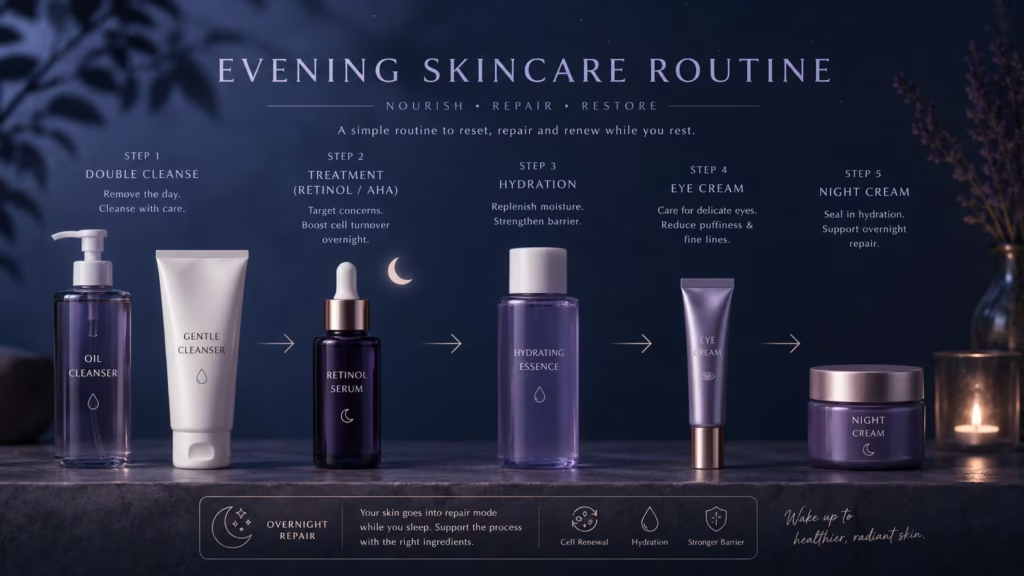
Step 1: The Double Cleanse
A single cleanse is rarely enough to remove a full day’s worth of water-resistant sunscreen, makeup, and urban pollution. Enter the double cleanse.
- First Cleanse (Oil-Based): Use a cleansing balm or cleansing oil. Oil attracts oil. This step effortlessly dissolves makeup, SPF, and excess sebum without scrubbing. Massage it onto dry skin, emulsify with a little water, and rinse.
- Second Cleanse (Water-Based): Follow up with a traditional gel or cream cleanser to remove any remaining residue and actually clean the pores.
Step 2: Exfoliation or Treatment Serums
This step dictates the trajectory of your evening routine. You should only use one potent active ingredient per night to avoid compromising your skin barrier.
- Option A: Chemical Exfoliants (AHAs/BHAs). Alpha Hydroxy Acids (like glycolic or lactic acid) dissolve dead skin cells on the surface, improving texture and brightness. Beta Hydroxy Acids (like salicylic acid) are oil-soluble, meaning they can penetrate pores to clear out congestion and prevent breakouts. Use 1–3 times a week.
- Option B: Retinoids (Retinol). The most proven anti-aging ingredient in dermatology. Retinoids speed up cellular turnover and stimulate collagen production. Apply a pea-sized amount to completely dry skin.
Important: Never use exfoliating acids and retinoids on the same night. Skin cycling—alternating nights for different actives is a highly effective way to gain the benefits of both without irritation.
Step 3: Hydrating Serums
If your skin is feeling parched, or to buffer the effects of strong actives, follow up with a hydrating serum. Hyaluronic acid or glycerin-based serums draw water into the skin.
Note: Hyaluronic acid should ideally be applied to slightly damp skin, but if you have just applied a low-pH acid or retinol, wait 15 minutes before applying your hydrating serum to prevent altering the pH of your active treatment.
Step 4: Eye Cream
Reapply your eye cream. Evening eye creams can be richer and more nourishing than morning formulas, sometimes incorporating gentle retinoids specifically formulated for the eye area.
Step 5: Night Cream or Facial Oil
Seal everything in. Night creams are typically thicker and heavier than daily moisturizers, packed with reparative ingredients like peptides, ceramides, and niacinamide.
If you use a facial oil, it should be the absolute final step in your routine. Oils are highly occlusive; they lock in all the water-based hydration beneath them and prevent transepidermal water loss (TEWL) while you sleep.
Skincare Ingredient Compatibility What Not to Mix
More is not always better. Layering too many active ingredients can lead to a damaged skin barrier, resulting in redness, peeling, and increased breakouts. Here is a quick guide to navigating ingredient compatibility.
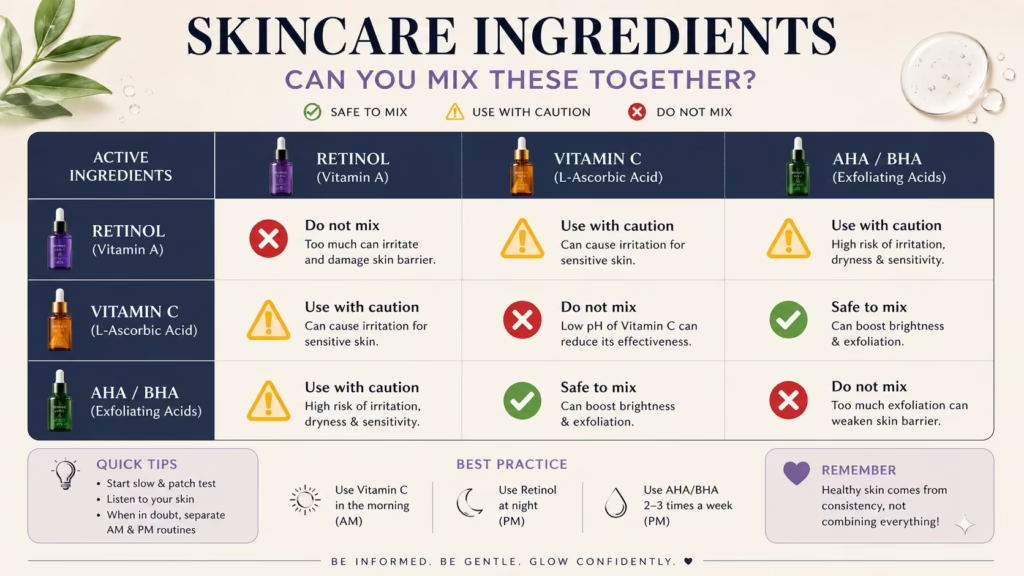
The Rule of Active Ingredients
| Ingredient 1 | Ingredient 2 | Verdict | Why? |
| Retinol | AHA / BHA | ❌ Do Not Mix | Both accelerate cell turnover. Using them together dramatically increases the risk of severe irritation and barrier damage. Alternate nights instead. |
| Vitamin C | AHA / BHA | ❌ Caution | Both are highly acidic. Using them together can cause stinging and redness. Use Vitamin C in the AM, and acids in the PM. |
| Retinol | Vitamin C | ❌ Do Not Mix | Formulated at different pH levels. Using them at the same time can destabilize them and cause irritation. Vitamin C in AM; Retinol in PM. |
| Retinol | Hyaluronic Acid | ✅ Great Pair | Hyaluronic acid provides the deep hydration needed to counteract the drying effects of retinol. |
| Vitamin C | Vitamin E & Ferulic Acid | ✅ Perfect Match | These antioxidants stabilize Vitamin C and exponentially increase its photoprotective properties. |
Troubleshooting Your Routine: Why is My Skincare Pilling?
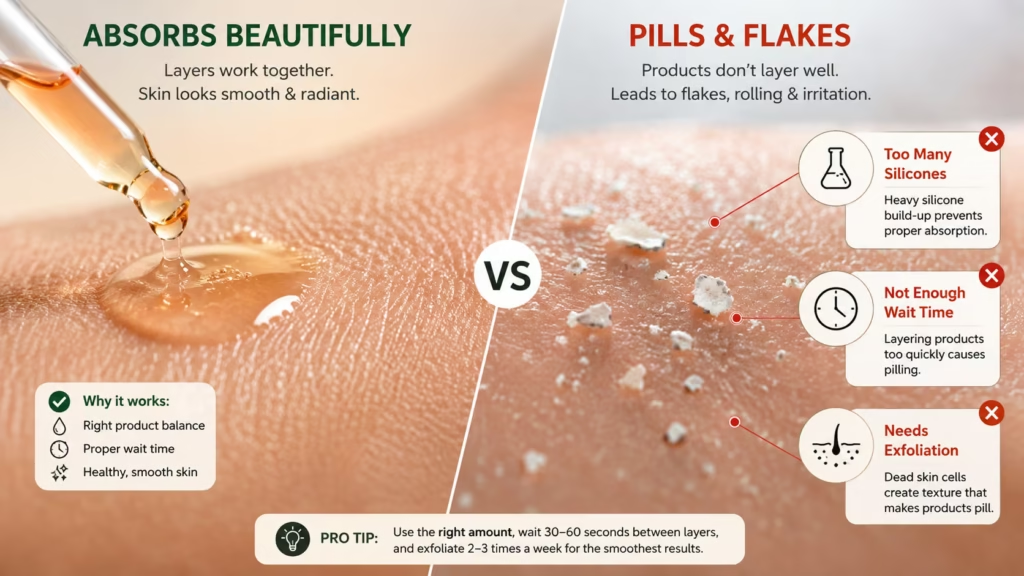
You have meticulously applied your layers, but as you rub in your sunscreen or foundation, tiny, eraser-like flakes begin rolling off your skin. This is known as “pilling.”
Pilling occurs when products fail to absorb into the skin and instead clump together on the surface. Here is how to prevent it:
- Give products time to absorb: Do not rapid-fire your layers. Wait 30 to 60 seconds between serums, and wait at least a minute or two before applying moisturizer or SPF.
- Watch your silicones: Many primers, sunscreens, and rich creams rely on silicones (like dimethicone) for a smooth finish. Layering a silicone-based product over a water-based product can cause friction and pilling.
- Use less product: A common mistake is applying too much. You only need a pea-sized amount of serum and a dime-sized amount of moisturizer.
- Exfoliate regularly: If you have a buildup of dead skin cells on the surface, your products have nowhere to go but sit on top and pill. Ensure you are gently exfoliating 1–2 times a week.
When to Seek Professional Advice
While a well-structured at-home skincare routine can dramatically improve the health and appearance of your skin, over-the-counter cosmetics have limitations. You should consult a board-certified dermatologist if you experience:
- Cystic or persistent acne that does not respond to BHA or over-the-counter retinol.
- Sudden, severe hyperpigmentation or changing moles.
- Chronic redness, stinging, or suspected rosacea.
- Conditions like eczema or psoriasis, which require targeted medical treatments rather than cosmetic layering.
Understanding the mechanics of skincare layering empowers you to make informed decisions. By respecting the chemical properties of your products and the biological needs of your skin barrier, you transform a chaotic collection of bottles into an effective, results-driven routine. Start simple, introduce new products slowly, and always listen to your skin.
Skincare Routine FAQ Section
Q: Do I really need to use a toner?
A: No, toner is not strictly mandatory, but it is highly beneficial. Modern hydrating toners prep the skin, balance pH after cleansing, and allow subsequent serums to absorb more efficiently. If you have a minimal routine, you can skip it; if you want to maximize hydration, it is a great addition.
Q: Can I skip cleanser in the morning?
A: Yes, especially if you have dry, sensitive, or compromised skin. Splashing your face with lukewarm water is often enough to remove overnight skincare residue without stripping your natural lipid barrier. However, oily and acne-prone skin types generally benefit from a gentle morning cleanse.
Q: How long should I wait between skincare steps?
A: As a general rule, wait 30 to 60 seconds between water-based serums to allow them to absorb. For pH-dependent actives like Vitamin C, AHAs, or Retinol, waiting 1 to 2 minutes before applying your next layer can prevent altering their efficacy.
Q: Why does my skin burn when I apply moisturizer?
A: Stinging or burning upon applying a basic, fragrance-free moisturizer is a classic sign of a damaged skin barrier, often caused by over-exfoliation or excessive use of strong actives like retinol. If this happens, strip your routine back to just a gentle cleanser, a basic barrier-repair cream, and SPF until the skin heals.
Q: Can I use Vitamin C and Niacinamide together?
A: Yes. Outdated research suggested that mixing the two created nicotinic acid (which causes flushing), but modern cosmetic chemistry has proven that they are perfectly safe and highly effective to use together in standard formulations. They work synergistically to brighten skin and fade pigmentation.
Q: Should I apply face oil before or after moisturizer?
A: Face oil should almost always be applied after your moisturizer. Oils are occlusive, meaning they create a barrier that locks moisture in. If you apply oil first, your water-based moisturizer will not be able to penetrate the oil layer to hydrate your skin.
Q: Does sunscreen go on before or after moisturizer?
A: Sunscreen must always be the absolute last step of your morning skincare routine, applied after moisturizer. Applying any skincare product over your SPF will disrupt its protective film and leave your skin vulnerable to UV damage.
Q: What is “skin cycling”?
A: Skin cycling is a nighttime routine methodology that alternates active ingredients to prevent irritation. A standard 4-night cycle consists of: Night 1 (Exfoliation), Night 2 (Retinol), Night 3 (Recovery/Hydration only), Night 4 (Recovery/Hydration only), and then repeating.