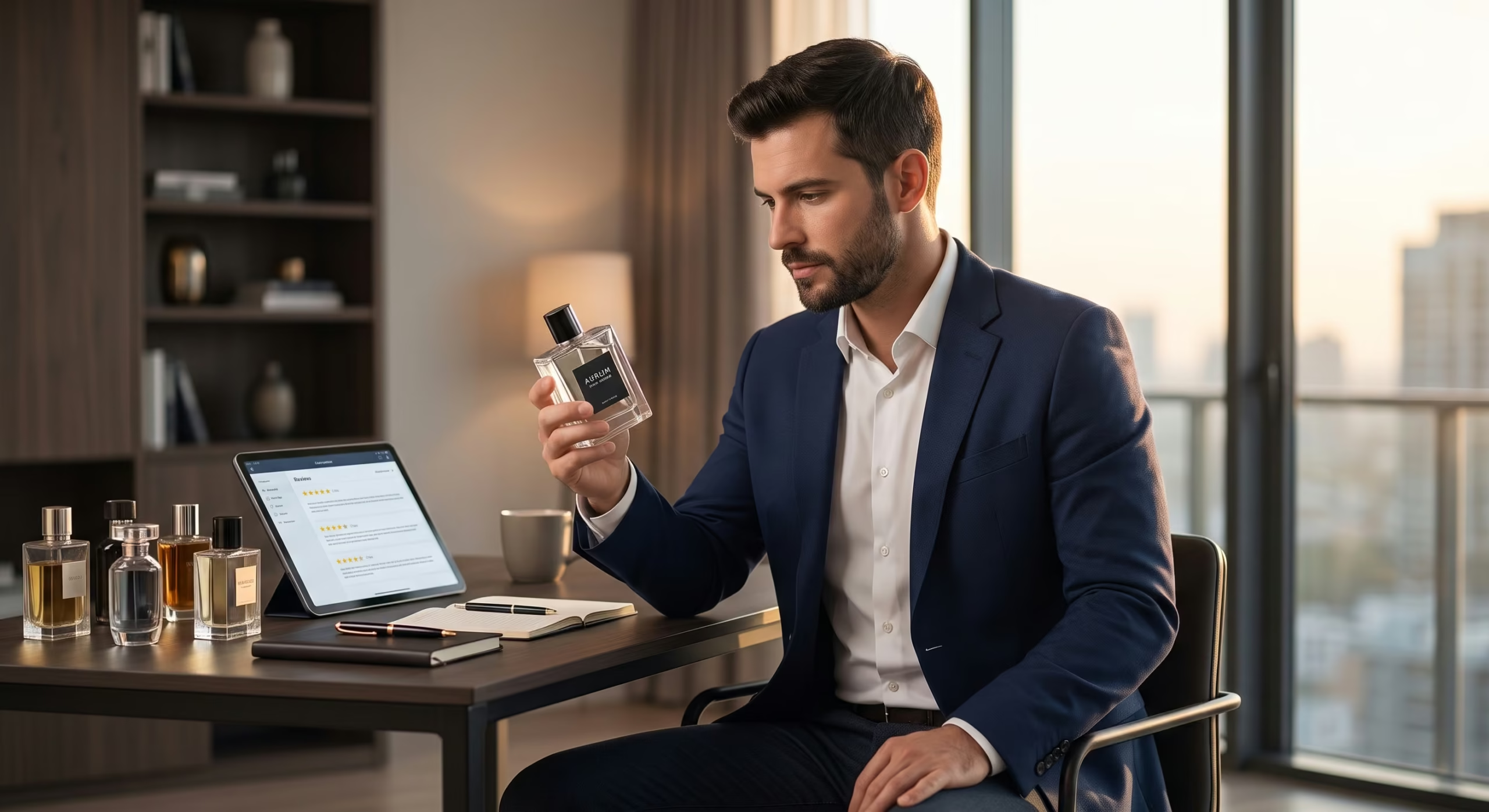
Men’s Perfume Reviews How to Read, Compare & Choose the Right Fragrance
Navigating men’s perfume reviews requires filtering subjective opinions from objective performance metrics. The fragrance market is saturated with conflicting feedback, exaggerated marketing claims, and influencer hype, making it difficult for buyers to make informed decisions. A high-quality review breaks down a scent into actionable data points: how long it lasts, how far it projects, and exactly which environments it suits best.

Understanding the mechanics of fragrance evaluation allows you to decode industry terminology, recognize reviewer bias, and align a fragrance’s actual performance with your personal style, climate, and daily routine.
What Makes a Good Men’s Perfume Review?
A useful men’s fragrance review separates the objective characteristics of a scent from the reviewer’s subjective emotional response. Stating that a fragrance “smells terrible” offers no value, whereas explaining that a fragrance “features a sharp, synthetic grapefruit opening that takes 45 minutes to settle into a dry cedar base” provides concrete information.
High-quality reviews contextualize the fragrance. The reviewer will disclose their climate, skin type, and the number of sprays applied. They map out the lifecycle of the scent from the initial spray to the final skin-scent phase, grading performance based on timed wear rather than initial impressions on a paper test strip.
How to Read Men’s Perfume Reviews
Interpreting perfume reviews for men involves looking for consensus across multiple evaluations rather than trusting a single source. Readers must translate common community terminology into practical expectations.

When reviewers describe a scent as “linear,” it means the fragrance smells the same from the first spray to the dry-down, lacking complex evolution. Phrases like “beast mode” indicate high projection and sillage, meaning the scent will fill a room and potentially overwhelm tight spaces like offices or cars. “Blue fragrances” typically refer to highly versatile, mass-appealing scents combining fresh citrus tops with woody, shower-gel-like bases. Recognizing these shorthand terms helps you quickly categorize a fragrance and determine if it aligns with your intent.
The Most Important Things to Look for in a Men’s Perfume Review
To evaluate a men’s fragrance intelligently, look for reviews that systematically address these core performance and composition categories.
Fragrance notes
A complete review dissects the raw materials and accords. It should clarify whether the notes smell natural or synthetic and identify which notes dominate the composition. For example, a fragrance might list twenty notes in its official pyramid, but a practical review will tell you that it primarily smells like cardamom and vanilla.
Opening and dry-down
The opening lasts for the first 15 to 30 minutes. Many commercial fragrances are front-loaded with bright, appealing top notes designed to secure a quick sale at the retail counter. A reliable review details the dry-down—the scent that remains on your skin for the next eight hours—as this is the true character of the perfume.
Longevity
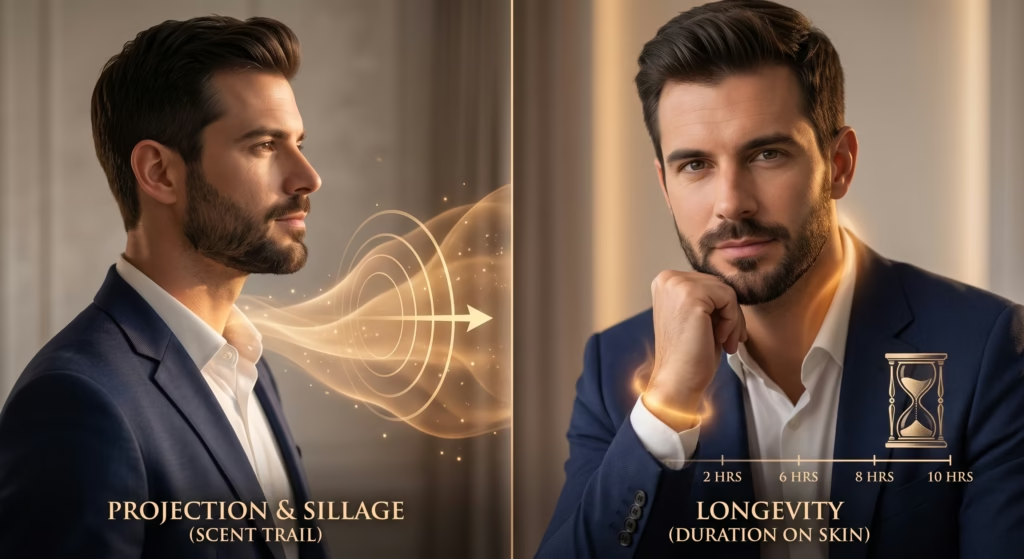
This is the total duration the fragrance is detectable on the skin or clothing. Reviews should define longevity in hours, distinguishing between the time it actively projects and the time it survives as a faint skin scent.
Projection
Projection measures the physical radius of the scent bubble surrounding the wearer. Reviews should specify if a fragrance projects strongly for the first two hours before sitting closer to the skin, or if it remains loud for the duration of the wear.
Sillage
Often confused with projection, sillage (pronounced see-yazh) is the invisible scent trail left behind when the wearer walks through a room. A dense, heavy winter fragrance might have low projection but massive sillage, hanging in the air long after the wearer has departed.
Seasonality
Temperature and humidity drastically alter how a perfume behaves. Citrus and aquatic notes evaporate quickly and require high summer heat to push off the skin. Conversely, heavy amber, oud, and leather notes become cloying in the summer but project beautifully in freezing winter air.
Occasion
A fragrance’s profile dictates its appropriateness for specific settings. Reviews should categorize scents as suitable for the office (inoffensive, light), date nights (intimate, warm, spicy), clubbing (loud, sweet, piercing), or casual weekend wear.
Versatility
Some fragrances are “dumb reaches”—scents that work in any season, for any occasion, dressed up or down. A review should evaluate whether a bottle serves as a year-round signature scent or a niche choice for specific scenarios.
Value
Evaluating value involves comparing the price per milliliter against the performance, ingredient quality, and the blending of the fragrance. A $200 bottle that requires only two sprays and lasts 12 hours often presents better value than a $40 bottle requiring eight sprays every four hours.
Understanding Men’s Fragrance Notes
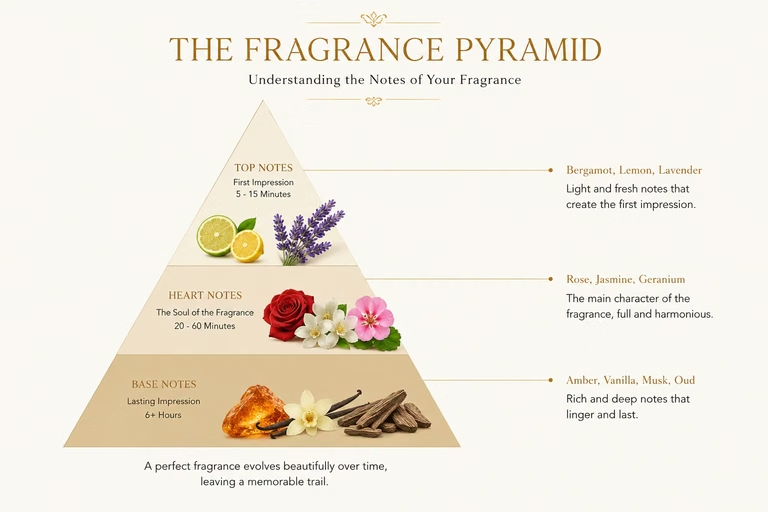
Fragrances are constructed using a three-tier architectural model called the olfactory pyramid. Understanding this structure prevents buyers from purchasing a fragrance based solely on a fleeting opening.
- Top Notes (Head Notes): These are the smallest, most volatile molecules. They evaporate quickly, usually within 15 to 30 minutes. Common top notes in men’s perfumery include bergamot, lemon, grapefruit, mint, pink pepper, and neroli.
- Heart Notes (Middle Notes): As the top notes burn off, the heart notes emerge. They form the core identity of the fragrance and last for 2 to 4 hours. You will frequently encounter lavender, geranium, cinnamon, cardamom, clary sage, and various florals in this phase.
- Base Notes: These are heavy, dense molecules that act as fixatives, anchoring the lighter notes to the skin. Base notes dictate the dry-down and can linger for 6 to 24 hours. Prominent men’s base notes include cedarwood, sandalwood, vetiver, patchouli, amber, vanilla, musk, oakmoss, and oud.
How to Judge Perfume Longevity and Performance
A fragrance’s performance is not a fixed, universal metric. It fluctuates wildly based on biological and environmental variables.
- Skin Chemistry: Oily skin holds fragrance significantly longer than dry skin. Sebum acts as a primer, trapping the perfume oils. Highly acidic skin can also burn through top notes faster, altering the scent profile.
- Application Method: Spraying on pulse points (neck, wrists) uses body heat to project the scent, while spraying on clothing significantly extends longevity but limits projection and prevents the fragrance from developing through its natural stages.
- Climate: High heat accelerates the evaporation of alcohol and perfume oils, increasing projection but decreasing total longevity. Humidity traps scent molecules, making fragrances feel denser and heavier in the air.
- Olfactory Fatigue (Nose Blindness): The human brain naturally filters out constant stimuli. Wearers frequently believe their fragrance has faded after two hours, while those around them can still smell it clearly. High doses of synthetics like Iso E Super or Ambroxan are notorious for causing rapid nose blindness.
How to Compare Men’s Perfume Reviews
When researching a potential purchase, cross-reference data points from multiple sources to eliminate individual bias.
- Filter by climate and skin type: Give the most weight to reviewers who share your climate and skin characteristics. A review of a winter fragrance from a user in humid, tropical Southeast Asia will not accurately reflect how the scent performs in a cold UK winter.
- Look for structural agreement: If five different reviews all mention that a fragrance has a harsh, metallic opening but a smooth vanilla dry-down, treat that as an objective fact. Discard outliers that claim the exact opposite unless they provide context (e.g., a known batch variation).
- Separate the scent from the performance: Some men’s fragrances are universally praised for their scent profile but universally criticized for lasting only two hours. Decide which metric is more important for your specific needs before purchasing.
How to Know If a Men’s Perfume Is Right for You
Selecting the right fragrance requires matching the objective data found in reviews to your personal context.
- Workplace Environment: If you work in a close-quarters corporate office or healthcare setting, prioritize fragrances described as “clean,” “soapy,” “intimate,” or “fresh.” Avoid heavy projection, sweet gourmands, or aggressive ouds.
- Climate Alignment: If you live in a region with nine months of high heat, a dense, sweet tobacco fragrance will be practically unwearable most of the year. Invest your budget into high-quality fresh, aromatic, or aquatic profiles.
- Desired Impression: Consider the psychological impact of the fragrance notes. Vetiver and cedar convey maturity, professionalism, and groundedness. Sweet spices and vanilla convey warmth, approachability, and allure. Citrus and mint convey high energy and cleanliness.
Common Problems With Online Perfume Reviews
The fragrance community is highly opinionated, and online reviews are susceptible to several distorting factors that readers must navigate carefully.
- The Hype Cycle: Social media algorithms prioritize extreme reactions. Fragrances are frequently labeled as “masterpieces” or “trash,” stripping away the nuanced reality that most fragrances are simply competent releases suited for specific tastes.
- Batch Variations and Reformulations: Fragrance houses frequently alter formulas due to regulatory changes (like IFRA ingredient bans) or cost-cutting measures. A review from 2018 praising a fragrance’s 14-hour longevity may no longer apply to a bottle manufactured in 2026.
- Maceration: Oxygen entering a newly sprayed bottle can alter the scent over the first few months. Many buyers leave a negative review immediately upon unboxing, unaware that the fragrance requires time to settle and mature after shipping.
- Counterfeits: Reviews on major marketplace platforms are often skewed by buyers who unknowingly purchased counterfeit products, leading to inaccurate complaints about poor longevity or harsh chemical smells.
How to Find More Reliable Men’s Perfume Reviews
To find accurate assessments, prioritize platforms and publications that emphasize detailed breakdown and testing methodologies over affiliate-driven hype. Look for reviewers who purchase their own bottles, as this eliminates the subconscious bias of receiving free PR packages.

Seek out community forums and dedicated fragrance databases where users vote on specific metrics like longevity, sillage, and seasonality. These aggregated community scores often provide a more accurate picture than a single editorial review. For a deeper understanding of how to interpret these metrics and avoid marketing traps, read the comprehensive guide on how to read perfume reviews available on the Golden Hour platform.
Men’s Perfume Review Checklist
Before finalizing a fragrance purchase, run the potential scent through this evaluation checklist based on your gathered reviews:
- Seasonality Match: Does the community consensus align this fragrance with the current or upcoming weather in your location?
- Longevity Floor: Does the average review confirm the scent lasts long enough for your intended use (e.g., a full 8-hour workday vs. a 3-hour dinner)?
- Opening vs. Dry-down: Have you evaluated descriptions of the base notes, rather than just the initial top notes?
- Occasion Fit: Is the projection level appropriate for where you intend to wear it?
- Reformulation Check: Are the positive reviews recent, or are they praising an older, discontinued batch?
Frequently Asked Questions
Why does a perfume smell great in a review but different on my skin?
Individual skin chemistry drastically alters fragrance development. Diet, skin pH, hydration levels, and natural body odor interact with perfume oils, highlighting certain notes and suppressing others. A fragrance reviewed on paper or on someone else’s skin will never be an exact 1:1 match for your own experience.
What is the difference between Eau de Toilette (EDT) and Eau de Parfum (EDP)?
These classifications refer to the concentration of perfume oil in the alcohol base. EDTs generally contain 5% to 15% oil, resulting in brighter top notes and stronger initial projection but shorter total longevity. EDPs contain 15% to 20% oil, offering a denser, richer scent profile that sits closer to the skin but lasts significantly longer.
How can I tell if a fragrance review is sponsored or biased?
Look for the disclosure of PR samples. Biased reviews often rely on generic buzzwords (“must-have,” “lady-killer,” “panty-dropper”) and rarely discuss a fragrance’s flaws or poor performance. Reliable reviewers contextualize the scent, explaining exactly who should avoid the fragrance alongside who should buy it.