How to Read and Evaluate Perfume Reviews Like a Pro
Finding your signature scent should be an exciting journey, but in the age of endless online recommendations, it often feels like navigating a maze. A quick search for perfume reviews yields thousands of videos, blogs, and social media posts, many of which use confusing jargon or make contradictory claims. One reviewer might call a fragrance a “longevity beast,” while another claims it disappears in an hour.
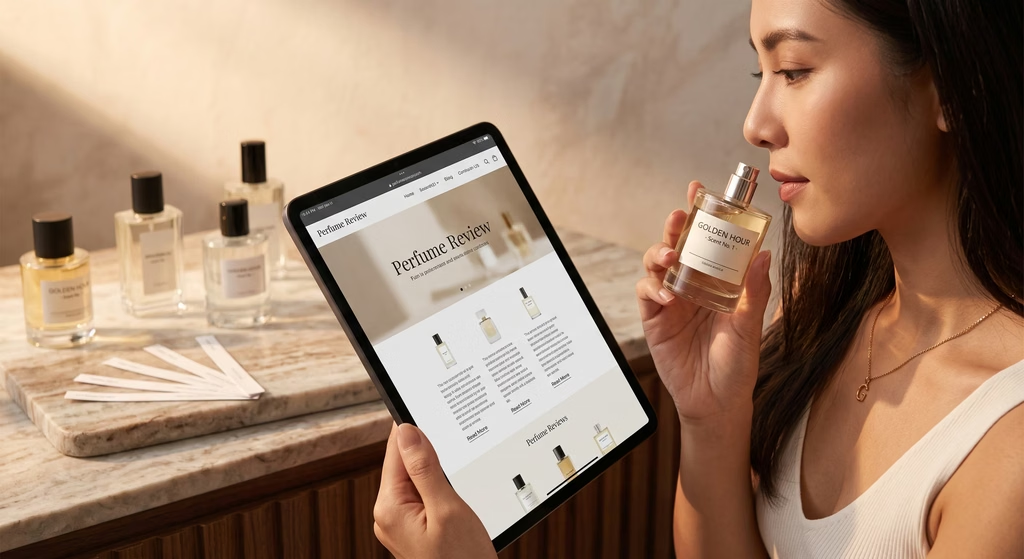
Who is right? Often, both of them are.
Fragrance is deeply subjective and heavily influenced by biology, climate, and personal olfactory memory. To make confident, informed purchasing decisions especially when buying online you need to know how to decode what reviewers are actually saying.
This comprehensive guide will teach you how to evaluate perfume reviews, understand fragrance performance metrics, spot biased recommendations, and ultimately find a scent that perfectly matches your preferences, lifestyle, and skin chemistry.
What Makes a Trustworthy Perfume Review?
A high-quality perfume review evaluates a fragrance across multiple objective and subjective criteria rather than simply stating, “it smells good.”
When evaluating a perfume review, look for content that addresses these five essential pillars:
- Wear Time Context: The reviewer tested the fragrance over several days, not just on a paper blotter at a department store.
- Skin vs. Fabric Testing: The review notes how the scent evolves on the skin compared to how it lingers on clothing.
- Climate and Seasonality: The reviewer mentions the weather or temperature during testing, as heat amplifies fragrance notes while cold mutes them.
- Note Evolution: The review describes the fragrance journey from the initial spray (top notes) to the final hours (base notes).
- Target Audience and Occasion: The reviewer provides context on who might enjoy the scent and where it is best worn, rather than claiming it is universally perfect.
Trustworthy reviewers acknowledge their own biases. If a reviewer explicitly states they dislike heavy floral scents but are reviewing a rose-based perfume, their objective breakdown of its performance is highly valuable, even if they wouldn’t personally wear it.
Decoding Fragrance Notes: The Scent Pyramid Explained
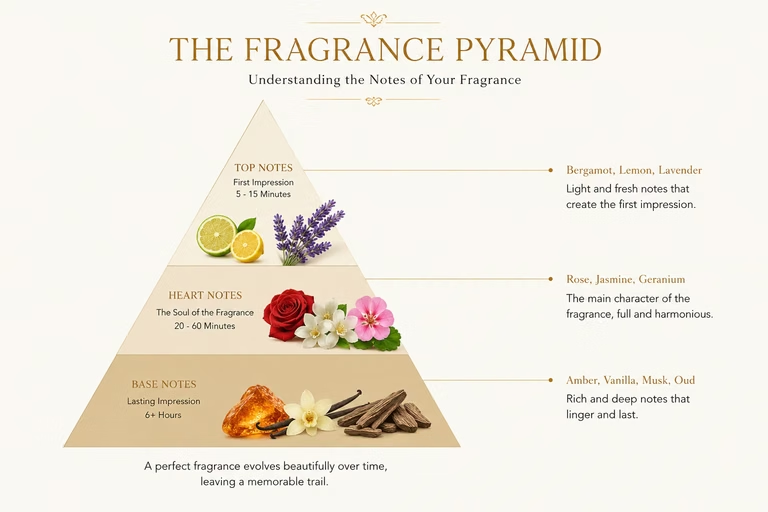
Most perfume reviews rely heavily on the concept of the “fragrance pyramid.” Understanding how notes are structured is critical for reading reviews effectively, as a perfume will not smell the same in hour four as it does in minute one.
Top Notes (The Opening)
Top notes are the initial scents you experience immediately after spraying. They are composed of smaller, lighter molecules that evaporate quickly, typically lasting anywhere from 15 minutes to two hours.
- Common Top Notes: Citrus (bergamot, lemon, grapefruit), light fruits (berries, pear), and fresh herbs (mint, basil).
- Reviewer Translation: When a review describes a fragrance as having a “sharp,” “fresh,” or “bright opening,” they are referring to the top notes. Never buy a perfume based solely on its opening, as this phase is fleeting.
Heart Notes (The Middle)
Also known as middle notes, these emerge just as the top notes begin to dissipate. The heart notes form the core identity of the perfume and usually last for three to five hours.
- Common Heart Notes: Florals (jasmine, rose, ylang-ylang), spices (cinnamon, nutmeg), and heavy fruits.
- Reviewer Translation: If a review mentions the “core” or “body” of the fragrance, they are evaluating the heart notes. This is what you and those close to you will smell for the majority of the day.
Base Notes (The Dry Down)
Base notes are the heavy, large molecules that anchor the fragrance. They appear after the heart notes begin to fade and can last anywhere from six hours to several days on clothing.
- Common Base Notes: Woods (sandalwood, cedar), musk, vanilla, amber, and patchouli.
- Reviewer Translation: When reviewers talk about the “dry down” or “skin scent,” they are discussing the base notes. A review should always tell you whether the dry down is pleasant, as this is the scent that lingers longest explore the different fragrance families.
Perfume Performance Explained: Longevity, Projection, and Sillage
The most common complaints in perfume reviews center around performance. However, performance is broken down into three distinct categories. A fragrance can have massive sillage but poor longevity, or incredible longevity but zero projection.
| Term | Definition | What it Means for You | Ideal For |
| Longevity | How long the fragrance physically remains detectable on your skin or clothing. | Determines whether you need to reapply the scent during the day. | Long office days, events, everyday wear. |
| Projection | How far the scent radiates outward from your body into the air around you. | Determines if people across the room can smell you, or only people in your personal space. | Night out, clubbing, making a statement. |
| Sillage | The scent trail left behind you in the air as you walk past. | Determines the lingering “aura” you leave in a room after moving through it. | Formal events, dates, leaving a lasting impression. |
When reading perfume reviews, pay close attention to these distinctions. An “intimate” fragrance (low projection) is not inherently poorly made; it is likely designed for close encounters or professional office environments where high projection would be inappropriate.
Understanding Fragrance Concentrations
Reviews will often reference the concentration of the fragrance, which directly impacts the performance metrics mentioned above.
- Eau de Cologne (EDC): 2% to 4% perfume oil. Lasts roughly 2 hours. Highly volatile, meant for quick refreshment.
- Eau de Toilette (EDT): 5% to 15% perfume oil. Lasts roughly 3 to 5 hours. Typically focuses more on top and heart notes, pushing further off the skin (higher projection).
- Eau de Parfum (EDP): 15% to 20% perfume oil. Lasts roughly 5 to 8 hours. Heavier, deeper, and sits closer to the skin with a focus on heart and base notes.
- Parfum / Extrait de Parfum: 20% to 30%+ perfume oil. Can last 12+ hours. Very rich, dense, and sits very close to the skin.
If a reviewer complains that an Extrait de Parfum doesn’t project across the room, they are misunderstanding the chemistry of the concentration. High oil concentrations sit closer to the skin, offering high longevity but lower projection compared to EDTs.
How Skin Chemistry Alters Fragrance
If you have ever bought a perfume because it smelled amazing on a friend, only to hate it on yourself, you have experienced the impact of skin chemistry. Perfume reviews are inherently limited because they only reflect how a fragrance interacts with the reviewer’s specific biology.
Several biological factors alter how a perfume smells and performs:
- Skin pH: Variations in your skin’s acidity can alter how certain notes develop. Highly acidic skin can sometimes make sweet notes turn sour or metallic.
- Skin Type (Oily vs. Dry): Sebum (natural skin oil) holds onto fragrance molecules. People with oily skin will generally experience better fragrance longevity and richer note development. People with dry skin often find that perfumes evaporate much faster.
- Diet and Medication: What you consume affects your natural body odor, which acts as the base layer for any perfume you apply.
A high-quality perfume review will often mention the reviewer’s skin type (e.g., “As someone with dry skin, this only lasted four hours on me”). Use this information to benchmark against your own skin type.
Red Flags: How to Spot Fake or Biased Perfume Reviews
The fragrance industry is lucrative, which inevitably leads to biased or financially motivated reviews. Protect your wallet by watching out for these common red flags:
- The “Blind Buy Safe” Claim: No fragrance is 100% safe to buy without smelling it. If a reviewer aggressively pushes a complex, highly divisive scent as a safe blind buy, they may be prioritizing affiliate commissions over honest advice.
- Lack of Negative Critique: Even the greatest fragrances in the world have drawbacks (e.g., too expensive, poor atomizer, not versatile). A review that only lists glowing positives is often a sponsored advertisement in disguise.
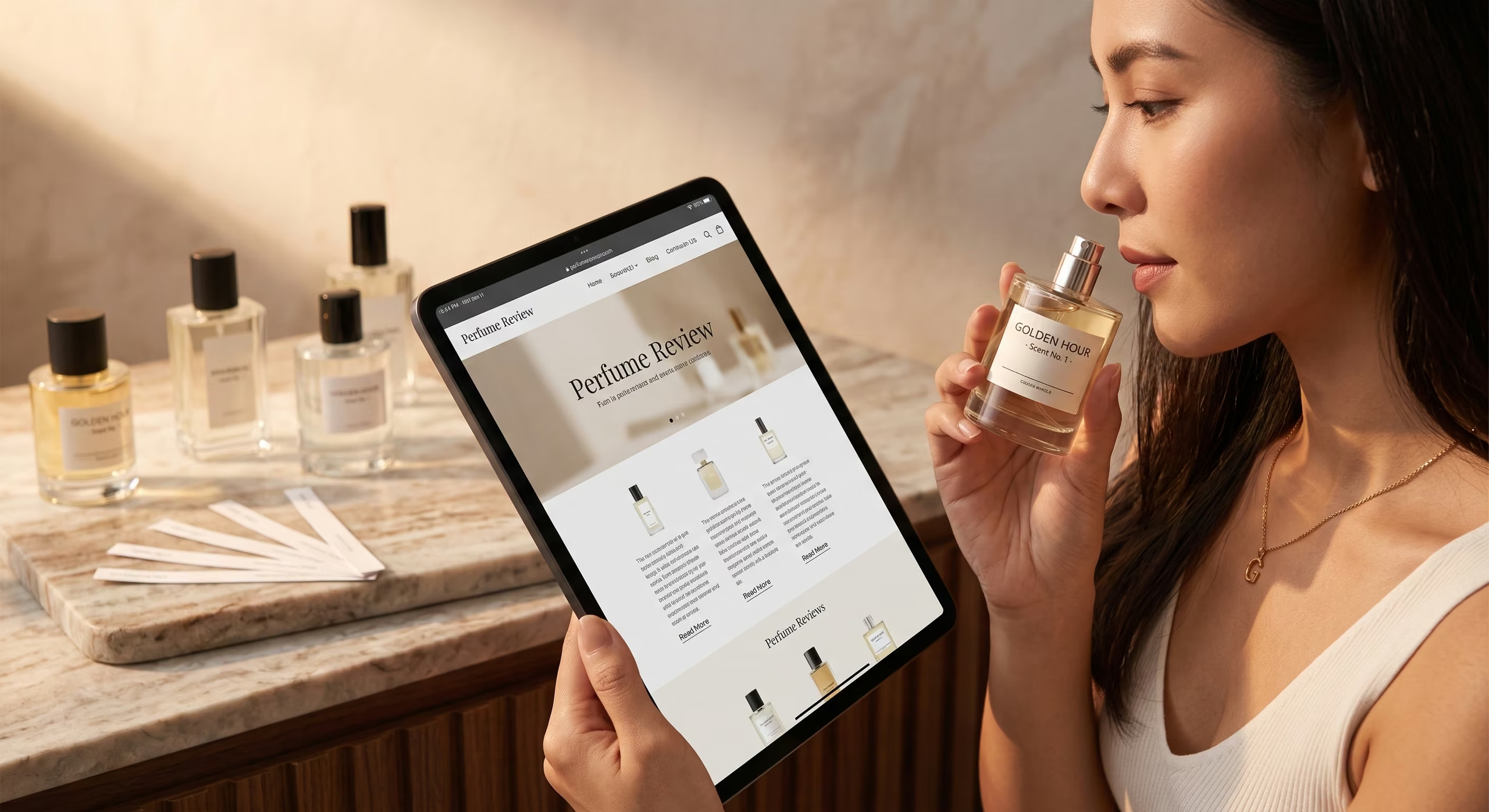
- Reviewing from a Paper Strip: If a video shows a reviewer smelling a fragrance on a paper tester strip and immediately declaring its longevity and dry-down characteristics, the review is invalid. Perfume must be worn on the skin to evaluate performance.
- Overuse of Hype Words: Be wary of reviews that rely entirely on terms like “panty-dropper,” “beast mode,” or “compliment monster” without actually describing the olfactory profile of the scent.
How to Choose a Perfume for Different Occasions
Once you know how to decode reviews, you can use them to build a versatile fragrance wardrobe. Look for reviews that categorize scents by their optimal use cases.
For the Office and Professional Settings:
Search for reviews highlighting terms like “inoffensive,” “clean,” “fresh,” and “moderate projection.” You want a scent that makes you feel put-together without distracting your colleagues. Look for soapy florals, light musks, or fresh citrus woods.
For Date Nights and Evenings:
Look for reviews praising a scent’s “allure,” “warmth,” and “intimacy.” Notes like vanilla, amber, cardamom, and dark fruits excel here. You want moderate projection but excellent sillage.
For Casual Everyday Wear:
Seek out “dumb reach” fragrances—industry slang for a highly versatile perfume you can grab without thinking. Reviews will highlight these as “versatile,” “year-round,” and “uplifting.”
Making Confident Purchasing Decisions
Reading perfume reviews is an art. It requires filtering out the hype, understanding the terminology, and contextualizing a stranger’s experience against your own biology and preferences.
The next time you evaluate a fragrance, don’t just look at the star rating. Dive into the text. Look for details on the dry down, the longevity on skin versus clothing, and the context of the reviewer’s environment. By treating reviews as data points rather than absolute truths, you can confidently navigate the world of perfumery and find scents that truly resonate with who you are.
Explore Golden Hour’s carefully vetted fragrance collections, where we prioritize transparent note breakdowns and clear performance expectations to help you find your next signature scent.
FAQ Section
What makes a good perfume review?
A good perfume review provides context beyond just “it smells good.” It should detail the fragrance notes from opening to dry down, evaluate longevity and projection on the skin, note the climate or season tested in, and suggest the ideal occasions or personality types the scent suits.
How do you know if a perfume is good quality?
High-quality perfumes generally feature a smooth transition between top, heart, and base notes without smelling harsh or synthetic. They also maintain their core identity during the dry-down phase and utilize well-blended oils that interact harmoniously with natural skin chemistry.
What is the difference between longevity, projection, and sillage?
Longevity is how long the perfume lasts on your skin. Projection is how far the scent pushes outward into the air around you. Sillage is the lingering scent trail you leave behind when you walk through a room.
Why does a perfume smell different on me than in the review?
Skin chemistry significantly alters fragrance. Your skin’s pH balance, moisture levels (dry vs. oily skin), natural body odor, and body temperature all interact with the perfume oils, changing how specific notes develop and how long the scent lasts.
Is it safe to blind-buy a perfume based on reviews?
Blind buying (purchasing a fragrance without smelling it first) always carries a risk, regardless of how positive the reviews are. If you must blind buy, look for fragrances widely described as “mass-appealing” or “versatile,” and avoid heavily animalic, overly sweet, or highly smoky profiles.
How long should a good perfume last?
Performance depends on concentration and scent profile. A fresh, citrus-based Eau de Toilette may naturally only last 4 hours, which is normal. A heavy, amber-based Eau de Parfum should ideally last 7 to 10 hours on the skin.