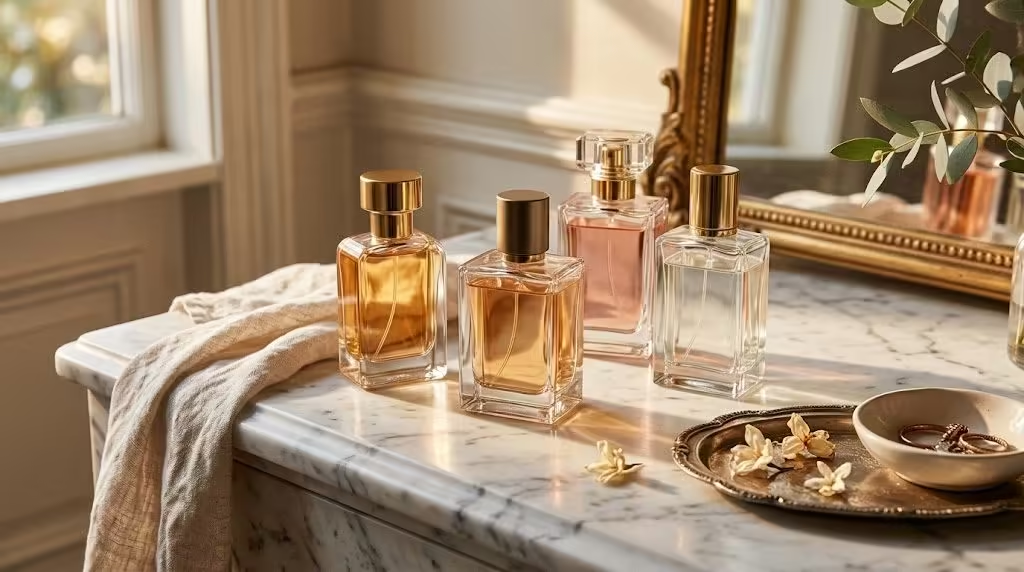
The Ultimate Honest Guide to Long-Lasting Women’s Perfumes
Finding truly long-lasting women’s perfumes is often the biggest challenge for fragrance lovers tired of scents that vanish by lunchtime. You invest in a beautiful bottle, spritz it generously before leaving the house feeling confident, only to realize hours later that the magic is gone. In a beauty market flooded with exaggerated claims and viral social media marketing, finding a scent that genuinely endures requires looking past the hype and understanding the actual science of perfumery.
Quick Answer: The secret to long-lasting women’s perfumes lies in high fragrance oil concentrations (like Eau de Parfum or Extrait) combined with heavy base notes such as woods, resins, and musks. To maximize any perfume’s longevity, apply it directly to well-moisturized skin and target your pulse points without rubbing the liquid in.
If you are just starting to explore the complex world of scent, I highly recommend reading our complete guide to finding and understanding your signature scent to build a solid foundation. Once you know what fragrance profiles and families you actually enjoy, the next crucial step is ensuring your chosen perfume has the molecular stamina to keep up with your daily routine.
The Science Behind Long-Lasting Women’s Perfumes
When searching for long-lasting women’s perfumes, the most common mistake consumers make is relying purely on a brand’s marketing descriptions. Words like “intense,” “absolu,” or “extreme” are often used as emotional marketing tools rather than strict scientific classifications. To truly predict how long a fragrance will last, you need to understand the fundamental building blocks of the juice itself: its concentration, its molecular weight, and how it interacts with human biology.
Fragrance is essentially a delicate, calculated balance of aromatic oils suspended in a solvent, which is typically perfumer’s alcohol. The ratio of these aromatic oils to the solvent directly dictates how the perfume behaves once it leaves the bottle and lands on your skin. However, concentration is only half the battle. The actual physical ingredients used in the formulation play an equally vital role in determining whether a scent will linger into the evening or disappear completely with the morning dew.
The Crucial Role of Fragrance Concentration
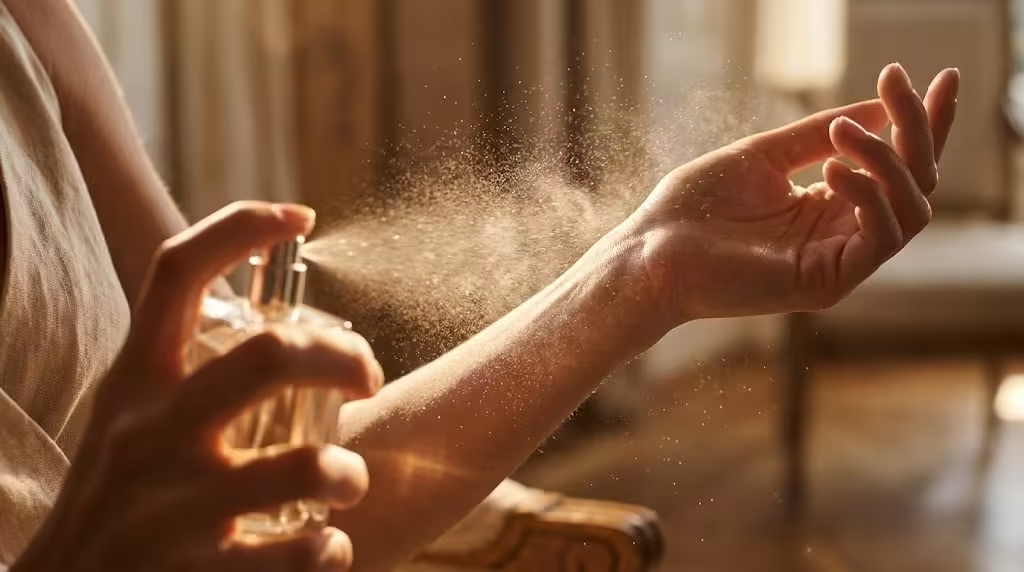
The beauty industry uses specific, standardized terms to categorize the ratio of fragrance oil to alcohol. While there can be slight variations between different designer and niche houses, understanding these core categories is your absolute best defense against buying a fleeting, disappointing scent. If you want a deeper dive into this specific topic, our guide explaining Eau de Parfum vs Eau de Toilette breaks down the subtle nuances perfectly.
- Eau de Cologne (EDC): Contains roughly 2% to 4% fragrance oil. These are designed to be bright, refreshing, and highly volatile. Expect 1 to 2 hours of wear at most.
- Eau de Toilette (EDT): Contains 5% to 15% fragrance oil. EDTs project beautifully initially but typically fade within 3 to 4 hours, making them ideal for short outings or gym sessions.
- Eau de Parfum (EDP): Contains 15% to 20% fragrance oil. This is the sweet spot for long-lasting women’s perfumes, offering a reliable 5 to 8 hours of consistent wear for most people.
- Extrait de Parfum (Pure Perfume): Contains 20% to 40% fragrance oil. These dense mixtures sit very close to the skin but can last 12 to 24 hours, often lingering on clothing for days or even weeks.
Skin Chemistry and Long-Lasting Women’s Perfumes
Have you ever noticed that a perfume lasts all day on your best friend but completely disappears in an hour on your own wrist? This is not a flaw in the perfume’s manufacturing; it is a matter of unique human skin chemistry. Fragrance oils desperately need moisture and lipids (fats) to bind to the skin. If your skin barrier is compromised or naturally dry, it will essentially “drink” the fragrance oils quickly, causing the scent to dissipate rapidly into the air.
Temperature and pH levels also play a massive role in longevity. The natural heat of your body acts as a biological incubator, warming the essential oils and pushing them into the air around you. People with higher resting body temperatures often project fragrance further but burn through the scent much faster. For a detailed look at how to protect the skin barrier that holds your scent, the American Academy of Dermatology offers excellent resources on maintaining healthy skin hydration, which directly impacts fragrance wear.
To further understand this fascinating biological interaction, you can explore our in-depth article on fragrance science and how perfume works on your skin. It explains why your unique acid mantle acts like a fingerprint, subtly altering every perfume you wear.
Key Ingredients Found in Long-Lasting Women’s Perfumes
No matter how high the oil concentration is, a perfume built entirely of sparkling citrus notes will never last 12 hours. The true longevity of a scent is dictated by the physical molecular weight of its ingredients. Light molecules (citruses, herbs, aquatic notes) evaporate in minutes. Medium molecules (florals, spices, soft fruits) last a few hours. Heavy molecules (woods, resins, musks) are the massive anchors that cling to your skin all day long.
To fully grasp how these complex layers interact over time, you can read our detailed breakdown on how to read and understand fragrance notes. Below, we look at the heavy-hitting ingredients that guarantee exceptional, reliable wear time.

Woody and Earthy Anchors
Woods are the absolute backbone of many long-lasting women’s perfumes. Ingredients like creamy sandalwood, sharp cedarwood, and earthy patchouli contain dense, heavy molecules that evaporate incredibly slowly. Oud (agarwood) is particularly famous for its nuclear longevity, often detectable on the skin even after a hot shower. If you see these robust ingredients listed in the base notes of a fragrance pyramid, it is a very strong indicator that the scent has excellent stamina.
Resins, Ambers, and Balsams
Resins like myrrh, frankincense, benzoin, and labdanum have been used for centuries in perfumery to anchor delicate, fleeting floral notes. They provide a rich, warming, and slightly sweet foundation that deepens as it interacts with body heat. These materials act as natural fixatives, slowing down the evaporation process of the entire perfume composition.
Natural vs. Synthetic Notes in Long-Lasting Women’s Perfumes
There is a persistent myth in the beauty community that “all-natural” perfumes last longer and are inherently superior. The honest truth is actually the opposite. While natural absolutes are beautiful and complex, they are often highly volatile and unstable. Many of the longest-lasting perfumes rely on brilliant synthetic molecules designed in a laboratory specifically for their staying power.
Ingredients like Ambroxan (a synthetic alternative to ambergris) and Iso E Super (a velvety, cedar-like molecule) are legendary for their longevity and sillage. Organizations like the International Fragrance Association (IFRA) regulate these synthetics to ensure they are incredibly safe for skin application while providing the 12-hour wear that modern consumers demand.
Comparing Scent Molecules by Longevity
To help you confidently decode perfume descriptions before you buy, here is a quick reference guide to how different notes perform based on their physical molecular structure. You can easily cross-reference this with comprehensive resources like Fragrantica’s ingredient database to research specific perfumes.
| Fragrance Phase | Common Ingredients | Molecular Weight | Expected Lifespan |
|---|---|---|---|
| Top Notes | Bergamot, Lemon, Mint, Pink Pepper, Grapefruit | Light & Volatile | 10 to 30 minutes |
| Heart (Middle) Notes | Rose, Jasmine, Lavender, Cinnamon, Ylang-Ylang | Medium | 2 to 4 hours |
| Base Notes | Vanilla, Amber, Sandalwood, Musk, Patchouli | Heavy & Dense | 6 to 24+ hours |
How to Choose Long-Lasting Women’s Perfumes for Your Lifestyle
Finding a scent that lasts forever is wonderful, but it also needs to fit seamlessly into your daily life. A heavy, room-filling oud and rose combination might last 24 hours, but it is likely inappropriate for a closed-plan office or a casual Sunday brunch. Selecting the right enduring fragrance means perfectly matching the projection (sillage) and scent profile to your specific environment.
Office-Friendly Scents That Endure
Workplace fragrances need to walk a very fine line: they must last through a grueling eight-hour shift without choking your colleagues in a small meeting room. For this environment, look for long-lasting women’s perfumes centered around clean white musks, soft powdery iris, or gentle sheer cedar. These specific ingredients stick close to the skin, creating an intimate, professional scent bubble that endures quietly. We have curated a dedicated list of the best office perfumes for women that perfectly balance high longevity with impeccable professional etiquette.
Evening and Date Night Fragrances
When the sun goes down and you step out, you can afford to wear bolder fragrances with heavier sillage (the scent trail a perfume leaves behind as you walk). For evenings out, you want unapologetic scents anchored by rich vanilla, roasted tonka bean, dense amber, or dark mysterious patchouli. These notes not only last through dinner, dancing, and drinks, but they also evolve beautifully on the skin as they warm up. If you are looking for something specifically romantic, check out our guide to finding your perfect date night perfume.
Seasonal Considerations for Longevity
The weather and ambient humidity dramatically impact how a perfume performs on your skin. In the height of a humid summer, heavy vanilla and resin scents can become cloying, sticky, and completely overwhelming. Conversely, bright, light citrus scents will practically vanish in freezing, dry winter temperatures. Adjusting your fragrance wardrobe seasonally ensures you always get the absolute best performance out of your collection without suffocating yourself or those around you.
Application Tips for Long-Lasting Women’s Perfumes
Even the most potent, masterfully blended long-lasting women’s perfumes can underperform if they are applied incorrectly. The way you prepare your skin and spray your fragrance dictates exactly how the scent molecules bind, heat up, and evaporate. By tweaking your daily routine just a little bit, you can easily double the lifespan of your favorite luxury perfumes.
Strategic Pulse Point Application
You have likely heard the age-old advice that you should spray perfume on your pulse points—the wrists, the neck, the inner elbows, and behind the ears. This advice is firmly rooted in human physiology. These specific areas emit more body heat because the major blood vessels sit closer to the surface of the skin, acting as natural, gentle diffusers for the fragrance.
However, a crucial and unbreakable rule of perfumery is to never rub your wrists together after spraying. The friction creates rapid, unnatural heat that essentially burns off the delicate top notes and forcefully breaks down the molecular structure of the perfume. This fast-tracks the dry-down process and drastically reduces your overall wear time.
The Art of Hydration and Fragrance Layering
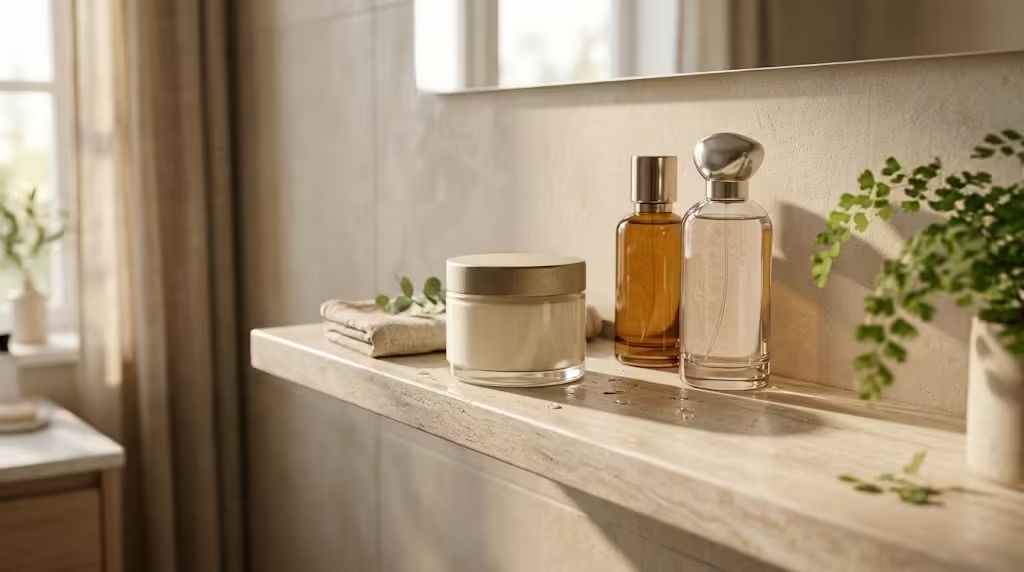
The single most effective, proven way to make any perfume last longer is to build a rich scent foundation using quality body care products. As we established, fragrance oils desperately need moisture to hold onto. Applying an unscented, rich body cream, or a luxury lotion that shares complementary notes with your perfume, creates a hydrated, slightly occlusive canvas that literally locks the fragrance in place.
For the absolute best results, apply your perfume immediately after stepping out of the warm shower and applying your moisturizer. At this moment, your pores are still open and your skin is warm, allowing the scent to melt in. If you struggle with chronic dry skin, our ultimate guide to the best body lotions for lasting hydration will help you prep your skin perfectly for daily fragrance application.
Spraying on Clothes and Hair
If your unique skin chemistry simply devours perfume no matter what you do, it is time to redirect your application strategy. Fabric and hair hold onto scent molecules far longer than human skin because they do not heat up or metabolize the oils in the same biological way. A light, airy spritz on your favorite scarf, a wool sweater, or the nape of your neck (sprayed over your hair) can ensure you smell your beautiful fragrance all day long.
You must be cautious, however, as dark or highly concentrated perfume oils (like rich ambers) can stain light-colored silks or cottons, and the high alcohol content in perfume can be drying to your hair ends. Always spray from a distance of at least six to eight inches to create a fine, even mist rather than a concentrated, damaging puddle.
The Concept of Perfume Maceration
Sometimes, you purchase a brand-new bottle of a perfume you know is famous for its longevity, but it seems weak straight out of the box. Do not panic—your perfume might just need to macerate. Maceration is the process of letting oxygen mix with the fragrance oils and alcohol, allowing the ingredients to mature, deepen, and bond properly.
If a new bottle seems weak, spray it five to ten times to introduce some air into the tube and the bottle, then put it away in a cool, dark drawer for a month. You will often find that when you return to it, the fragrance has thickened, the base notes have blossomed, and the longevity has vastly improved.
Key Takeaways for Fragrance Lovers
Finding a beautiful fragrance that genuinely stays with you from your morning coffee all the way to your evening commute does not have to be an expensive guessing game. Keep these core principles in mind when shopping and applying:
- Check the exact concentration: Always opt for Eau de Parfum (EDP) or Extrait de Parfum for the highest, most reliable percentage of fragrance oils.
- Look for heavy base notes: Woods, synthetic musks, ambers, and resins have heavy molecular weights that literally take hours to evaporate.
- Deep hydration is mandatory: Perfume vanishes rapidly on dry skin. Always apply a rich, unscented lotion or body oil immediately before spraying your fragrance.
- Do not rub: Let the perfume dry completely naturally on your pulse points to preserve the delicate top notes and structure.
- Utilize your wardrobe: Spraying your clothes (carefully from a distance) is a foolproof, time-tested way to extend the life of lighter, fresher fragrances.
Continue Your Fragrance Journey With Us
Understanding the actual science and mechanics of long-lasting women’s perfumes gives you the ultimate power to shop smarter, avoiding expensive disappointments at the fragrance counter. At Golden Hour, we deeply believe that choosing a fragrance should be an intimate, joyful, and highly personal experience, entirely free from retail pressure and misleading social media marketing.
Take your time, always test perfumes directly on your own skin rather than just relying on paper blotter strips, and let the complex scent evolve over a full eight-hour day before making your final purchasing decision.
If you are ready to explore more honest, hype-free beauty advice, browse our extensive library of fragrance reviews and guides. Whether you are searching for a breezy, uplifting summer staple or a cozy, enduring winter signature, we are here to help you navigate the beautiful world of scent with absolute confidence.
Frequently Asked Questions
Why does my perfume fade so quickly on me?
Your perfume likely fades quickly due to dry skin or your unique body chemistry. Fragrance oils require a moisturized, lipid-rich surface to cling to; otherwise, your skin simply absorbs them. Applying a thick, unscented body lotion before spraying can dramatically improve the longevity of your scent.
Is Eau de Parfum always better than Eau de Toilette?
Not necessarily. While Eau de Parfum contains a higher concentration of oils and generally lasts much longer, Eau de Toilette projects more intensely in the first hour due to a higher alcohol content. EDTs are often better suited for hot summer days, while EDPs excel in cooler weather.
Can a perfume expire and lose its longevity?
Yes, perfumes can definitely degrade over time, which negatively affects both their scent profile and their longevity. Exposure to direct sunlight, heat, and humidity breaks down the delicate chemical bonds. To preserve your perfume, store it in a cool, dark place like a bedroom drawer.
Do expensive designer perfumes last longer than affordable ones?
A high price tag does not automatically guarantee longevity. While luxury brands often use high-quality extracts, longevity is determined by the molecular weight of the ingredients (like woods and musks). Many affordable fragrances formulated with heavy base notes will easily outlast expensive, light citrus perfumes.
How many sprays of perfume should I actually apply?
For a standard Eau de Parfum, two to four sprays are usually perfectly sufficient. Apply one to each wrist and one to the neck or chest. Over-spraying does not necessarily make the scent last longer; it usually just makes the initial projection overwhelmingly strong, causing olfactory fatigue.
What is olfactory fatigue or “nose blindness”?
Olfactory fatigue happens when your brain stops registering a scent you are constantly exposed to in order to prevent sensory overload. You might think your perfume has faded, but others can still smell it. To test this, spray your perfume on a shirt, leave the room, and smell it hours later.
Does applying Vaseline really make perfume last longer?
Yes, applying a thin layer of Vaseline (petroleum jelly) or a similar occlusive ointment to your pulse points before spraying works exceptionally well. The ointment acts as a moisturizing barrier that catches the fragrance oils, preventing your skin from absorbing them and extending the wear time significantly.
Are synthetic perfumes safer and longer-lasting than natural ones?
Often, yes. Synthetic fragrance molecules like Ambroxan are explicitly engineered for massive longevity and stability. Furthermore, heavily regulated synthetic ingredients are frequently much safer and less allergenic for sensitive skin than complex, highly reactive natural essential oils like raw oakmoss or citrus peel extracts.