The Ultimate Guide to Women’s Fragrance How to Find, Wear, and Understand Your Signature Scent
Navigating the world of women’s fragrance often feels like learning a new language. Between the French terminology, complex scent pyramids, and endless arrays of beautiful bottles, finding a fragrance that genuinely matches your personality and lifestyle can be overwhelming. The beauty industry frequently relies on abstract descriptions promising a scent will make you feel “luminous” or “mysterious” without explaining the actual mechanics of how the perfume is built or how it will react with your skin.
A great fragrance is an invisible accessory, a mood enhancer, and a powerful memory trigger. Whether you are building a fragrance wardrobe for different seasons or hunting for a single signature scent, understanding the fundamentals of perfumery is the key to making informed, confident choices.
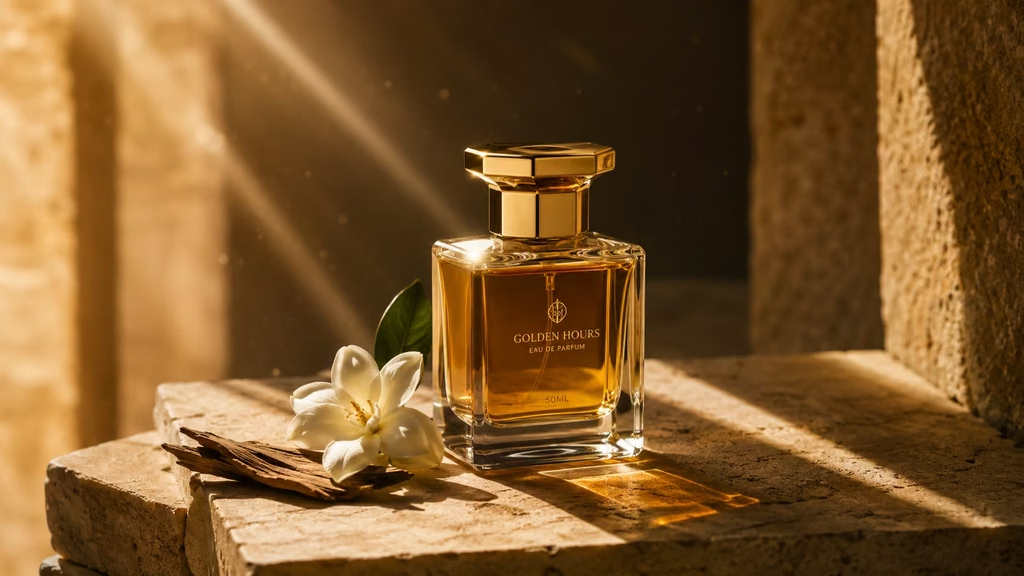
This comprehensive guide strips away the marketing jargon to explain exactly how women’s fragrance works, how to choose the right concentration, and the practical steps to ensure your scent lasts all day.
What Are Fragrance Notes? The Anatomy of a Scent
Fragrances are not flat; they are three-dimensional compositions designed to evolve over time. This evolution is driven by the volatility of the ingredients how quickly they evaporate upon contact with the heat of your skin. Perfumers construct this journey using a three-tiered structure known as the olfactory pyramid, which consists of top, heart, and base notes.
Top Notes (The Introduction)
Top notes are the initial scents you experience immediately after spraying a perfume. They consist of small, light molecules that evaporate quickly, usually lasting between 5 and 15 minutes. Their primary purpose is to provide the initial burst of fragrance and form your first impression. Common top notes include bright, refreshing citrus (bergamot, lemon, grapefruit), light fruits (berries, pear), and fresh herbs (basil, sage).
Heart Notes (The Core)
As the top notes fade, the heart (or middle) notes emerge. Making up roughly 40% to 80% of the total fragrance, these notes act as the core identity of the perfume. Heart notes are generally more mellow and rounded, lasting anywhere from 20 minutes to a full hour. This layer typically features prominent florals (rose, jasmine, ylang-ylang), spices (cinnamon, nutmeg), or heavier fruit accords.
Base Notes (The Foundation)
Base notes are the heavy, large molecules that anchor the fragrance and provide its lasting power. These notes mingle with the heart notes to create the perfume’s full body and can linger on the skin for hours, or even days on clothing. The base is what you smell at the end of the day during the fragrance’s “dry down.” Traditional base notes include woods (sandalwood, cedar), musk, amber, vanilla, and patchouli.
(Explore Golden Hour’s collection by note profile to find your preferred scent structure.)
Exploring the Fragrance Families
To easily categorize scents, the fragrance industry uses a classification system known as the Fragrance notes Wheel, developed by Michael Edwards in 1992. Understanding which family you gravitate toward is the fastest way to narrow down your choices when shopping for a new women’s fragrance.
- Floral: The most popular and broadest family. Florals can range from light, dewy single-note scents (soliflores) to complex, heady bouquets. Sub-categories include soft florals (powdery) and floral orientals (spicy).
- Amber / Oriental: Rich, warm, and sensual. These fragrances rely heavily on spices, resins, vanilla, and exotic woods. They are typically heavier, making them ideal for evening wear and cooler months.
- Woody: Earthy, deep, and grounded. Once reserved primarily for men’s cologne, woody notes like sandalwood, cedar, and vetiver are now incredibly popular in women’s niche perfumery for their sophistication and depth.
- Fresh: Crisp, clean, and uplifting. This family encompasses citrus, green (crushed leaves, fresh-cut grass), and aquatic (oceanic, marine) notes. They are highly versatile and perfect for daytime and office environments.
Eau de Parfum vs. Eau de Toilette: Understanding Concentrations
One of the most common questions in perfumery is the difference between terms like Eau de Parfum and Eau de Toilette. These titles refer strictly to the concentration of fragrance notes oil suspended in alcohol and water. The higher the oil concentration, the longer the scent typically lasts on the skin.
| Concentration | Fragrance Oil % | Estimated Longevity | Best Use Case |
| Parfum / Extrait | 20% – 40% | 8 to 12+ hours | Evening events, signature luxury wear |
| Eau de Parfum (EDP) | 15% – 20% | 5 to 8 hours | Everyday wear, long workdays |
| Eau de Toilette (EDT) | 5% – 15% | 3 to 5 hours | Warm weather, office settings |
| Eau de Cologne (EDC) | 2% – 5% | 1 to 3 hours | Post-shower refresh, gym wear |
| Eau Fraîche | 1% – 3% | 1 to 2 hours | Quick refreshment, highly sensitive skin |
When investing in a fragrance, consider your lifestyle. An Eau de Parfum offers excellent value and longevity for daily wear, while an Eau de Toilette is ideal if you prefer a more subtle scent bubble.
The Science of Scent: How Skin Chemistry Alters Perfume
Have you ever smelled a beautiful perfume on a friend, bought the exact same bottle, and found it smelled entirely different on you? This is not a defect in the product; it is human biology.
Fragrance requires heat to evaporate, and your unique skin chemistry directly impacts how a scent profile develops. Several biological factors influence this:
- Skin Type (Sebum Levels): Oily skin retains fragrance much better than dry skin. The natural oils trap the fragrance molecules, slowing down evaporation and often amplifying sweeter or heavier notes. Dry skin allows the alcohol to evaporate rapidly, which can make the scent dissipate quickly.
- pH Levels: The natural acidity of your skin can alter the balance of a fragrance, sometimes making certain floral or citrus notes smell sharper or flatter.
- Diet and Body Temperature: Spicy diets can subtly change the natural odor of your skin, which in turn mixes with the perfume. Additionally, people with a naturally warmer baseline body temperature will burn through top notes much faster than those who run cool.
Expert Tips: How to Make Perfume Last Longer
If your fragrance notes fades by lunchtime, your application method might be the culprit. Follow these industry-standard techniques to maximize your perfume’s longevity and performance.
- Moisturize First: Fragrance binds to oils, not dry skin. Apply an unscented body lotion or a matching perfumed body cream immediately after showering, then spray your fragrance notes over the hydrated skin.
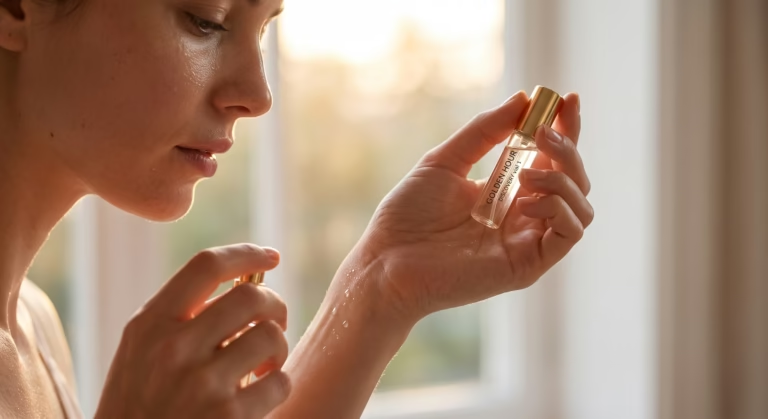
- Target Pulse Points: Apply perfume to areas where blood vessels sit closest to the skin’s surface. The natural heat from these pulse points—the inner wrists, the base of the neck, behind the earlobes, and the inner elbows—helps project the scent outward.
- Do Not Rub Your Wrists: Friction generates heat, which accelerates the evaporation process and crushes the delicate top notes of the fragrance. Simply spray and let the liquid air dry naturally.
- Spray on Hair or Clothing: If your skin rapidly absorbs fragrance, lightly misting your clothing or hair (from a distance to avoid alcohol damage) can significantly extend longevity. Note: Always test on a hidden area of fabric first to prevent oil stains.
- Store Properly: Heat, humidity, and direct sunlight break down fragrance molecules, causing the perfume to spoil. Keep your bottles in a cool, dark place like a bedroom drawer or closet rather than the bathroom.
Common Fragrance Buying Mistakes
Shopping for a new women’s fragrance notes should be a deliberate process. Avoid these common pitfalls to ensure you invest in a scent you will actually wear.
Blind Buying Based on Trends: A perfume going viral on social media does not guarantee it will suit your personal style or skin chemistry. Always sample first.
Testing Too Many Scents at Once: The human nose experiences olfactory fatigue (nose blindness) after smelling three to four distinct fragrances. If you are testing in-store, smell coffee beans or fresh air between samples to reset your palate.
Judging by the Blotter: A paper tester strip is excellent for getting a general idea of a fragrance, but it lacks the heat and oils of human skin. A perfume will always smell flatter on paper. Once you find a scent you like on a blotter, you must test it on your skin and wait at least 30 minutes to experience the heart and base notes before purchasing.
Finding Your Signature With Golden Hour
Discovering the perfect women’s fragrance is a deeply personal journey of trial, error, and exploration. Whether you lean towards the crisp elegance of a citrus Eau de Toilette or the commanding presence of an amber Eau de Parfum, understanding the mechanics of fragrance empowers you to buy with confidence.
Start by identifying your favourite fragrance notes families, testing scents on your actual skin, and paying attention to how the notes evolve throughout the day.
Ready to find your next favorite scent? Explore our curated collection of women’s fragrances or start with our discovery sample setto experience how our crafted profiles interact with your unique skin chemistry.
FAQ Section
What is women’s fragrance?
Women’s fragrance is a blend of aromatic essential oils, synthetic compounds, fixatives, and solvents designed to impart a pleasant scent to the body. While traditionally marketed with floral or sweet profiles, modern women’s fragrances encompass a wide spectrum of scent families, including woody, fresh, and amber notes.
What is the difference between Eau de Parfum and Eau de Toilette?
The main difference is the concentration of perfume oil. Eau de Parfum (EDP) contains 15% to 20% fragrance oil and typically lasts 5 to 8 hours. Eau de Toilette (EDT) contains 5% to 15% fragrance oil, resulting in a lighter scent that lasts around 3 to 5 hours.
How do fragrance notes work?
Fragrance notes are the individual scent layers that make up a perfume, categorized by how quickly they evaporate. Top notes are smelled immediately and fade quickly; heart notes form the core identity of the scent; and base notes are the heavy, lingering scents that anchor the fragrance on your skin.
How can I make my perfume last longer?
To make perfume last longer, apply it to well-moisturized skin immediately after showering. Target heat-generating pulse points like the wrists and neck, avoid rubbing your wrists together, and consider lightly misting your hair or clothing.
Why does perfume smell different on me than on a tester paper?
Perfume requires body heat to evaporate and develop fully. Additionally, your unique skin chemistry—including your natural pH levels, sebum (oil) production, and body temperature—mixes with the fragrance, altering how the notes project and dry down compared to inanimate tester paper.
How should women apply perfume?
Women should apply perfume by spraying directly onto pulse points (wrists, neck, inner elbows) from about 3 to 6 inches away. Let the liquid dry naturally without rubbing to preserve the delicate top notes of the fragrance pyramid.