The Ultimate Guide to Honest Perfume Ratings: How to Truly Evaluate a Fragrance Without the Hype
Navigating the world of honest perfume ratings can feel completely impossible when every new launch claims to be a compliment-pulling masterpiece. Between viral social media hype, sponsored influencer content, and confusing brand descriptions, finding a reliable assessment of a fragrance has never been more difficult. We are here to change that by breaking down exactly how a scent should be evaluated from the first spray to the final fading whisper.
Quick answer: Honest perfume ratings require evaluating a fragrance through nine specific stages: the overall scent profile, opening notes, heart notes, the final dry-down, longevity on the skin, projection (sillage), situational occasion, true value for money, and an objective final verdict. By testing each phase independently, you bypass marketing hype and discover how a perfume genuinely performs in real life.
Why the Beauty World Desperately Needs Honest Perfume Ratings
The modern fragrance industry is built on emotion and aspiration, which makes objective reviewing incredibly difficult. When you walk into a department store, you are immediately overwhelmed by beautiful bottles, persuasive sales associates, and an environment saturated with conflicting aromas. Online, the situation is even more chaotic, with short-form videos heavily pushing the idea of “beast mode” performance or blind-buying based solely on aesthetic packaging.
To truly understand what you are buying, you need to learn how to read and evaluate perfume reviews like a pro. At Golden Hour, we refuse to deal in exaggerated claims or recycled brand press releases. Instead, we use a strict, chronological testing framework that mimics exactly how you will experience the fragrance in your daily life.
This comprehensive methodology ensures our reviews remain grounded in reality. We do not test fragrances on paper strips for five minutes and write a review; we wear them on skin, through different temperatures, and in real-world scenarios. Here is the exact framework we use to generate honest perfume ratings, and how you can apply it to your own fragrance shopping journey.
The Golden Hour Framework: Step-by-Step Evaluation
1. The Overall Scent Profile: The Core Identity
Before we break a fragrance down into its microscopic components, we must first look at its macro identity. The scent profile is the elevator pitch of the perfume. Is it a jammy rose, a smoky leather, a fresh aquatic, or a gourmand vanilla? Establishing this immediately grounds the reader and sets expectations.
Honest perfume ratings must clearly identify the fragrance family because this dictates how the perfume is traditionally supposed to behave. For instance, expecting a light, citrus-based cologne to perform like a heavy, resinous amber fragrance is a fundamental misunderstanding of perfumery. By establishing the core identity upfront, we judge the perfume against its peers, rather than an impossible universal standard.
If you want to understand these categories deeper, our guide on how fragrance notes are explained will help you identify which scent profiles naturally resonate with your personal taste and body chemistry.
2. The Opening: The First 15 Minutes
The opening of a fragrance is the most deceptive part of the entire perfume experience. Top notes are designed to be highly volatile, meaning they evaporate quickly. Brands intentionally load the opening with bright, captivating notes like bergamot, pink pepper, or sweet fruits to secure a quick sale at the perfume counter.
When creating honest perfume ratings, we actively warn readers not to buy a fragrance based solely on its opening. The initial blast often contains a sharp burst of alcohol, which needs at least thirty seconds to settle before you press your nose to your skin. We evaluate the opening based on its smoothness—is it harsh and synthetic, or well-blended and inviting?
A high-quality opening should gently introduce the theme of the fragrance without screeching. However, no matter how much you love those first five minutes, you must remember that they will disappear. The true character of the perfume is yet to reveal itself.
3. The Heart: The Core of the Fragrance
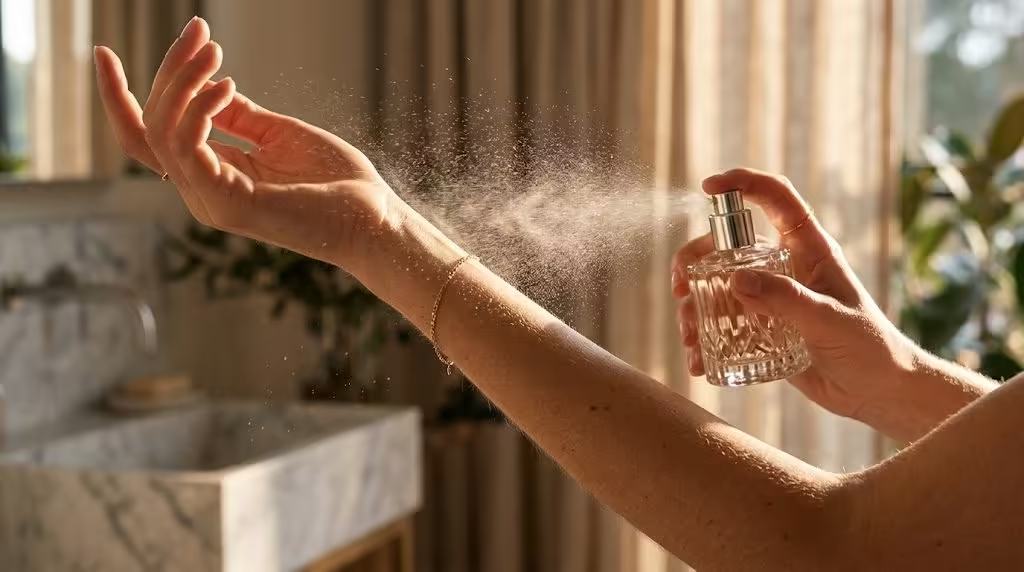
Once the volatile top notes burn off—usually between fifteen and thirty minutes into the wear—the heart notes take center stage. Also known as middle notes, this phase represents the true narrative of the perfume. It is what you and those around you will smell for the majority of the perfume’s lifespan.
Heart notes typically consist of heavier florals, spices, and herbaceous elements. In honest perfume ratings, this is where we evaluate the perfumer’s blending skills. Do the spices overpower the florals? Does a promised jasmine note smell authentically indolic, or does it smell like synthetic plastic?
We pay close attention to the transition from the opening to the heart. A well-constructed fragrance will morph seamlessly, offering a beautiful olfactory journey. Poorly formulated, cheap fragrances often fall apart here, losing their initial charm and turning muddy or generic on the skin.
4. The Dry-Down: Skin Chemistry and Base Notes
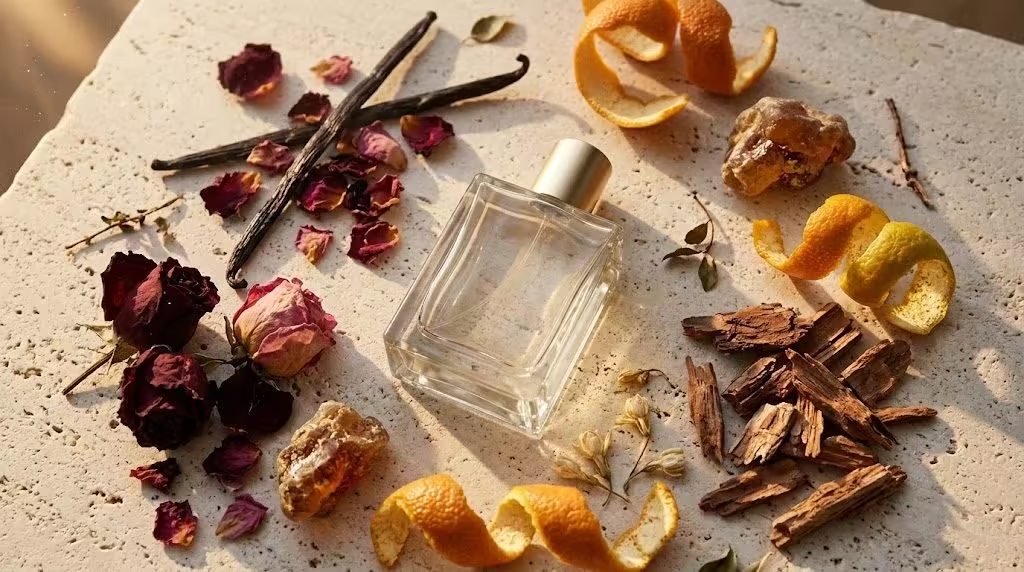
The dry-down is the ultimate test of a perfume’s quality and the most critical phase in honest perfume ratings. Occurring anywhere from two to four hours after application, the dry-down is dominated by base notes like woods, musks, amber, vanilla, and resins. These are the large, heavy molecules that anchor the fragrance to your skin.
This phase is entirely dependent on your unique skin chemistry. The natural oils, pH levels, and even the temperature of your skin will interact with the base notes to create a bespoke scent. What smells like rich sandalwood on one person might turn unpleasantly sour on another. This is why testing on a paper blotter in a store is practically useless for long-term evaluation.
When reviewing the dry-down, we look for richness, comfort, and stability. Does the fragrance retain its intended character, or does it collapse into a generic, screechy “white musk” base that smells like cheap laundry detergent? The dry-down is what you will be left with at the end of a long day, so it must be evaluated rigorously.
Measuring Performance: How It Actually Wears
5. Longevity: The Reality of Lasting Power
Longevity is the most fiercely debated topic in the fragrance community, and it is where honest perfume ratings are most needed. Consumers have been conditioned to believe that every perfume should last 12 to 24 hours. In reality, longevity is dictated by the volatility of the ingredients used and the regulations surrounding them, such as those set by the International Fragrance Association (IFRA).
Citrus and fresh notes are biologically incapable of lasting all day without the aid of heavy synthetic fixatives. Conversely, heavy ambers and ouds naturally linger for hours. We rate longevity on a realistic scale: anything over 8 hours is exceptional, 5 to 7 hours is standard and perfectly acceptable for everyday wear, and anything under 4 hours requires reapplication.
It is also crucial to account for olfactory fatigue, commonly known as nose blindness. Often, people believe a perfume has disappeared when, in fact, their brain has just tuned out the scent to prevent sensory overload. We test longevity by asking others if they can still detect the scent hours later.

6. Projection and Sillage: Your Fragrance Trail
Projection refers to how far the scent pushes off your skin, while sillage (pronounced see-yahj) is the invisible trail you leave behind as you walk through a room. Honest perfume ratings must clearly distinguish between a scent that sits intimately close to the skin and one that announces your arrival before you enter a room.
More projection does not automatically equal a better perfume. In fact, a “beast mode” fragrance can be entirely inappropriate for tight office spaces, hospitals, or long flights. We evaluate projection based on its intention. If it is a cozy, intimate skin scent, we rate it highly if it achieves that beautifully.
To fully master this concept and understand how to control your personal scent cloud, read our ultimate guide to perfume longevity and projection. Controlling your sillage is the mark of a truly elegant fragrance wearer.
Context and Practical Wearability
7. Occasion: When and Where to Wear It
A fragrance can be an absolute masterpiece of perfumery and still be entirely unwearable for your daily lifestyle. Context is everything. When writing honest perfume ratings, we dedicate a specific section to the occasions the scent suits best. Is it an everyday office staple, a cozy weekend sweater scent, or a heavy, seductive evening fragrance?
Seasonality also plays a massive role. High heat causes fragrance molecules to evaporate faster, making heavy, sweet scents cloying and suffocating in the summer. Cold winter air suppresses fragrance, meaning those delicate citrus summer scents will completely disappear in December.
By defining the ideal season and occasion, we help you avoid expensive mistakes. A decadent, heavy oud might score perfectly in our ratings, but if you work as a nurse in a hot climate, it is simply not a practical purchase for you.
8. Value for Money: Beyond the Price Tag
Value is highly subjective, but in honest perfume ratings, it must be addressed directly. A $300 perfume is not inherently better than a $30 perfume. We assess value by looking at the cost per milliliter, the quality of the raw ingredients, the uniqueness of the composition, and the physical presentation of the bottle.
Is the brand charging a massive premium simply for their designer name? Are the ingredients genuinely high quality, or is it a cheap synthetic blend housed in heavy glass? To help you navigate this, our deep dive into designer perfume reviews breaks down exactly when you are paying for quality versus when you are just paying for a logo.
Below is a quick reference table showing how we generally evaluate the true value of a fragrance based on several key metrics.
| Price Tier | Expected Longevity | Ingredient Quality | Packaging & Presentation | Overall Value Verdict |
|---|---|---|---|---|
| Drugstore / Fast Fashion ($20 – $50) | 2 – 4 Hours | Mostly Synthetic | Basic Glass, Plastic Caps | Great for quick, trendy wear. High value for beginners. |
| Designer / Mid-Tier ($80 – $150) | 5 – 8 Hours | Mixed Natural & Synthetic | Solid Glass, Branded Caps | The sweet spot. Best balance of performance and price. |
| Niche / Luxury ($200 – $400+) | 8+ Hours | High-Yield Naturals, Rare Synthetics | Heavy Flacons, Magnetic Caps, Artistry | Low pure value, high artistic value. For serious collectors. |
The Final Assessment and Red Flags
9. The Verdict: Putting It All Together
The final section of any honest perfume rating is the verdict. This is where we synthesize the scent profile, the performance, the wearability, and the value into a single, cohesive recommendation. We do not use arbitrary number scores out of ten, as a “7/10” means very little without context.
Instead, our verdicts focus on the target audience. We explicitly state: “Buy this if you love X, Y, and Z. Avoid this if you dislike A and B.” We also suggest similar alternatives at different price points, allowing you to find the exact scent profile you want within your specific budget.
A true verdict acknowledges that perfume is deeply personal. Our job is not to tell you what smells “good”—because that is entirely subjective—but to tell you exactly how the product performs so you can make an empowered, educated decision.
Decoding Fragrance Hype: Red Flags in Online Ratings
As you read reviews across the internet, you must protect yourself from the massive influx of sponsored content and affiliate-driven hype. The internet is flooded with exaggerated claims that simply do not align with the reality of chemistry and perfumery.
Always be wary of reviews that promise a fragrance will universally attract compliments. Compliments have more to do with your personal confidence, your grooming routine, and cultural norms than the liquid in the bottle. Furthermore, be skeptical of creators who claim every single new release is a “must-have masterpiece.” If you want to dive deeper into these falsehoods, our guide on perfume myths debunked will completely change how you view fragrance marketing.
Honest perfume ratings will always highlight the flaws of a fragrance. If a review does not mention at least one negative aspect—such as a harsh opening, a generic dry-down, or an exorbitant price tag—it is likely a piece of marketing masquerading as a review. You can cross-reference notes and community consensus on independent databases like Fragrantica, but remember that even crowd-sourced reviews can fall victim to herd mentality.
Key Takeaways for Evaluating Scents
Mastering the art of understanding honest perfume ratings will save you hundreds of dollars and protect you from buyer’s remorse. Keep these essential principles in mind the next time you are researching a new signature scent:
- Never trust the opening: The first 15 minutes are designed to sell the perfume. Always wait for the heart and dry-down before judging.
- Skin chemistry is king: Paper blotters lie. A perfume must be worn on your actual skin to evaluate its true base notes and longevity.
- Longevity has biological limits: Fresh, citrus scents naturally evaporate faster than heavy woods and resins. Adjust your expectations based on the fragrance family.
- Context matters: Consider exactly where and when you will wear the fragrance before investing in a full bottle.
- Ignore the “beast mode” hype: A beautiful, intimate skin scent is often much more elegant and wearable than a perfume that fills a room and suffocates bystanders.
If you are ready to put this knowledge into practice and start building a fragrance wardrobe you genuinely love, we invite you to explore our comprehensive library at Golden Hour. Start by reading our detailed breakdowns of the best seasonal scents, or dive into our beginner-friendly guides on building a complete beauty and grooming routine.
Frequently Asked Questions
Why do perfumes smell different on me than on paper?
Perfumes smell different on skin because of your unique body chemistry, body heat, and natural oils. Paper strips are sterile and cold, which prevents the fragrance from developing properly. Your skin’s pH level and temperature activate the base notes, revealing the true, final scent of the perfume.
How long should a good quality perfume last?
A good quality Eau de Parfum should generally last between five to eight hours on the skin. However, longevity heavily depends on the ingredients. Fresh, citrus-heavy scents naturally fade within three to four hours, while heavy amber, oud, or vanilla fragrances can easily last over eight hours.
What does “blind buying” a perfume mean?
Blind buying means purchasing a full bottle of fragrance without ever having smelled it first. While exciting, it is highly risky due to how much skin chemistry alters a scent. Honest perfume ratings always recommend buying small sample vials or decants to test the fragrance before committing to a full bottle.
Why can’t I smell my own perfume after a few hours?
You likely cannot smell your perfume due to olfactory fatigue, commonly known as nose blindness. Your brain naturally tunes out constant, familiar stimuli to protect your nervous system from sensory overload. Even if you cannot smell it, people around you likely still can.
Do expensive perfumes project better than cheap ones?
Not necessarily. Projection relies on the specific aroma chemicals and fixatives used in the formula, not the price tag. Many affordable perfumes use heavy synthetic molecules that project aggressively, while some highly expensive, natural niche perfumes are designed to sit intimately close to the skin.
What is the difference between sillage and projection?
Projection is how far a fragrance radiates from your body while you are standing still. Sillage is the invisible scent trail you leave behind in the air as you walk through a room. Both are important performance metrics evaluated in honest perfume ratings.