
Fragrance Notes Explained: How to Read, Understand, and Master Scent Layers Like an Expert
Fragrance notes explained clearly can mean the difference between discovering a lifetime signature scent and wasting money on a gorgeous bottle that disappoints after ten minutes on your skin. Buying perfume online often feels like taking an expensive gamble based on poetic product prose and glamorous advertising campaigns. You fall in love with a description that promises crisp bergamot and warm vanilla, only to find it smells like harsh synthetic citrus for a quarter of an hour before disappearing into thin air. Having fragrance notes explained from a practical, scientific perspective empowers you to break this frustrating cycle and invest in scents that deliver real wearability, beauty, and longevity.
Having fragrance notes explained comes down to understanding time, volatility, and evaporation: fragrance notes are the individual scent ingredients organized into three distinct structural layers—top, middle (heart), and base—that evaporate sequentially off human skin as time passes. According to fragrance industry standards established by prestigious global organizations like the Fragrance Foundation, these layers form an architectural scent pyramid that determines how a perfume initially smells, how it gracefully shifts over several hours, and how long it ultimately clings to your body. Understanding this chemical evolution transforms you from an easily misled shopper into a discerning fragrance curator.
To master the foundational science of scents, consult our complete guide to perfume & fragrance fundamentals explained before diving deep into individual building blocks. Gaining a clear perspective on raw ingredients, volatility rates, and olfactory families ensures you will never feel overwhelmed at the perfume counter again.
Fragrance Notes Explained: What Is the Scent Pyramid?
The concept of the scent pyramid is the classic structural framework perfumers use to construct a balanced, dynamic fragrance composition. Because aromatic ingredients have vastly different molecular weights and boiling points, they evaporate off warm human skin at distinctly different speeds. Lighter, smaller aromatic molecules vanish rapidly into the surrounding atmosphere, while heavier, denser molecules cling quietly to heat points for many hours.
When you spray a perfume, you are not smelling a static, unchanging liquid; you are experiencing an unfolding chemical diffusion process. A well-constructed non-linear fragrance reveals itself gradually in distinct chapters, shifting fluidly from initial application to its final quiet dry-down. Understanding this structural journey prevents impulsive purchases based solely on a quick store blotter test or an agreeable opening spray.
For a detailed foundation on raw materials and concentration science, read our gentle introductory guide to perfume basics for beginners.
The Three Evaporation Phases of the Scent Pyramid
Every traditional fragrance pyramid divides its aromatic ingredients across three precise structural tiers based on chemical volatility:
- Top Notes (Head Notes): The sharp initial impression that bursts forth immediately upon spraying, lasting between 5 to 15 minutes before dissipating.
- Middle Notes (Heart Notes): The true character and core narrative of the scent, emerging as top notes soften and lasting anywhere from 2 to 4 hours.
- Base Notes (Dry-Down Notes): The rich foundational anchor that settles deep into the skin, lingering anywhere from 6 to 12+ hours depending on concentration and formula quality.

The Three Layers of Fragrance Notes Explained in Detail
To understand how a fragrance evolves throughout the day, let us dissect each tier of the scent pyramid in comprehensive detail. Knowing which raw materials reside in which structural level gives you instant insight into a perfume’s projected longevity, diffusion, and overall performance.
1. Top Notes: The Opening Impression
Top notes are crafted from small, highly volatile molecules that spring off your skin the moment alcohol carrier liquids evaporate. Their primary function is to capture your immediate attention, spark curiosity, and provide an energetic, refreshing introduction to the composition. However, because their chemical structure is lightweight and reactive to room temperatures, they evaporate rapidly.
Common top note ingredients include vibrant citrus fruits (bergamot, lemon, mandarin, pink grapefruit), aromatic herbs (basil, mint, clary sage, rosemary), and light watery accents (cucumber, sea salt, marine accords). When evaluating a perfume on a paper test strip in a boutique, you are primarily smelling these fugitive top notes. Purchasing a bottle based purely on this initial spray is the most common mistake fragrance shoppers make.
2. Middle Notes: The Heart and Character
As the initial burst of zesty citrus or aromatic greenery fades away, the middle notes—widely referred to as heart notes—take center stage. These medium-weight molecules act as the emotional core and structural bridge of the composition. They blend smoothly with whatever lingering top notes remain while gradually introducing the richer base notes waiting beneath.
Heart notes typically consist of complex florals (jasmine sambac, damask rose, orange blossom, tuberose, lily of the valley), vibrant spices (cardamom, nutmeg, pink pepper, ginger), and lush fruity nuances (peach, plum, blackcurrant). If you are browsing our curated edit of the best perfumes for women or looking for an alluring evening blend, the heart notes dictate whether a fragrance feels intrinsically romantic, playful, sensual, or sophisticated.

3. Base Notes: The Long-Lasting Foundation
Base notes consist of large, complex, heavy molecules that evaporate very slowly over many hours. They serve two vital purposes in perfumery: they provide deep resonance and sensory warmth during the late hours of wear, and they act as natural fixatives that slow down the evaporation rate of the lighter top and heart notes floating above them. Safety, purity, and usage guidelines for natural extracts and aroma-chemicals in base notes are regulated internationally by the International Fragrance Association (IFRA).
Classic base notes include precious woods (sandalwood, cedarwood, vetiver, oud), rich natural resins (amber, benzoin, frankincense, myrrh), gourmand treats (vanilla bean, tonka bean, cocoa), and warm synthetic or animalic undertones (musk, oakmoss, ambergris). The lingering scent on your collar or sweater the morning after wearing a perfume comes entirely from these tenacious base materials.
Linear vs. Non-Linear Fragrance Formulas Explained
Not all modern perfumes adhere to the traditional multi-layered scent pyramid structure. Understanding the key distinction between linear and non-linear formula architecture helps align your expectations with modern perfumery choices before you buy.
Non-Linear (Traditional Dynamic) Scents
Traditional French-style high perfumery relies heavily on non-linear architecture. These scents morph dramatically across time on skin. What starts as a sparkling green mandarin scent at 9:00 AM may transform into a spicy cardamom and jasmine heart by noon, finally resting as a quiet vanilla-sandalwood whisper by sunset. These compositions offer a rich sensory journey but require patience and full-day wear testing to evaluate properly.
Linear Modern Formulations
Linear perfumes, which have gained immense popularity in contemporary niche and lifestyle perfumery, are engineered to smell virtually identical from the initial spray until they fade away hours later. Utilizing advanced aroma-chemicals like Iso E Super, Hedione, or Ambroxan, perfumers lock the scent profile into a stable, consistent aura. Linear scents are exceptionally practical choices for office beauty routines, where predictable, non-intrusive sillage and professional subtlety are vital.

Key Olfactory Fragrance Families Explained
Fragrance notes do not exist in isolated bubbles; perfumers group them into recognizable olfactory families based on shared aromatic qualities and botanical profiles. Recognizing these major scent families makes reading online note breakdown lists vastly easier and more meaningful.
| Fragrance Family | Dominant Notes | Key Characteristics | Best Suited For |
|---|---|---|---|
| Fresh & Citrus | Bergamot, Lemon, Grapefruit, Aquatic marine notes | Bright, uplifting, energetic, crisp | Daytime wear, hot summer weather, gym settings |
| Floral | Jasmine, Rose, Peony, Tuberose, Ylang-ylang | Romantic, soft, feminine, classic | Weddings, springtime, everyday elegant wear |
| Woody | Sandalwood, Cedarwood, Vetiver, Patchouli, Oud | Earthy, grounded, sophisticated, warm | Professional environments, autumn months, evening events |
| Amber / Oriental | Vanilla, Amber resin, Tonka bean, Cardamom, Cinnamon | Sensual, spicy, cozy, opulent | Date nights, cold winter months, formal gatherings |
| Gourmand | Praline, Salted caramel, Espresso, Honey, Almond | Edible, comforting, rich, addictive | Casual cozy gatherings, cold weather, evening dates |
When selecting scents for specific life moments, consult our detailed guide on choosing perfume recommendations by occasion to match olfactory families with real-world settings seamlessly.
Fragrance Concentrations and Their Impact on Fragrance Notes Explained
The balance, projection, and longevity of fragrance notes are heavily influenced by liquid concentration—the percentage of pure aromatic oil dissolved in ethyl alcohol and water. Higher oil concentrations do not simply make a perfume smell louder; they fundamentally alter how individual notes diffuse off your skin.
Understanding Concentration Levels and Note Dynamics
The concentration level determines whether a fragrance prioritizes effervescent top notes or lingering base notes:
- Eau de Cologne (EDC): Contains 2% to 4% aromatic oil concentration. Heavily dominated by bright, volatile top notes like citrus and herbal accords; lasts approximately 1 to 2 hours.
- Eau de Toilette (EDT): Contains 5% to 15% aromatic oil concentration. Maintains a balanced emphasis on top and heart notes; lasts 3 to 5 hours. Ideal for daily casual wear and warm weather.
- Eau de Parfum (EDP): Contains 15% to 20% aromatic oil concentration. Features strong emphasis on heart and base notes; lasts 6 to 8 hours. The benchmark choice for all-day reliability and rich development.
- Extrait de Parfum (Parfum): Contains 20% to 40% aromatic oil concentration. A dense, rich, base-dominant blend with lower initial projection but immense skin longevity (10 to 14+ hours).
For men seeking to understand how oil ratios impact woody, smoky, and amber notes specifically, our editorial resource on men’s fragrance guidelines provides deep technical insights into formulation performance.
How to Test Fragrance Notes on Your Skin Correctly
Paper blotters (tester strips) are useful for initial elimination in a store, but they completely lack human skin warmth, natural lipid oils, micro-flora, and individual pH levels. Chemical interactions between aromatic compounds and human sebum significantly alter how fragrance notes unfold over time. Research published in sensory scientific journals such as Encyclopaedia Britannica’s Olfaction Analysis highlights how individual physiological factors directly shape scent perception and volatile organic compound diffusion.
Follow these essential testing steps to evaluate fragrance notes accurately before buying:
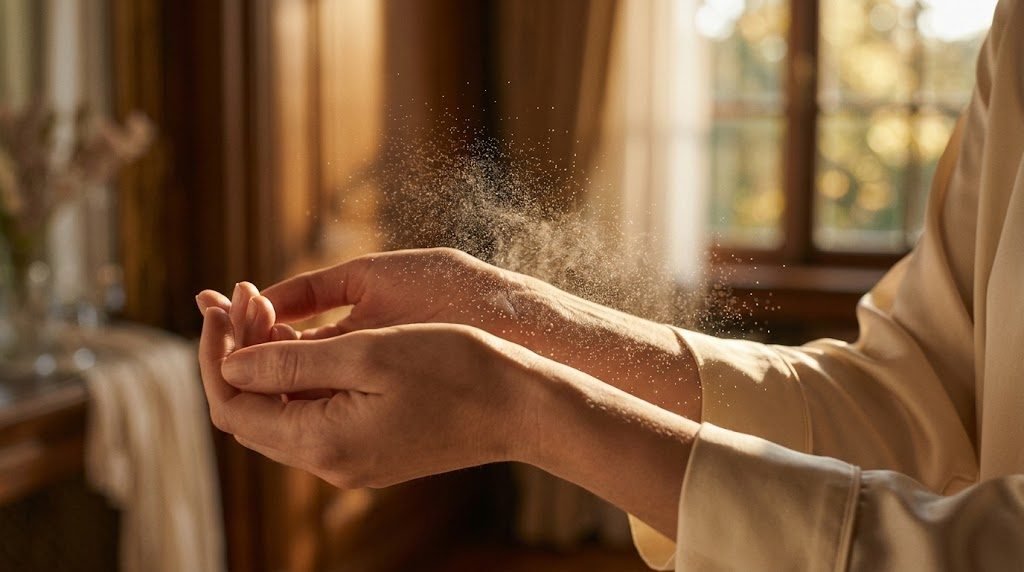
- Spray on clean, bare pulse points: Apply one spray to your inner wrist, inner forearm, or crook of your elbow. Do not apply over scented body wash, body lotion, or competing oils.
- Never rub your wrists together: Friction creates intense localized heat that crushes delicate top-note molecules, distorting the perfumer’s intended opening composition.
- Track the wear curve in real time: Evaluate the scent at 5 minutes (opening top notes), 1 hour (blooming heart notes), and 4 hours (residual dry-down base notes).
- Assess seasonal climate compatibility: Cold winter air compresses fragrance evaporation, making scents seem quieter, while summer heat and humidity accelerate diffusion rapidly. Learn how climate alters scent performance in our summer beauty guide.
How Body Chemistry and Skin Type Alter Fragrance Notes
Have you ever noticed that a perfume smelling divine on a friend smells sour, overly sweet, or flat on your own skin? This phenomenon occurs because human skin chemistry actively interacts with volatile fragrance compounds.
Dry Skin vs. Oily Skin
Skin hydration is the single biggest factor influencing how long fragrance notes survive. Oily skin possesses abundant natural lipids that trap aromatic molecules, slowing down evaporation and making base notes last significantly longer. Conversely, dry skin lacks sebum, causing volatile alcohol and light top notes to evaporate rapidly into the air, leaving the scent feeling faint within two hours. If you suffer from dry skin, applying a rich, fragrance-free body lotion before spraying perfume provides an artificial lipid layer that anchors fragrance notes effectively. For more on optimizing skin health for product absorption, read our analysis on skin barrier science and hydration.
Skin pH and Temperature Factors
Human skin pH typically ranges between 4.7 and 5.7. Slight variations in acidity caused by diet, stress levels, medications, or hormonal fluctuations can alter the subtlety of delicate floral and botanical heart notes. Furthermore, higher natural body temperature accelerates the progression through the scent pyramid, shortening top note duration and bringing base notes forward much faster.
How to Match Fragrance Notes to Your Personal Style
Fragrance is an invisible yet deeply unforgettable extension of your personal aesthetic. Understanding note profiles empowers you to curate a versatile scent wardrobe that reflects how you present yourself to the world across different settings and moods.
If you prefer clean lines, crisp tailored clothing, and minimal aesthetics, look for crisp top notes of pink pepper and bergamot combined with sheer cedarwood or white musk base notes. If your style leans vintage, dramatic, or bold, seek out heavy floral heart notes of damask rose grounded in dark patchouli, rich amber, or smoky leather base notes.
To dive deeper into self-expression through tailored scent profiles, explore our comprehensive framework for finding perfume recommendations by personality, or learn how to pair your scent with formal wardrobe choices in our guide to party beauty and evening fragrance selection.
Fragrance Notes Explained: Key Takeaways
- Fragrance notes explained simply: Scent notes are aromatic ingredients divided into top, middle, and base tiers based on chemical volatility and evaporation speed.
- Top notes are fugitive and temporary: Citrus and light herbal openings vanish within 15 minutes—never buy a perfume based on the initial spray alone.
- Heart notes define true scent character: Florals, spices, and fruits emerge after 15 minutes to form the emotional core of the fragrance for several hours.
- Base notes deliver longevity and depth: Heavy resins, precious woods, vanilla, and musks cling to skin for 6 to 12+ hours while fixing lighter notes.
- Concentration dictates performance: Eau de Parfum formulas highlight heart and base notes longer than lighter Eau de Toilette options.
- Always test on warm human skin: Paper tester blotters miss individual skin chemistry, lipid levels, body heat, and real-world dry-down evolution.
- Hydrated skin retains scent longer: Applying unfragranced moisturizer before spraying creates a protective lipid layer that anchors volatile notes.
Finding your signature scent is a deeply rewarding journey of personal discovery. Browse our complete library of perfume discovery guides at Golden Hour to learn how to read fragrance reviews critically, layer scents effortlessly, and build an intentional perfume collection tailored to your unique lifestyle.
Frequently Asked Questions
What does fragrance notes explained mean for beginners?
Having fragrance notes explained means understanding that perfumes are composed of distinct ingredient layers—top, middle, and base notes—that evaporate off your skin at different speeds over several hours, rather than smelling like a single static scent from initial application to final fade.
Why do fragrance top notes disappear so fast?
Top notes disappear quickly because they are composed of light, highly volatile molecules such as citrus, aquatic accords, and soft herbs. These ingredients evaporate rapidly upon contact with ambient room air and skin heat, typically lasting only 5 to 15 minutes before yielding to heart notes.
How long should base notes last on human skin?
Base notes are engineered from heavy, complex molecules like sandalwood, amber, vanilla, and musk that evaporate very slowly. On properly hydrated skin, quality base notes should easily linger anywhere from 6 to 12+ hours depending on concentration levels and formula quality.
Can my body chemistry change how perfume notes smell?
Yes, individual body chemistry drastically alters fragrance notes. Skin moisture levels, skin surface pH, diet, ambient temperature, and natural body oils all influence how quickly aromatic compounds evaporate, making the exact same perfume smell subtly unique on different people.
What is the difference between linear and non-linear perfumes?
Non-linear perfumes follow a traditional scent pyramid, evolving noticeably from bright top notes to rich base notes over time. Linear perfumes are engineered using modern aroma-chemicals to maintain a single, consistent scent profile from initial application through final dry-down.
Does Eau de Parfum have different fragrance notes than Eau de Toilette?
While an EDP and EDT in the same fragrance line share core ingredients, perfumers often adjust note proportions. Eau de Parfum formulas emphasize rich base and heart notes for longevity, whereas Eau de Toilette versions highlight bright, airy top notes for fresher wear.
How can I make my fragrance base notes last longer?
To maximize base note longevity, apply perfume immediately after showering onto well-moisturized skin. Using an unfragranced body lotion or petroleum jelly on pulse points creates a lipid barrier that traps scent molecules and slows down evaporation significantly throughout the day.
How many fragrance notes are usually in one perfume?
A single perfume can contain anywhere from 20 to over 200 individual aromatic notes and raw materials. However, brand note pyramids typically highlight only 5 to 12 key key notes to give consumers a clear, readable summary of the scent profile.