
Perfume Recommendations by Occasion Find the Right Scent for Every Moment
Fragrance is an invisible accessory. Just as you would not wear a tailored tuxedo to a beach vacation or a swimsuit to a corporate boardroom, the same perfume does not necessarily work equally well for every Perfume by Occasion. A fragrance that feels magnetic and alluring on a romantic evening can quickly become overwhelming in a confined morning meeting.
Finding the right scent for the moment requires understanding how a fragrance interacts with your environment. Setting, weather, time of day, dress code, and social proximity all play a crucial role in how a perfume is perceived by you and those around you. Selecting the right fragrance is less about following strict rules and more about understanding balance, intensity, and appropriateness.
What perfume is best for different occasions?
The best perfume for an occasion depends on the environment and proximity to others. For close-contact professional settings, light citrus, clean musk, or soft floral fragrances with moderate projection are ideal. For evening events, parties, or dates, richer profiles like amber, warm woods, and spices with stronger sillage work best.
How to Choose a Perfume Based on the Occasion
Selecting the ideal fragrance requires evaluating a few practical factors before reaching for a bottle. Consider the following elements to guide your choice:
- Where are you going? Indoor, climate-controlled environments call for different fragrance profiles than open-air, breezy outdoor venues.
- What time of day is it? Morning events typically favor fresh, uplifting, and unobtrusive scents, while evening events can support heavier, more complex compositions.
- How warm or cold is the weather? Heat amplifies fragrance, making heavy scents cloying. Cold weather subdues scent, requiring richer, stronger notes to cut through the chill.
- How formal is the occasion? A black-tie gala calls for elegance and sophistication, whereas a weekend brunch pairs beautifully with playful, casual aromas.
- How close will you be to other people? If you are sitting shoulder-to-shoulder on a flight or in a theater, a skin scent (one that sits close to the body) is much more polite than a fragrance that fills the room.
- How long do you need the fragrance to last? A quick lunch date requires different longevity than a marathon 12-hour wedding celebration.
Perfume by Occasion Recommendations
Best Perfume for Everyday Wear

Everyday wear requires a versatile, effortless fragrance that makes you feel put together without demanding too much attention. These are the scents you reach for when running errands, lounging at home, or meeting a friend for coffee. Versatile fragrance families such as fresh citrus, clean musk, light woods, and soft florals excel here. A great everyday perfume should have moderate projection noticeable when someone hugs you, but not lingering in a room long after you have left. It should act as a comfortable, pleasant backdrop to your day.
Best Perfume for Work and the Office

Shared workspaces require careful fragrance consideration. The goal of an office perfume is to convey a polished, clean, and professional image without encroaching on your colleagues’ personal space. Look for subtle, clean compositions featuring fresh green notes, white florals, light cedar, or soapy musks. It is crucial to avoid heavy gourmands, intense spices, or dominating animalic notes in close-contact environments. Low to moderate projection is the golden rule; your fragrance should be a polite detail of your grooming routine, not a distraction.
Best Perfume for a Date

Date night fragrances are all about creating a memorable, magnetic impression while inviting someone closer. Balancing attractiveness with restraint is key. Warm, romantic compositions featuring soft florals like rose or jasmine, smooth vanilla, skin-like musk, or warm amber are traditional favorites. If you prefer a sharper edge, warm woods and subtle fruity notes can also be highly inviting. The ideal date fragrance draws the other person in rather than hitting them from across the restaurant.
Best Perfume for Weddings
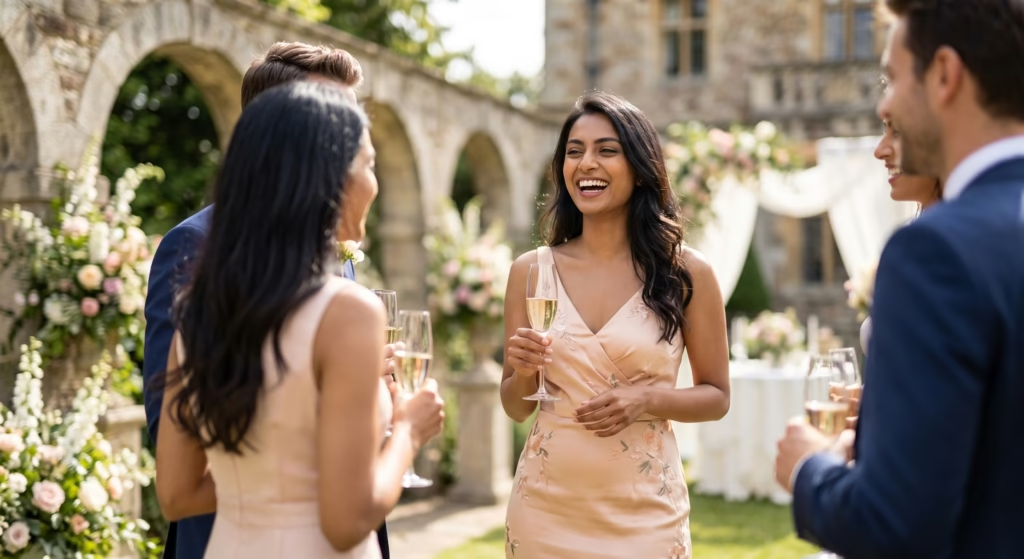
Weddings are multifaceted events, and your fragrance choice should reflect your role, the venue, and the time of day. For daytime or outdoor weddings, especially in spring or summer, bright florals, green notes, and effervescent citrus blends complement the joyous, open-air atmosphere. For formal evening weddings or indoor winter receptions, richer profiles featuring iris, sandalwood, or elegant amber provide a sophisticated touch. Wedding guests should wear something celebratory but respectful, ensuring their sillage does not overpower the dining tables or the ceremony space.
Best Perfume for Parties and Nightlife

When stepping into a crowded, energetic environment with loud music and competing aromas, your fragrance needs to have the presence to stand out. Parties and nightlife are the perfect occasions to deploy stronger fragrance concentrations and bolder scent profiles. Rich florals (like tuberose), heavy amber, deep woods, spices, and sweet gourmands thrive in this setting. Stronger projection is acceptable and often desired here, as the dynamic environment diffuses scent rapidly.
Best Perfume for Formal Events
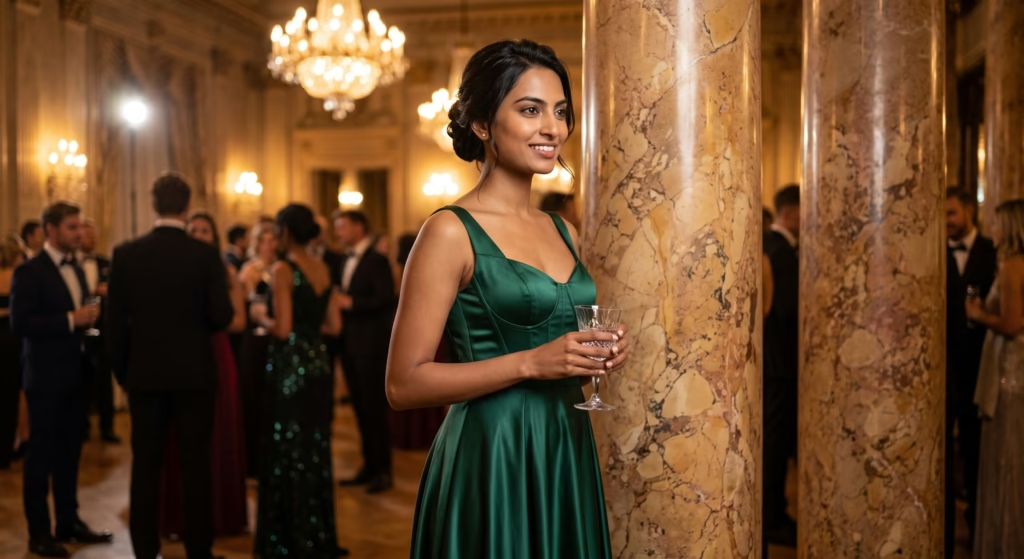
Formal events, such as galas, charity dinners, or the opera, demand sophistication. Your fragrance should complement your formal attire, acting as the final, invisible thread of a tailored suit or an elegant gown. Refined aromatic compositions, elegant iris, smooth woods, high-quality musk, and deep, classic florals (like ylang-ylang or jasmine) project confidence and grace. Avoid overtly sweet, playful, or “beachy” fragrances, aiming instead for timeless elegance with moderate to strong longevity.
Best Perfume for a Job Interview

In a job interview, your qualifications and demeanor should be the sole focus. If you choose to wear fragrance, it must be exceptionally understated. The best approach is to select a scent that mimics the aroma of luxury soap or a crisp, freshly ironed shirt. Clean musk, soft woods, light aquatic notes, or a very sheer citrus are appropriate. Apply minimally—perhaps a single spray under clothing. The interviewer should only detect it if they lean in to shake your hand.
Best Perfume for Dinner or a Romantic Evening

Evening dining environments often feature dim lighting, rich food, and wine, allowing for richer fragrance profiles that would feel out of place at noon. Warm fragrances featuring vanilla, amber, musk, sandalwood, or subtle gourmand accents blend beautifully with the atmosphere of a romantic dinner. However, be mindful of projection; a scent that is overly pungent or aggressively spicy can interfere with the aroma and enjoyment of the food for both you and your dining companion.
Best Perfume for Brunch and Casual Social Events

Daytime social settings like weekend brunches, garden parties, or shopping trips call for lighthearted, approachable fragrances. This is the domain of bright citrus, vibrant fruity notes, fresh florals like peony or freesia, and crisp green notes. These lighter fragrance families feel optimistic and energetic, perfectly matching the casual, daytime vibe.
Best Perfume for Travel and Vacation

Travel requires practical fragrance planning. For air travel, it is imperative to wear a very light, clean skin scent (or no perfume at all) out of respect for fellow passengers in a confined cabin. Once at your destination, your fragrance should match the climate. Hot, humid beach vacations call for coconut, lime, sea salt, and tropical florals that perform well in the heat. City breaks in cooler weather allow for cozy, spicy, or woody scents. When traveling with limited luggage, choosing one versatile signature scent or carrying small travel atomizers is the best strategy.
Best Perfume Families for Different Occasions
While personal preference always reigns supreme, understanding how traditional fragrance families align with different settings can simplify your choice.
| Occasion | Suitable Fragrance Directions | Ideal Intensity | Why It Works |
| Office / Work | Fresh, Green, Clean Musk, Light Woods | Low to Moderate | Conveys professionalism and grooming without being intrusive in shared spaces. |
| Date Night | Vanilla, Amber, Musk, Soft Floral | Moderate | Creates an inviting, warm aura that encourages closeness without overpowering. |
| Daytime Casual | Citrus, Fruity, Aquatic, Light Floral | Moderate | Feels vibrant, energetic, and appropriate for daylight and open air. |
| Nightlife / Party | Gourmand, Spicy, Rich Woods, Heavy Amber | High | Has the structural weight to cut through crowded rooms and competing scents. |
| Formal Events | Iris, Classic Florals, Sandalwood, Oud | Moderate to High | Projects sophistication, elegance, and complements formal attire seamlessly. |
Perfume by Time of Day
Fragrance perception shifts alongside the clock.
- Morning: Early hours call for awakening, unobtrusive scents. Citrus, tea notes, and light aquatics feel refreshing. Heavy, sweet scents can often induce headaches when applied too early in the day.
- Afternoon: As the day warms up, floral and fruity notes bloom beautifully. Afternoon scents can be slightly more complex than morning choices but should remain relatively buoyant.
- Evening: The transition to evening allows for depth. Woods, spices, and resins take on a cozy, elegant character as the sun goes down.
- Late Night: For late-night socializing, bold, opulent, and dense fragrances with strong projection make a statement and match the energy of the night.
Perfume by Season and Weather
Weather profoundly impacts how a perfume evaporates and projects off your skin.
- Spring: A season of transition. Green notes, fresh blossoms, and light aromatic herbs reflect the blooming environment.
- Summer: Heat amplifies fragrance notes, meaning heavy perfumes can become suffocating. Opt for citrus, aquatics, and sheer florals. High humidity can make fragrances feel “sticky,” so dry, crisp notes perform best.
- Autumn/Fall: As the air cools and crisps, you can reintroduce warmth. Spices like cinnamon or cardamom, alongside cedarwood, patchouli, and light amber, capture the essence of the season.
- Winter: Cold air suppresses fragrance. This is the time for your heaviest, most complex perfumes. Rich vanilla, dense oud, heavy amber, and strong gourmands cut through the cold and wrap you in a comforting olfactory blanket.
How Strong Should Your Perfume Be?
Understanding fragrance strength is critical for occasion-matching. The terms used to describe strength are related but distinct:
- Concentration: This refers to the ratio of perfume oil to alcohol. Eau de Cologne (EDC) is very light and fleeting. Eau de Toilette (EDT) is brighter and projects well but may fade faster. Eau de Parfum (EDP) is denser and lasts longer on the skin. Parfum or Extrait has the highest oil concentration, often wearing closer to the skin but lasting all day.
- Longevity: How long the scent remains detectable on your skin.
- Projection: How far the scent radiates off your body into the air around you.
- Sillage: The scent trail you leave behind as you walk through a space.
While an Extrait may have incredible longevity, its high oil content often means it projects less aggressively than an alcohol-heavy EDT. Choose high projection for parties, and low projection (but perhaps high longevity) for the office.
How Much Perfume Should You Wear for Different Occasions?
The number of sprays you apply is just as important as the perfume you choose.
- Office and Interviews: 1 to 2 sprays. Apply under clothing (like on the chest or stomach) to naturally muffle the projection.
- Everyday Wear: 2 to 3 sprays on pulse points (wrists, neck).
- Dates and Dinners: 2 to 3 sprays. Focus on the neck and behind the ears, areas that are noticed only when someone is close to you.
- Parties and Outdoor Events: 3 to 5 sprays. You can apply to pulse points, the back of the neck (for a scent trail), and lightly on clothing to increase longevity and projection in dynamic environments.
Fragrance Notes That Work Well for Different Occasions
Understanding individual notes helps you decode a perfume’s intended setting.
- Fresh and Citrus Notes (Bergamot, Lemon, Grapefruit): Ideal for work, summer days, everyday errands, and brunch. They are volatile, meaning they evaporate quickly, providing a burst of clean energy.
- Floral Notes (Rose, Jasmine, Peony): Highly versatile. Light, dewy florals work for everyday wear and daytime weddings. Deep, indolic (rich and heady) florals are suited for dates and formal occasions.
- Woody Notes (Sandalwood, Cedar, Vetiver): Excellent for professional environments, evening wear, and cooler weather. They provide a grounding, reliable, and sophisticated baseline.
- Vanilla and Gourmand Notes (Caramel, Tonka Bean, Coffee): Best for dates, evenings, parties, and winter. They evoke warmth, comfort, and edible sweetness, which can be overwhelming in high heat or tight office spaces.
- Amber and Spices (Resins, Cardamom, Pepper): Suited for night events, formal occasions, and winter wear. They add mystery, depth, and a lingering, sensual trail.
- Musk: Clean, “white” musks are perfect for the office and minimalist aesthetics, smelling like fresh laundry. Darker musks work well for intimate evenings.
How to Choose One Perfume That Works for Multiple Occasions
If you prefer to maintain a single “signature scent” rather than building a large wardrobe of fragrances, you need a highly versatile composition.
Look for a fragrance that balances freshness with depth a “blue” fragrance, a clean woody-floral, or a bright citrus with a sturdy cedar base. To make one perfume work across multiple occasions, modulate your application. Wear one light spray under your shirt for the office, and apply three sprays to your neck and clothing before heading to an evening event. A truly versatile perfume adapts to your climate, meshes with your personal style, and transitions easily from day to night.
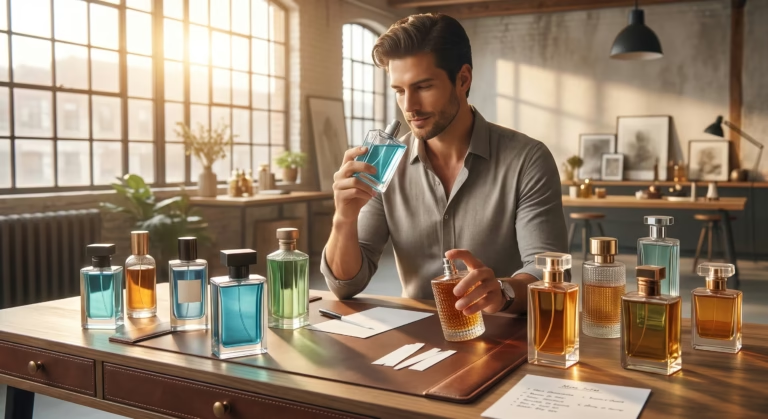
How to Test a Perfume Before Buying
To ensure a fragrance fits your intended occasion, it must be tested properly.
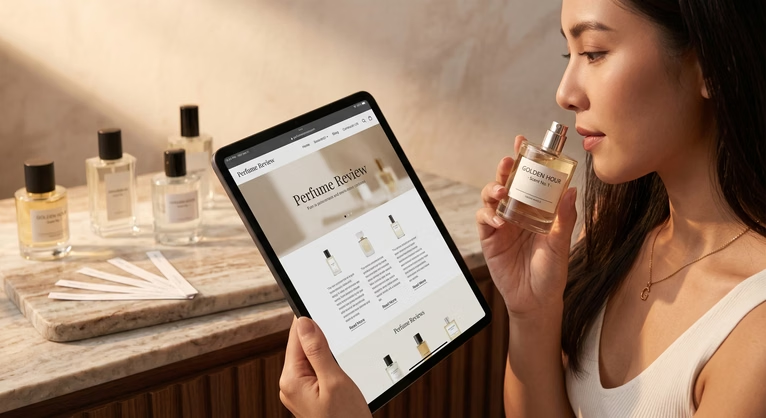
- Start with a blotter strip: Spray the paper to see if you enjoy the initial opening.
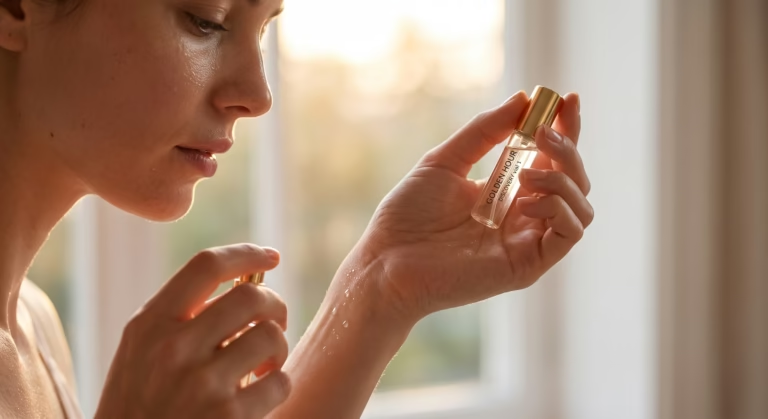
- Test on skin: If you like it on paper, spray it on your wrist. Skin chemistry radically alters how a fragrance develops.
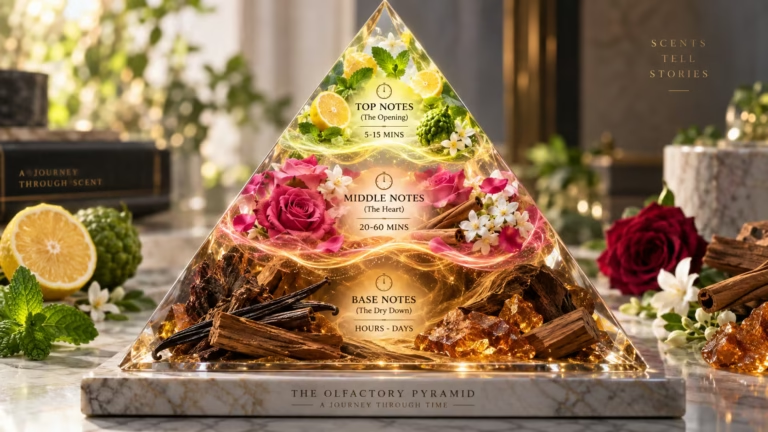
- Smell the opening, wait for the dry-down: Top notes (the opening) disappear within 15 minutes. The heart and base notes (the dry-down) are what you will actually smell for the rest of the day.
- Observe performance: Wear it for a full day to evaluate its longevity and projection.
- Test in context: If you are buying a summer fragrance, do not test it in a heavily air-conditioned mall and expect it to perform the same way on a humid beach.
Common Mistakes When Choosing Perfume for an Occasion
- Wearing too much fragrance: Overspraying is the quickest way to ruin an otherwise beautiful scent.
- Ignoring the venue: Wearing a heavy clubbing fragrance on a 12-hour flight is inconsiderate to others.
- Ignoring the weather: Wearing a dense, syrupy gourmand in 90-degree heat can become cloying and nauseating.
- Testing only the opening: Buying a perfume based on the first 10 seconds of spraying, only to realize you dislike the base notes that linger for hours.
- Assuming stronger means better: High projection is a feature, not a universal sign of quality. Some of the most luxurious, expensive perfumes in the world are designed to be intimate skin scents.
Golden Hour’s Perfume Discovery Guide
Finding the perfect fragrance for every moment of your life is a journey of exploration. Understanding notes, concentrations, and families is the first step toward building a fragrance wardrobe that serves you well in any setting. If you want to dive deeper into identifying your personal scent profile and learning more about how to evaluate different aromas, explore our comprehensive Perfume Discovery Guide. Whether you are looking for a singular signature scent or a diverse collection for every event on your calendar, continued education will refine your nose and your choices.
Perfume by Occasion FAQ Section
What perfume is best for the office?
The best office perfumes are subtle, clean, and fresh. Look for light citrus, soft floral, or clean musk fragrances. Apply sparingly (1-2 sprays) to ensure the scent remains close to your body and does not distract colleagues.
Can I wear the same perfume every day?
Yes, you can wear the same perfume daily if you choose a highly versatile signature scent. Fragrances that balance fresh top notes with a clean, woody, or musky base transition easily between work, casual outings, and evenings.
What is the difference between Eau de Toilette and Eau de Parfum?
Eau de Parfum (EDP) has a higher concentration of perfume oils than Eau de Toilette (EDT). EDP generally lasts longer on the skin and feels richer, while EDT is often brighter, more volatile, and projects further in the first few hours of wear.
How do I choose a perfume for a wedding?
For daytime or summer weddings, choose bright florals or fresh citrus scents. For evening or winter weddings, elegant woods, amber, or rich florals are appropriate. Ensure your fragrance is respectful and does not overpower the venue.
Why does my perfume smell different at night than during the day?
Temperature and humidity affect how perfume evaporates. Warmer daytime temperatures cause fragrance to evaporate faster and project more loudly. Cooler evening air subdues evaporation, allowing richer, deeper notes to unfold more slowly.
How many sprays of perfume should I use for a date?
For a date, 2 to 3 sprays are ideal. Apply to pulse points like the neck and wrists. The goal is to create an inviting scent bubble that is only detectable when the other person leans in close.
Is it okay to wear strong perfume to dinner?
It is best to avoid overly strong, spicy, or heavy gourmand perfumes at dinner. Intense fragrances can interfere with the aroma and taste of the food, detracting from the dining experience for you and those around you.
How do I make my perfume last longer for an all-day event?
To increase longevity, apply unscented lotion to your skin before spraying, as moisturized skin holds fragrance better. You can also spray lightly onto your clothing or hair, as fabrics trap scent molecules longer than skin does.