Spicy Perfume for Women: How to Choose a Year-Round Scent Without the Marketing Hype
Choosing a spicy perfume for women often feels like a risky gamble between smelling like an autumn candle shop or overwhelming an entire room the moment outdoor temperatures climb. Social media trends routinely praise heavy cinnamon, clove, and amber bombs without mentioning how suffocating they turn in July humidity, crowded commuter trains, or warm indoor offices. If you love the magnetic, confident energy of spice notes, you do not have to lock your favorite bottles away for eight months of the year.
Quick answer: To choose a spicy perfume for women for year-round wear, balance your collection between “cool” spices—such as pink pepper, green cardamom, and fresh ginger—for spring and summer, and “warm” spices like Ceylon cinnamon, saffron, and nutmeg for autumn and winter. Anchor these notes in airy citrus, tea, dry wood, or clean musk bases so the scent projects cleanly without becoming syrupy.
When you understand how different spice molecules behave on warm skin versus crisp air, selecting a versatile fragrance becomes effortless and predictable. Whether you are exploring Golden Hour’s complete beauty and fragrance editorial guides or testing paper blotters at a local counter, this honest breakdown covers the chemistry, note pairings, concentrations, and testing habits that make spice wearable every month of the year.
Why Spicy Perfume for Women Is Often Misunderstood
Most mainstream fragrance marketing treats “spicy” as a single, monolithic category reserved strictly for cold weather, velvet dresses, and evening glamour. In reality, perfumers classify culinary and botanical spices across a wide thermal spectrum ranging from crisp, sparkling, and effervescent to dense, resinous, and smoldering. Grouping pink pepper with dark clove bud is like grouping fresh lemon juice with blackstrap molasses.
Conflicting online reviews also stem from dramatic differences in regional climates and individual skin chemistry. A spicy perfume for women praised as “cozy and subtle” by a reviewer in a dry London winter can feel ten times louder and sweeter on warm skin in Mumbai, Dubai, Singapore, or Miami. Understanding the structural anatomy of a formula empowers you to look past seasonal marketing labels and predict how a scent will actually behave on your pulse points.
- The “Holiday Candle” Trap: Heavy overdoses of synthetic cinnamaldehyde and eugenol (clove) paired with syrupy vanilla or caramel often read as baked goods rather than refined, skin-enhancing perfumery.
- Climate and Humidity Amplification: Ambient heat increases kinetic energy and speeds up the evaporation of volatile aromatic compounds, meaning heavy spices project aggressively in humid or high-temperature environments.
- Gendered Marketing Myths: Many of the most balanced year-round spice compositions—especially green cardamom, black pepper, and dry nutmeg blends—are marketed as unisex or masculine, even though they bloom with remarkable elegance on women’s skin.
- Top-Note Illusion: Many shoppers judge a bottle within ten seconds of spraying, missing the fact that sharp peppery openings often settle into soft, creamy sandalwood or clean white musk within thirty minutes.
The Anatomy of a Spicy Perfume for Women: Fresh vs. Warm Notes
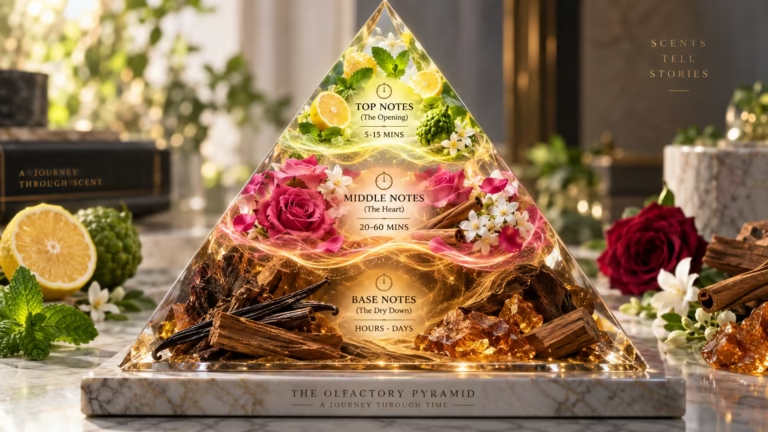
To build a twelve-month fragrance rotation that never feels out of place, you need to separate spice ingredients into two distinct functional families. Learning how perfumers layer top, heart, and base materials in our complete guide to fragrance notes makes it much easier to decode an ingredient list before you ever spend money on a bottle.
Fresh (Cool) Spices for Heat, Humidity, and Daytime
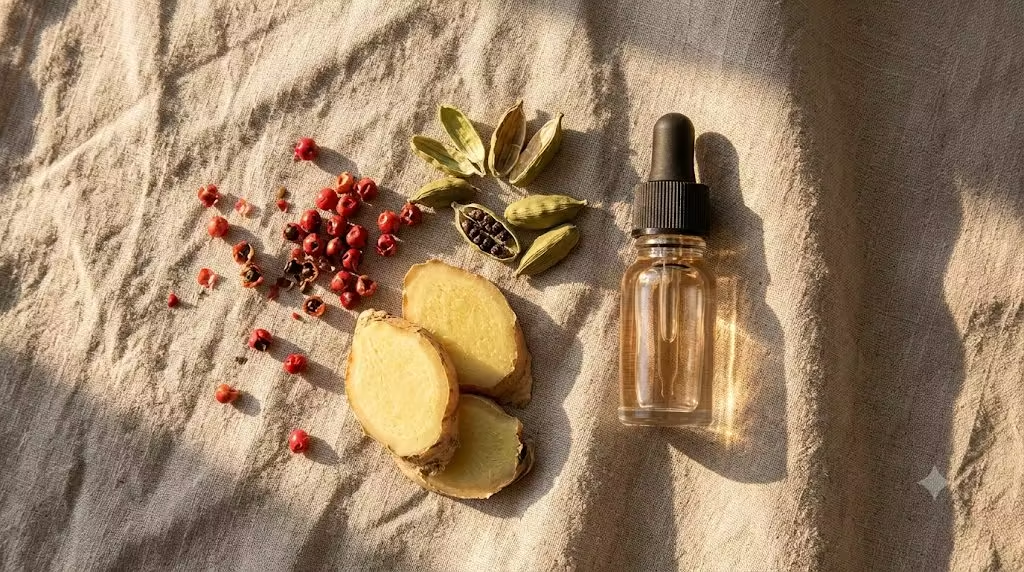
Fresh spices contain high concentrations of terpenes—lightweight, fast-moving aromatic molecules also found in citrus rinds, crushed herbs, and pine needles. Because they evaporate briskly and stimulate cold receptors slightly on the skin, they deliver a bright, almost cooling sensation that cuts effortlessly through summer heat and stagnant office air.
Pink Pepper (Baie Rose)
Despite its name, pink pepper is not true black pepper; it is harvested from the dried rose-colored berries of the Peruvian pepper tree (Schinus molle). It delivers a sparkling, rosy, slightly fruity effervescence that lifts bergamot, peony, and sheer musk openings without adding culinary heat or heaviness.
Green Cardamom
Green cardamom is the undisputed champion of four-season perfumery. Steam-distilled from crushed emerald pods, it offers a crisp, camphoraceous, slightly eucalyptus-like brightness upfront before settling into a smooth, milky, aromatic warmth that feels equally natural in July and January.
Fresh Ginger Root
Unlike dried ginger powder used in gingerbread, supercritical CO2 extract of fresh ginger root smells zesty, lemony, and mouthwateringly crisp. It pairs seamlessly with grapefruit, neroli, and green tea to create an energizing spicy perfume for women suitable for the hottest afternoons.
Coriander Seed
Crushed coriander seeds smell nothing like fresh green cilantro leaves. Instead, their essential oil is rich in linalool, imparting a gentle, nutty, orange-peel warmth that bridges bright citrus top notes into woody or floral hearts without adding weight.
Juniper Berry and Black Pepper
Juniper berry brings a gin-like, pine-kissed crispness, while Madagascar black pepper offers a dry, woody-zingy snap. Used in light doses, both notes sharpen sluggish florals and give daytime perfumes an effortless, tailored edge.
Warm (Hot) Spices for Evening and Cooler Weather
Warm spices rely on heavier aromatic phenols, phenylpropanoids, and aldehydes that evaporate slowly and cling close to the skin for hours. They generate an intimate, velvety aura that thrives in crisp autumn air, winter winds, air-conditioned evening venues, and formal gatherings.
Ceylon Cinnamon Bark
True Ceylon cinnamon bark (Cinnamomum verum) is noticeably drier, woodier, and more delicate than sweet, fiery cassia cinnamon. When dosed carefully alongside dry iris root, cedar, or tobacco leaf, it reads as sophisticated warmth rather than kitchen baking.
Saffron Threads
Harvested from crocus stigmas, saffron contributes a luxurious, leathery, bittersweet spice with a subtle metallic-mineral edge. It adds immediate depth, texture, and refinement to Damask rose, oud, and suede compositions without making them sugary.
Nutmeg and Mace
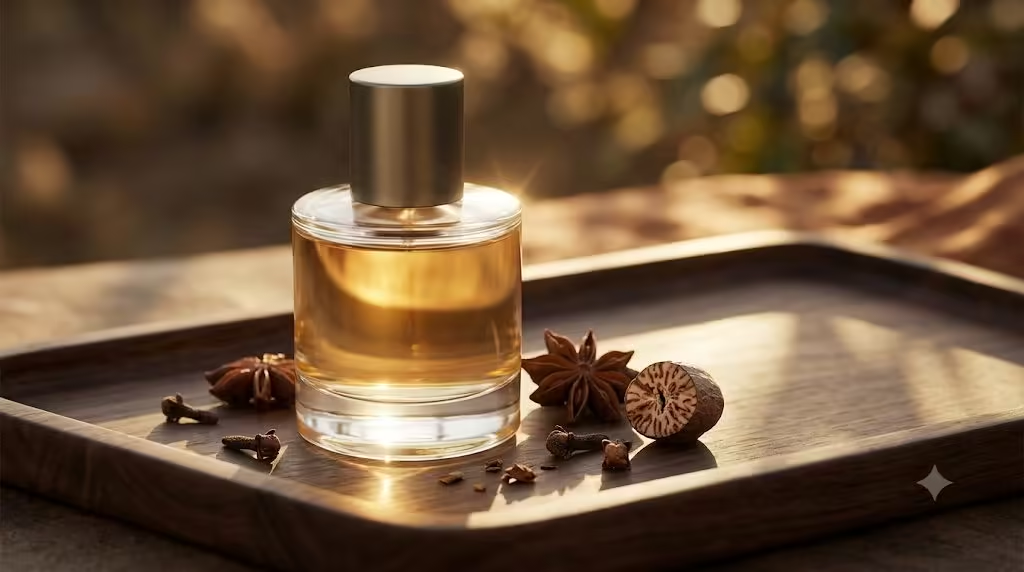
Nutmeg and its outer lacy aril, mace, bring a dusty, aromatic, slightly woody warmth that melds invisibly into creamy sandalwood and cashmere accords. In balanced proportions, nutmeg gives a fragrance a comforting, second-skin texture.
Clove Bud and Star Anise
Clove bud is naturally rich in eugenol, a potent aromatic compound that lends carnation-like floral spice and rich warmth. Star anise adds a sleek, licorice-tinged coolness that keeps heavy amber and resin bases from feeling sluggish or overly sweet.
Seasonal Comparison: Matching Spicy Perfume for Women to Climate
Rather than guessing which bottle belongs in your bag each morning, use the comparison table below to match specific spice profiles and supporting base notes to your local weather and daily schedule.
| Spice Profile | Key Notes to Look For | Best Supporting Bases | Ideal Season & Setting |
|---|---|---|---|
| Sparkling & Effervescent | Pink pepper, fresh ginger, juniper berry | Bergamot, neroli, white musk, sheer cedar | Spring & Summer; daytime, commuting, outdoor brunch |
| Aromatic & Tea-Spiced | Green cardamom, coriander, black pepper | Black tea, fig leaf, sandalwood, vetiver | All Four Seasons; office wear, everyday signature scent |
| Floral & Velvety | Saffron, nutmeg, pimento berry, carnation | Damask rose, iris butter, suede, cashmeran | Autumn & Mild Winter; dinner dates, creative events |
| Resinous & Smoldering | Ceylon cinnamon, clove, star anise, cumin | Labdanum, benzoin, patchouli, dry vanilla | Deep Winter & Cool Nights; formal evenings, cold air |
How Supporting Notes Transform a Spicy Perfume for Women
A spice note almost never stands completely alone; the structural base notes surrounding it determine whether a perfume feels airy enough for a humid afternoon or strictly built for a snowy evening. Reviewing our broader fragrance families guide shows how spices act as architectural bridges between crisp fresh categories and deep amber categories.
Spicy Woody and Aromatic Blends (The True Year-Rounders)
When spices are anchored in dry Virginia cedarwood, creamy Australian sandalwood, or earthy Haitian vetiver, the entire composition stays grounded and breathable in any temperature. Dry woods act like a natural blotter, absorbing excess sweetness so cardamom, black pepper, and nutmeg feel crisp, tailored, and architectural.
This structure is the gold standard if you want a single signature fragrance that transitions smoothly from an eight-hour workday straight into dinner plans. Look for ingredient descriptions highlighting white tea, papyrus, fig, oriso, or dry sandalwood alongside your favorite spices.
Spicy Citrus and Transparent Floral Blends (Warm-Weather Safe)
If you live in South Asia, the Middle East, or any tropical climate where temperatures remain warm year-round, look for spices woven into luminous citrus or airy floral structures. Pink pepper sparkling over bitter grapefruit or fresh ginger layered with water jasmine creates a radiant, sun-drenched trail that feels refreshing rather than heavy.
In high humidity, avoid pairing heavy warm spices with thick, narcotic white florals like buttery tuberose or syrupy ylang-ylang, as the combination can quickly become cloying. Instead, prioritize translucent florals such as freesia, tea rose, orange blossom, or peony.
Spicy Amber and Gourmand Blends (Best for Cool Air)
Amber fragrances blend warm spices with tree resins such as benzoin, labdanum, myrrh, and tonka bean. While undeniably captivating in crisp air, dense spicy ambers can feel overwhelming in warm weather unless they are lightened by dry frankincense or brisk herbal aromatics.
If you love sweetness paired with spice, read our dedicated guide on choosing a vanilla perfume for women without smelling like a cupcake to learn how dry vanilla bean pods differ from sugary gourmand accords. Selecting a woody, non-sugary vanilla base keeps spicy scents sophisticated rather than edible.
Spicy Leather and Suede Blends (Modern Elegance)
Pairing saffron, cardamom, or pink pepper with soft suede creates a sleek, minimalist texture that feels effortlessly modern. Unlike heavy animalic leathers, modern suede accords rely on clean musks and birch tar nuances that wear remarkably well in air-conditioned offices and cool evenings alike.
Concentration, Sillage, and Skin Chemistry
Selecting the right notes is only half of making a spicy perfume for women work year-round; concentration, spray placement, and your own skin barrier determine how loudly those spices project. A dense Extrait de Parfum worn on a humid afternoon behaves completely differently from a breezy Eau de Toilette.
Matching Concentration to Season and Setting
Higher perfume concentrations contain a larger percentage of aromatic oils and heavy base fixatives, which slow down evaporation and hold spice molecules close to the skin. You can explore exact oil-to-alcohol ratios in our honest guide to perfume concentrations, and apply these rules when building your shelf:
- Eau de Toilette (EDT) and Eau de Cologne: Ideal for high heat, humid climates, and close-quarters office environments. The higher alcohol content gives top-note spices like pink pepper, coriander, and ginger an immediate, crisp lift that fades gracefully without lingering heavily.
- Eau de Parfum (EDP): The most reliable four-season concentration. An EDP provides enough heart and base structure for cardamom, saffron, and nutmeg to last six to eight hours while maintaining polite, controlled projection.
- Extrait de Parfum and Perfume Oils: Best suited for dry skin, cool weather, and evening occasions. Alcohol-free perfume oils and high-concentration extraits lack the initial alcohol burst of sprays, meaning warm spices bloom slowly and intimately on the skin rather than filling an entire room.
How Skin Hydration and Body Heat Alter Spice Notes
Your skin’s natural lipid barrier and surface temperature dramatically change how spicy molecules unfold over time. On dry or dehydrated skin, lightweight terpene spices like cardamom and ginger evaporate within an hour, leaving behind sharper woody or peppery edges without their intended roundness.
Applying an unscented, ceramide-rich body lotion or plain jojoba oil to your pulse points five minutes before spraying creates a smooth lipid anchor that slows evaporation and preserves top-to-base balance. Conversely, if you have naturally warm or oily skin, your body heat will amplify cinnamon, clove, and amber—so start with one or two sprays behind the ears or on the lower torso rather than four sprays on the neck.
Adjusting Spray Placement for Subtlety vs. Projection
Where you apply your fragrance matters just as much as which bottle you choose. In warm weather or conservative workplaces, spraying a spicy scent onto your lower abdomen, behind your knees, or lightly onto a cotton shirt hem allows the scent to rise gently with body movement rather than hitting your nose—and everyone around you—all at once.
Step-by-Step: How to Test a Spicy Perfume for Women Before Buying
Because spice notes shift dramatically between the first five minutes and the fourth hour, impulse-buying after a quick sniff of a paper strip frequently leads to bottle regret. Follow this five-step testing method to evaluate any spicy fragrance accurately before committing to a full-size flacon.
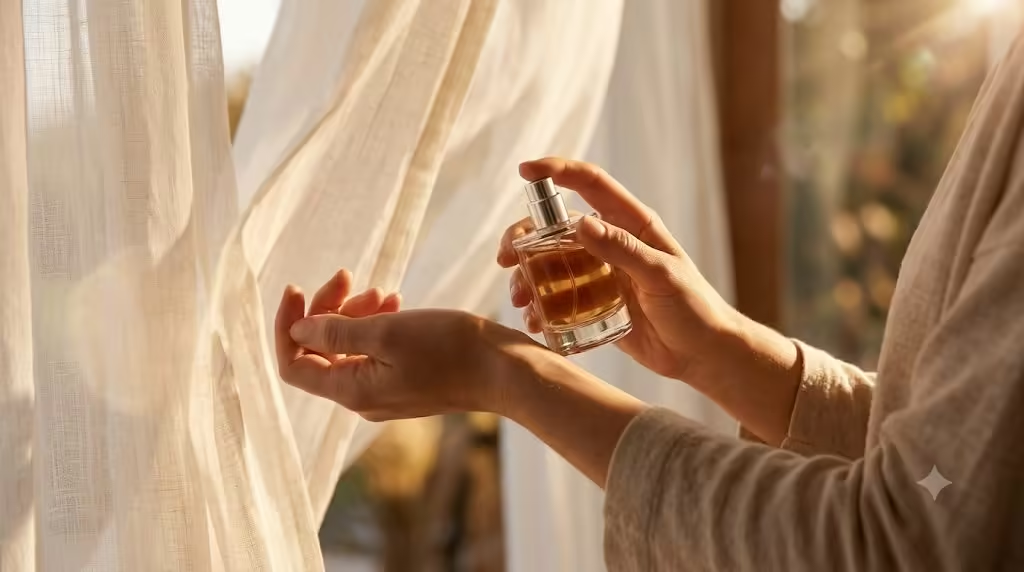
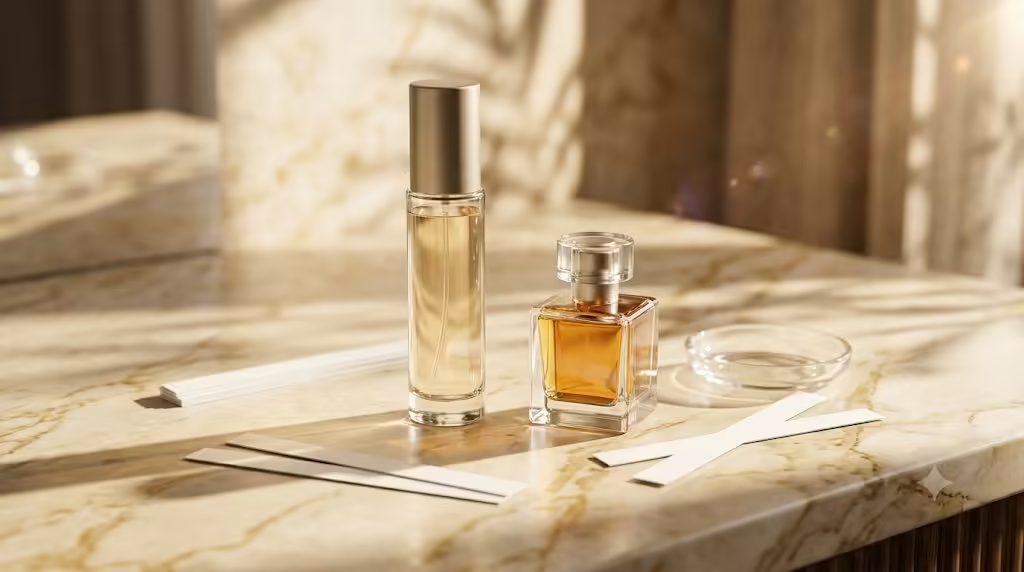
- Start on Paper, Move to Skin Within Ten Minutes: Paper blotters trap volatile top notes and flatten complex warm spices. If a fragrance passes your initial impression on paper, spray it directly onto clean, unscented skin on the back of your hand or inner forearm.
- Wait Out the Initial “Spice Spike”: The first fifteen minutes often feature a sharp burst of black pepper, clove, or alcohol. Resist judging the perfume until at least forty-five minutes have passed and the heart notes have settled.
- Step Into Your Real Environment: Walk outside into the actual weather or return to your normal workspace while wearing the test spray. A spicy perfume for women that feels whisper-quiet inside a cool, air-conditioned boutique can bloom intensely once you step into afternoon sunlight.
- Evaluate the Four-Hour Dry-Down: Pay close attention to what remains on your wrist after the bright spices fade. A well-composed fragrance should leave behind a smooth, woody, musky, or softly resinous skin scent—never a harsh, sour, or metallic synthetic residue.
- Wear a 2ml to 5ml Decant Across Two Different Days: Before buying a full 50ml or 100ml bottle, test a small sample vial across two contrasting occasions—one busy daytime schedule and one relaxed evening—to verify that the scent feels like an effortless extension of your personality.
Ingredient Safety, Authenticity, and Avoiding Counterfeits
Natural spice essential oils—especially cinnamon bark, clove bud, and Peruvian balsam—contain potent natural allergens that can irritate sensitive skin if formulated above safe thresholds. Reputable fragrance houses strictly follow scientific usage limits established by the International Fragrance Association (IFRA) to ensure skin safety while maintaining artistic quality.
Adhering to these standards is also why avoiding counterfeit perfumes from unverified third-party marketplaces or suspiciously discounted social media ads is critical. Counterfeit bottles frequently replace regulated botanical extracts with cheap, unpurified industrial synthetics that smell harsh, trigger headaches, or cause contact dermatitis on pulse points.
- Cross-Check Batch Codes: Verify that the batch code stamped or printed on the bottom of the outer cardboard box matches the laser-etched or printed code on the bottom of the glass bottle.
- Examine Glass Clarity and Atomizer Quality: Authentic bottles feature uniform glass walls, crisp typography, and a fine, pressurized mist atomizer, whereas fakes commonly display cloudy glass, bubbling labels, and sputtering nozzles.
- Purchase Through Authorized Channels: Buy directly from brand boutiques, established department stores, or reputable sample decanters with transparent batch tracking.
Key Takeaways for Choosing a Spicy Perfume for Women
- Divide Spices by Temperature: Choose cool, terpene-rich spices like pink pepper, green cardamom, fresh ginger, and coriander for spring, summer, and daytime; save warm spices like Ceylon cinnamon, saffron, and clove for cooler weather and evenings.
- Prioritize Breathable Base Notes: Dry cedarwood, sandalwood, black tea, vetiver, and clean white musk keep spicy fragrances balanced and wearable year-round without turning syrupy.
- Match Concentration to Your Climate: Reach for Eau de Toilette or light Eau de Parfum formats in heat and humidity, and reserve Extrait concentrations or perfume oils for dry, cool air and intimate settings.
- Always Test the Four-Hour Dry-Down: Spices evolve slowly on skin—never buy a full bottle based solely on a five-second paper blotter test.
- Prep Dry Skin First: Applying unscented moisturizer before spraying anchors delicate fresh spices and prevents sharp woody dry-downs.
Building a fragrance wardrobe that feels true to your style does not require owning dozens of bottles—just a clear understanding of how notes, bases, and concentrations interact with your daily life. If you want to explore how spices compare with other versatile year-round scent profiles, read our honest guide to choosing women’s perfume for everyday wear, browse our complete guide to woody perfumes for women, or explore our honest guide to women’s perfume for office wear on Golden Hour.
Frequently Asked Questions
Can you wear spicy perfume for women in hot summer weather?
Yes, you can comfortably wear a spicy perfume for women in summer by selecting “cool” spices like pink pepper, green cardamom, or fresh ginger paired with citrus, tea, or sheer musk bases. Avoid dense concentrations of cinnamon, clove, and syrupy amber in high heat, as humidity amplifies heavy resinous spices.
What are the best spicy perfume notes for everyday office wear?
Green cardamom, pink pepper, coriander seed, and subtle nutmeg are the best spice notes for office wear because they stay crisp, aromatic, and polite. When anchored in dry cedarwood, sandalwood, or iris, these notes project quiet confidence without overwhelming shared indoor workspaces or meeting rooms.
Why do some spicy perfumes smell like a holiday candle on my skin?
Spicy perfumes smell like holiday candles when formulas rely heavily on sweet cassia cinnamon, clove bud, and gourmand vanilla without dry woody or herbal counterbalances. Choosing scents structured around dry cedar, vetiver, black tea, or soft suede keeps spice refined and wearable rather than edible.
What is the difference between fresh spicy and warm spicy fragrances?
Fresh spicy fragrances use lightweight, terpene-rich spices like fresh ginger, pink pepper, and cardamom that smell bright, zesty, and slightly cooling on skin. Warm spicy fragrances feature heavier aromatic compounds like Ceylon cinnamon, saffron, and clove that create a rich, velvety, and lingering warmth.
How do I make a fresh spicy perfume last longer on dry skin?
Apply an unscented moisturizer or plain body oil to your pulse points before spraying so the fragrance molecules have lipids to bind to, slowing evaporation. You can also spray lightly onto natural clothing fibers—such as a cotton shirt collar or scarf—where cool spice notes linger hours longer.
Are spicy perfumes suitable for women in their 20s, or do they smell mature?
Spicy perfumes suit women of every age depending on the supporting notes surrounding the spice. Bright combinations of pink pepper, crisp pear, bergamot, and clean white musk feel modern and energetic in your 20s, while deeper blends of saffron, rose, and sandalwood offer timeless elegance at any stage.
How many sprays of spicy perfume should I wear in warm weather?
Start with one to two sprays on lower pulse points—such as the inner elbows, lower torso, or behind the knees—when wearing a spicy perfume in warm or humid weather. Heat naturally increases fragrance projection, so lighter application keeps the scent trail inviting rather than overpowering.