Perfume Concentration Explained: The Honest Guide to EDP, EDT, Extrait, and Longevity
Perfume concentration explained properly is the secret to never wasting money on a disappointing bottle again. If you have ever bought a scent expecting an all-day trail only to have it disappear before lunch, the bottle’s oil percentage—not its price tag—is usually responsible.
In short, when having perfume concentration explained, it simply refers to the ratio of pure fragrance oils dissolved in alcohol and water. Higher oil concentrations, such as Extrait de Parfum, last longer and stay closer to the skin, while lighter formulas like Eau de Toilette project further initially but fade faster.
Understanding these strength tiers is fundamental to building a reliable fragrance wardrobe. Before diving into specific oil percentages, it helps to understand the overall landscape of scent structure by exploring our complete guide to fragrance fundamentals.
Perfume Concentration Explained: What Does It Actually Mean?
At its core, every liquid perfume is a blend of aromatic compounds—essential oils, synthetic aroma molecules, and absolutes—diluted in high-proof ethanol and distilled water. To have perfume concentration explained in practical terms, remember that pure fragrance oil by itself is too concentrated, greasy, and overpowering to apply directly to skin or clothing without staining or causing severe irritation.
Alcohol acts as the vital carrier agent. It dilutes the heavy aromatic compounds, stabilizes the blend, and evaporates quickly upon skin contact. This evaporation process lifts the volatile scent molecules into the air, creating the projection and scent trail, known as sillage, that others notice around you.
When a house labels a bottle as Eau de Parfum or Eau de Toilette, they are defining the concentration ratio of raw oil to alcohol. Having perfume concentration explained helps you realize that higher oil percentages mean fewer light solvent molecules, resulting in slower evaporation and a longer presence on the skin.
Perfume Concentration Explained Tier by Tier: The 5 Main Categories
While industry standard guidelines defined by organizations like the International Fragrance Association (IFRA) govern ingredient safety, concentration percentages vary slightly between perfume houses. However, five major categories form the universal benchmark for strength and longevity when considering perfume concentration explained.
1. Extrait de Parfum (Parfum / Pure Perfume)
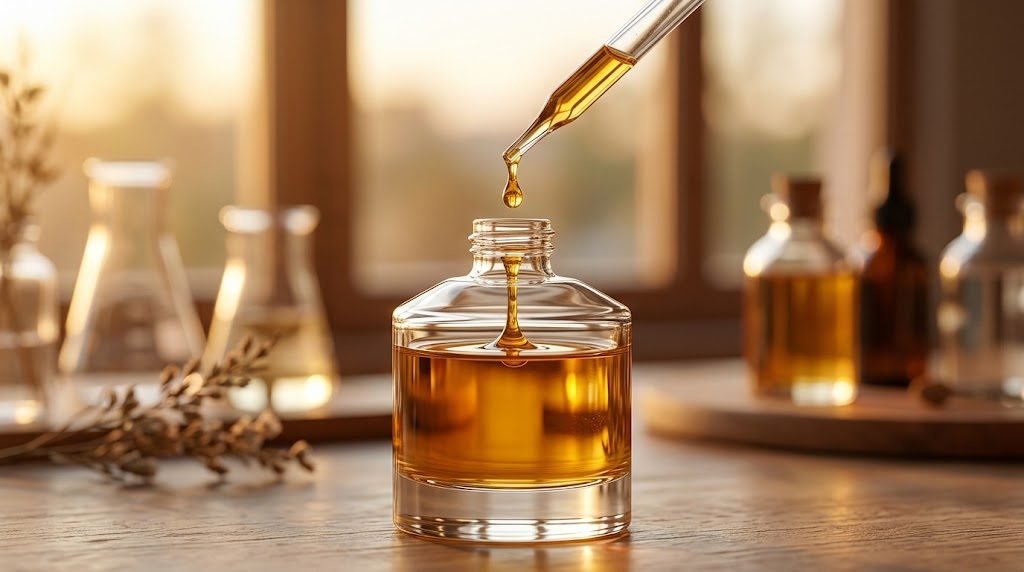
Extrait de Parfum represents the pinnacle of strength in modern perfumery, typically containing between 20% and 40% aromatic oils. It offers the richest, most velvety scent experience possible, grounding the blend with dense base notes like oud, amber, and vanilla.
Because Extrait contains very little alcohol, it does not explode wildly across a room. Instead, it forms an intimate aura that stays close to your skin, lasting anywhere from 8 to 12 hours—or even longer on textiles.
2. Eau de Parfum (EDP)
Eau de Parfum is the global standard for daily luxury, holding an oil concentration of 15% to 20%. As any expert in perfume concentration explained will note, it balances strong longevity with noticeable projection, making it the most versatile choice for day-to-night wear.
An EDP typically lasts between 6 and 8 hours on the skin. It hits the sweet spot for readers wanting a noticeable scent that survives a full workday or evening event without requiring constant reapplication.
3. Eau de Toilette (EDT)
Eau de Toilette features a lighter oil concentration of 5% to 15%, heavily emphasized by bright top notes like citrus, crisp herbs, and delicate florals. The higher alcohol ratio causes these volatile molecules to radiate outward immediately after spraying.
EDT formulations project prominently during the first hour of wear but generally taper off after 3 to 5 hours. Having perfume concentration explained shows why EDTs are ideal for warm weather, casual daytime errands, or sensitive workplace settings where intense scents might feel overwhelming.
4. Eau de Cologne (EDC)
Eau de Cologne contains a light blend of 2% to 4% fragrance oil, historically crafted around sparkling citrus oils like bergamot, lemon, and orange blossom. Originating in 18th-century Europe, traditional colognes were created for immediate refreshment rather than all-day wear.
An EDC typically lasts around 2 hours before dissipating completely. When thinking of perfume concentration explained for casual wear, an EDC serves as an invigorating post-shower splash or an instant cooling mist during humid summer afternoons.
5. Eau Fraiche and Body Sprays
Eau Fraiche represents the lowest strength tier, containing 1% to 3% aromatic compounds diluted primarily in water rather than alcohol. This makes it exceptionally gentle on delicate or sun-exposed skin.
With perfume concentration explained for light formulas, lasting under 2 hours, Eau Fraiche and light body mists provide a faint wash of scent. They are ideal for post-workout refreshing or low-key relaxation at home.
Perfume Concentration Comparison Chart
To help you compare these levels at a glance, the table below outlines the standard oil ratios, average longevity, and best use cases with perfume concentration explained visually.
| Concentration Tier | Oil Concentration (%) | Average Wear Time | Projection Style | Best For |
|---|---|---|---|---|
| Extrait de Parfum | 20% – 40% | 8 – 12+ hours | Intimate / Skin Aura | Evening wear, winter, formal occasions |
| Eau de Parfum (EDP) | 15% – 20% | 6 – 8 hours | Moderate to Strong | Signature scent, daily wear, year-round |
| Eau de Toilette (EDT) | 5% – 15% | 3 – 5 hours | Bright initial radiate | Daytime, office, warm weather |
| Eau de Cologne (EDC) | 2% – 4% | 2 hours | Soft initial burst | Post-shower, hot summer days |
| Eau Fraiche | 1% – 3% | 1 – 2 hours | Very subtle / Close | Casual home wear, gym refresh |
Eau de Parfum vs Eau de Toilette: What Is the Real Difference?
The debate over eau de parfum vs eau de toilette is one of the most common dilemmas in fragrance shopping. With perfume concentration explained properly, many people realize that an EDP is not simply a stronger version of the exact same EDT fragrance.
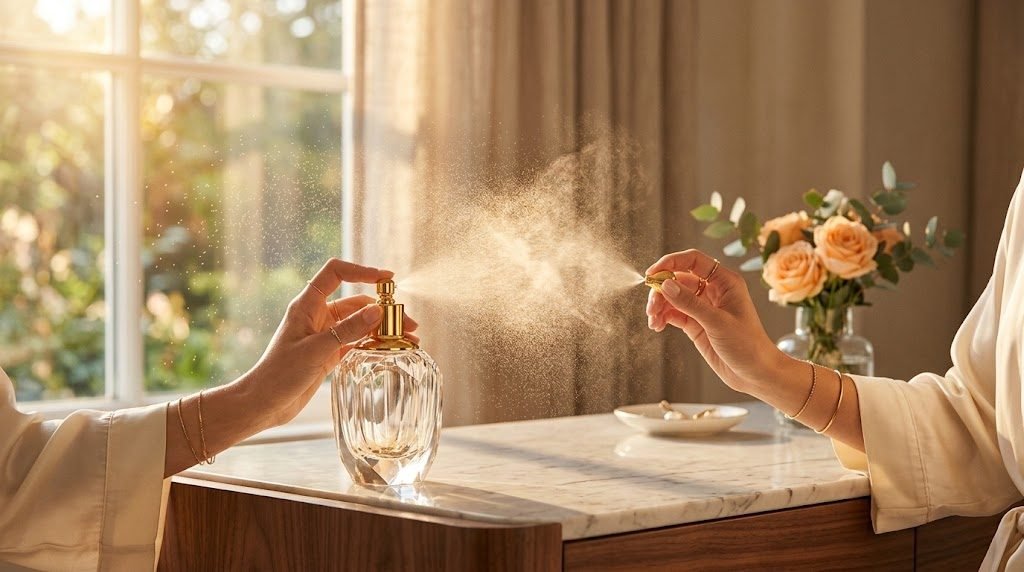
Master perfumers frequently alter the actual formula when creating different concentration versions of a master scent. In an Eau de Toilette, a perfumer might boost effervescent top notes like bergamot, mint, or pink pepper to maximize that initial fresh blast.
Conversely, when formulating the Eau de Parfum version of that same fragrance, the perfumer will often increase heavy base notes like sandalwood, amber, or patchouli to support the higher oil content. As a result, having perfume concentration explained reveals that the EDP may actually smell deeper, warmer, and less citrus-forward than its EDT counterpart.
When deciding between the two, consider your environment and lifestyle needs:
- Choose Eau de Toilette if you live in a tropical or humid climate, work in close quarters, or prefer fresh, uplifting scents that don’t linger past dinner. If you need professional recommendations for work, explore our curated list of workplace beauty and fragrance choices.
- Choose Eau de Parfum if you want your scent to last through a busy day, prefer rich gourmand or spicy notes, or want a reliable signature bottle that adapts to multiple seasons.
How Fragrance Longevity Works Beyond Concentration Labels
While having perfume concentration explained gives you a clear baseline, fragrance longevity is governed by several secondary biological and environmental factors. Understanding these variables explains why the exact same bottle of Eau de Parfum can perform differently on two different people.
1. Scent Families and Heavy Base Notes
Individual ingredient molecules possess drastically different weights and evaporation rates. Fresh citrus notes like grapefruit and lime have tiny, light chemical structures that evaporate within 30 minutes, regardless of whether you have perfume concentration explained in an EDT or an Extrait.
In contrast, heavy resinous notes like oud, frankincense, amber, and oakmoss consist of large, complex molecules that cling to surfaces for days. An Eau de Toilette built around heavy oriental resins will often outlast an Eau de Parfum built purely around lemon and blossom notes. To learn how different scent categories interact, check out our guide to scent wheel fragrance families.
2. Skin Chemistry, Hydration, and pH
Your skin condition heavily influences how long scent molecules stay attached. Dry skin lacks natural lipids, causing alcohol-based perfume to evaporate at an accelerated rate. Well-hydrated skin acts as an anchor for fragrance oil molecules, significantly extending wear time.
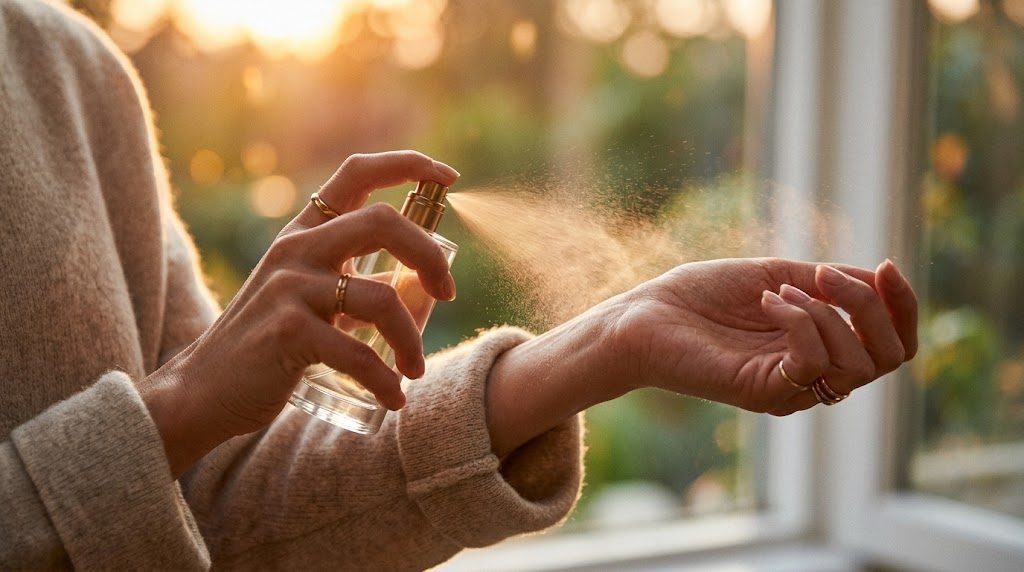
With perfume concentration explained for practical application, apply a fragrance-free body lotion or a light layer of petroleum jelly to pulse points before spraying your perfume. You can also explore our complete guide on body care and fragrance layering techniques to optimize your scent retention.
3. Temperature and Weather Conditions
Heat accelerates chemical evaporation. In hot summer weather, perfume molecules move rapidly, projecting intensely for the first hour but exhausting their lifespan much faster. Cold winter air slows evaporation down, making scents appear quieter but allowing them to last longer on skin and clothing.
How to Choose the Right Concentration for Every Occasion
Matching your fragrance strength to your environment ensures you always make a refined impression without overpowering those around you. Here is how having perfume concentration explained helps you select the right tier based on your routine:
Daily Office and Professional Settings
In enclosed work environments, high-concentration scents can quickly cause headache triggers for colleagues. An Eau de Toilette or a light Eau de Parfum applied with a restrained hand (1–2 sprays maximum) provides a subtle, polished presence without filling the room.
Evening Events, Date Nights, and Weddings
Special occasions call for warmth, depth, and memorable performance. An Eau de Parfum or an Extrait de Parfum shines during evening events, as the warm ambient setting allows rich base notes like vanilla, rose, and amber to bloom slowly. For specific event recommendations, see our guide on date night fragrance selections.
Seasonal Transitions
As outdoor temperatures shift throughout the year, your fragrance choices should adjust accordingly. High summer heat amplifies strong oils, making light EDTs and Colognes the most comfortable option. During freezing winter months, skin dries out and cold air dampens scent projection, making rich Extraits and EDPs ideal choices when keeping perfume concentration explained principles in mind.
Key Takeaways
- Concentration means oil ratio: Having perfume concentration explained simply shows the percentage of pure aromatic oil dissolved in alcohol and water, which dictates wear time and skin behavior.
- Extrait is long-lasting but intimate: Extrait de Parfum (20–40% oil) lasts 8–12+ hours with a subtle, close-to-skin projection, whereas EDP (15–20% oil) is the ideal balance of strong projection and longevity.
- EDT vs EDP formulas differ: Brands frequently reformulate the fragrance notes between EDT and EDP versions of the same scent—EDTs focus on bright top notes, while EDPs feature deeper base notes.
- Base notes dictate true longevity: Oriental, woody, and amber notes naturally stay on skin much longer than citrus or green notes, regardless of the bottle concentration label.
- Hydration amplifies performance: Applying perfume to moisturized, well-hydrated skin dramatically improves scent retention and delays oil evaporation.
Find Your Ideal Fragrance Strength with Golden Hour
Having perfume concentration explained gives you complete control over your personal scent trail. Rather than relying on guesswork or flashy marketing claims, you can now evaluate any bottle based on its oil concentration, ingredient weights, and seasonal suitability.
We invite you to explore our comprehensive perfume discovery guide to learn how to test scents effectively on skin, decipher complex pyramid notes, and build a versatile scent collection that uniquely reflects who you are.
Frequently Asked Questions
Does higher perfume concentration mean better quality?
No, having perfume concentration explained reveals that a higher percentage indicates a greater ratio of aromatic oil to alcohol, not superior quality. High-grade ingredients can exist in a light Eau de Toilette, while synthetic low-grade oils can be blended at an Extrait strength. Concentration determines wear time, warmth, and density rather than luxury status.
Why does my Eau de Parfum vanish after just two hours?
Fast scent fading usually occurs due to dry skin, light citrus-dominant notes, or olfactory fatigue, where your brain blocks out a familiar scent. Applying unscented moisturizer before spraying helps lock in scent molecules. Additionally, rich base notes naturally survive hours longer than fresh top notes.
Can I spray Extrait de Parfum on my clothes?
It is best to proceed with caution when applying Extrait de Parfum to garments. Because Extrait de Parfum contains a very high concentration of natural fragrance oils and less alcohol, it can leave visible oil stains on delicate fabrics, silk, and light-colored cotton. Always spray onto pulse points instead.
Is Eau de Cologne only meant for men?
No, Eau de Cologne is a unisex concentration tier defined strictly by its 2% to 4% oil ratio, not by gender. While traditional 18th-century colognes featured crisp citrus and herbal notes popular in classic men’s grooming, modern cologne strength fragrances are created for everyone seeking a light refresh.
How many sprays of Eau de Parfum should I apply?
For standard Eau de Parfum formulations, 2 to 3 sprays placed on warm pulse points—such as the wrists, base of the neck, or inner elbows—provide optimal daily performance. Applying more than 4 sprays can overwhelm enclosed indoor spaces and trigger olfactory fatigue for yourself and others.
Does perfume concentration affect shelf life and expiration?
Yes, fragrances with higher oil concentrations like Extrait de Parfum and Eau de Parfum generally remain stable longer than light alcohol mists if stored properly. Alcohol acts as a protective preservative, but heavy oil bases oxidize slower than delicate top-heavy formulas when kept away from heat and sunlight.
Why do EDT and EDP versions of the same perfume smell different?
Perfumers often rebalance the fragrance pyramid between concentrations rather than simply adding more oil. An EDT version typically emphasizes volatile top notes like citrus and light florals for fresh radiance, while an EDP increases warm resinous base notes like amber and wood to support higher oil density.