Beyond the Hype: How to Choose a Fruity Floral Perfume for Women for Year-Round Wear
Finding the perfect fruity floral perfume for women can feel like walking a tightrope between elegant sophistication and a sticky-sweet flashback to middle school locker rooms. The fragrance market is saturated with overly syrupy launches that promise a fresh, modern vibe but dry down into a cloying mess within an hour. You want a fragrance that feels vibrant, grounded, and undeniably grown-up, but the sheer volume of marketing hype makes it nearly impossible to know what will actually work with your body chemistry.
Quick answer: A high-quality fruity floral perfume for women balances juicy, volatile fruit top notes (like pear, bergamot, or plum) with a rich floral heart and a grounding base of woods or musk. To find your perfect match for year-round wear, prioritize fragrances with deep base notes that anchor the sweetness, preventing the scent from evaporating into a sugary mist.
Welcome to Golden Hour, where we strip away the marketing exaggeration to help you build a beauty and fragrance wardrobe you genuinely love. Today, we are breaking down exactly how to navigate the floral fruity fragrance family, decode ingredient labels, and find a signature scent profile that lasts all day, no matter the season.
What Makes a Fruity Floral Perfume for Women Feel Grown-Up?
The fruity floral fragrance family is often misunderstood by fragrance enthusiasts. Because fruit notes are historically associated with youth-targeted body mists, many assume this scent profile lacks depth or elegance.
However, some of the most celebrated and expensive niche fragrances in the world fall into this exact category. The difference between a cheap body spray and a luxurious fruity floral perfume for women comes down to the quality of the ingredients, the mastery of the blending, and the presence of contrasting notes.
A sophisticated fragrance rarely gives you all its secrets at the first spray. It evolves, allowing the bright, juicy opening to slowly melt into a warm, lingering embrace.
The Anatomy of the Scent Profile
To understand how these fragrances work, you need to look at the traditional fragrance pyramid. This structure dictates how a perfume unfolds on your skin over time.
- Top Notes (The Hook): This is where the fruit usually lives. Citrus (bergamot, grapefruit), orchard fruits (apple, pear, peach), and berries provide an immediate, mouth-watering burst that lasts about 15 to 30 minutes.
- Heart Notes (The Core): As the fruit softens, the florals emerge. Rose, jasmine, tuberose, and peony make up the body of the scent, lingering for several hours and defining the perfume’s personality.
- Base Notes (The Anchor): This is the secret to a grown-up scent. Woods, musk, amber, and sometimes patchouli ground the fragrance, giving it longevity and preventing the sweet notes from becoming overwhelming.
Without a strong base, a fragrance will disappear quickly or smell entirely linear and flat. If you want to dive deeper into how different floral heart notes perform, our guide on how to choose a rose perfume for women offers a comprehensive look at one of perfumery’s most versatile ingredients.
Dispelling the “Too Sweet” Myth
Not all fruits are sugar-bombs. Modern perfumery uses a wide spectrum of fruit notes to create different emotional responses.
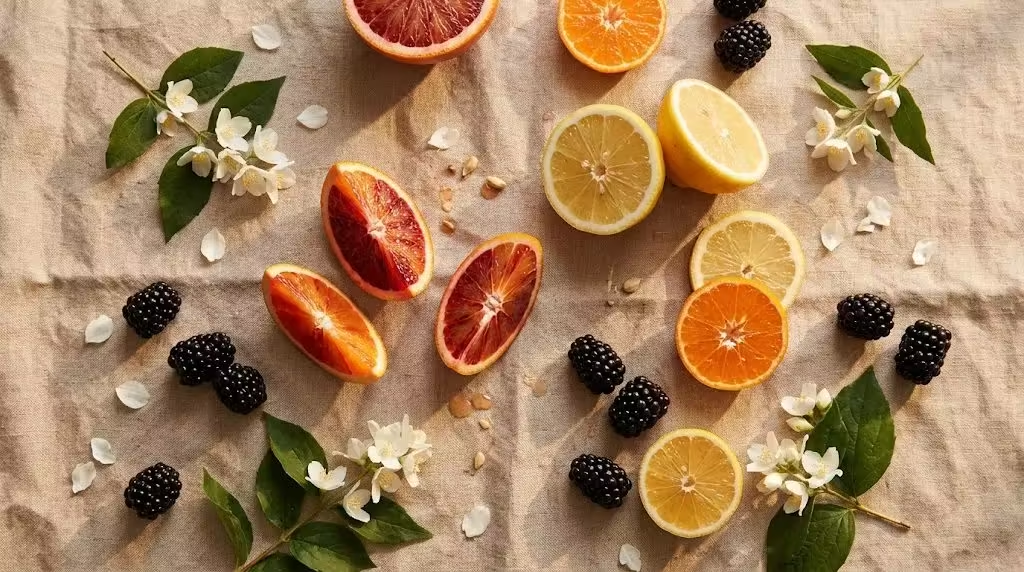
Tart fruits like rhubarb, blackcurrant, and grapefruit add a sharp, sophisticated edge that cuts through heavy florals. Alternatively, fleshy fruits like fig and plum bring a creamy, dark depth that feels incredibly sensual and mysterious.
When you are looking for the best fruity floral fragrances, do not immediately dismiss a bottle just because it lists “raspberry” or “peach” on the label. Pay attention to what those fruits are paired with—a peach paired with dry cedarwood smells entirely different than a peach paired with vanilla marshmallow.
How to Choose a Fruity Floral Perfume for Women by Season
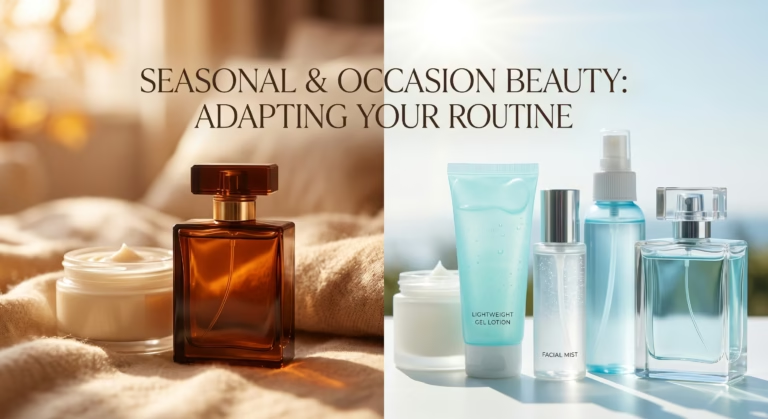
One of the biggest mistakes consumers make is assuming that all fruity florals are meant strictly for summer vacations. While a vibrant mango-hibiscus blend is undeniably summery, the fruity floral category is surprisingly versatile.
By shifting the specific types of fruits and flowers in your fragrance, you can easily wear this scent profile 365 days a year. The key is matching the weight and temperature of the notes to the climate around you.
Spring and Summer: Crisp, Bright, and Aquatic
In high heat and humidity, heavy fragrances can become suffocating. Your skin temperature rises, causing perfumes to project further and evaporate faster.
For warmer months, look for a fruity floral perfume for women that relies on high-water-content fruits and delicate, airy flowers. These elements create a refreshing, cooling effect on the skin.
- Ideal Fruits: Watermelon, pear, green apple, bergamot, lemon, and lychee.
- Ideal Florals: Freesia, lily of the valley, orange blossom, and sheer peony.
- The Vibe: Crisp cotton dresses, iced tea on a patio, and effortless daytime elegance.
These lighter compositions are perfect for humid days because they slice through the thick air without overwhelming those around you.
Autumn and Winter: Syrupy, Spiced, and Warm
When the temperature drops, your skin naturally becomes drier, which can cause lighter perfumes to vanish almost instantly. Cold weather mutes fragrance, meaning you need richer, denser notes to cut through the chill.
This is the time to embrace dark, syrupy fruits and heavy, narcotic florals. The sweetness of the fruit takes on a baked or jammy quality, which feels incredibly comforting and luxurious.
- Ideal Fruits: Dark plum, black cherry, blackberry, fig, and spiced apple.
- Ideal Florals: Tuberose, deep velvet rose, ylang-ylang, and orchid.
- The Vibe: Cashmere sweaters, dimly lit wine bars, and intimate holiday parties.
If you want to explore more about grounding your fragrances for colder weather, check out our insights on how to choose a woody perfume for women, which often share these essential winter base notes.

Decoding the Notes: Which Fruits and Flowers Work Best Together?
Perfumery is a delicate science of chemistry and art. According to the International Fragrance Association (IFRA), creating a balanced fragrance requires a deep understanding of how different aromatic compounds interact safely and beautifully on human skin.
When shopping for a fruity floral perfume for women, you will start to notice classic pairings that perfumers return to again and again. Understanding these combinations can help you blind-buy with more confidence or communicate better with a fragrance sales associate.
Classic Fruity Floral Pairings
Here is a breakdown of some of the most successful fruit and floral combinations, and why they work so beautifully together.
| Fruit Note | Floral Pairing | Base Note Anchor | The Overall Effect |
|---|---|---|---|
| Pear (Crisp, watery) | Freesia (Clean, peppery) | White Musk | Fresh, inoffensive, perfect for the office or casual weekends. |
| Blackberry (Tart, jammy) | Rose (Rich, romantic) | Cedarwood | Dark, mysterious, slightly gothic, and incredibly elegant for evening wear. |
| Mandarin (Sweet citrus) | Jasmine (Indolic, lush) | Amber | Sun-drenched, radiant, and warmly sensual. |
| Fig (Creamy, green) | Iris (Powdery, earthy) | Sandalwood | Sophisticated, niche-leaning, and comforting like a second skin. |
| Lychee (Sweet, exotic) | Peony (Fresh, pink) | Vetiver | Playful, sparkling, and youthful without being immature. |
By looking at a fragrance’s note breakdown (often found on reputable databases like Fragrantica), you can use this table to predict whether a scent will be a clean daytime staple or a sultry nighttime weapon.
The Secret to a Long-Lasting Fruity Floral Perfume for Women
The most common complaint about the fruity floral category is longevity. It is incredibly frustrating to spend a significant amount of money on a beautiful perfume, only to have it vanish by your lunch break.
However, understanding the science of scent volatility can help you select long-lasting fruity floral scents and apply them in a way that maximizes their lifespan.
Why Citrus and Bright Fruits Fade First
Fragrance notes are classified by their molecular weight. Citrus fruits, berries, and watery fruits have very small, light molecules. Because of this, they evaporate rapidly when exposed to the heat of your skin.
This is why the first five minutes of a perfume test are often misleading. You are smelling the most volatile notes, which will not represent how the fragrance smells for the remaining eight hours. Never buy a perfume based purely on the initial spray.

The Power of Base Notes and Concentration
If you want a fruity floral perfume for women to last, you must look at the base notes. Ingredients like patchouli, amber, vanilla, musk, and various woods consist of large, heavy molecules that anchor the lighter fruit and floral notes, slowing down their evaporation.
Furthermore, concentration matters. An Eau de Parfum (EDP) or Extrait de Parfum contains a higher percentage of perfume oils compared to an Eau de Toilette (EDT), generally resulting in better longevity on the skin. For a deep dive into how concentration affects performance, read our guide on perfume longevity and projection.
Application Tips for Maximum Longevity
Your skin condition plays a massive role in how long a fragrance lasts. Dry skin absorbs perfume oils quickly, causing the scent to disappear.
- Hydrate your skin: Apply an unscented body lotion or a complementary body oil straight out of the shower before spraying your perfume. The oils give the fragrance molecules something to cling to.
- Target pulse points: Spray on your wrists, the inside of your elbows, the nape of your neck, and behind your knees. The natural heat from these areas helps project the scent.
- Do not rub your wrists: Rubbing creates friction and heat, which breaks down the delicate top notes of the fruit and dulls the fragrance prematurely.
- Spray your clothes: Fabric holds onto scent much longer than skin. A light mist over your scarf or blouse (test on a small area first to ensure it does not stain) will keep the floral fruity notes lingering for days.
Matching Your Fruity Floral Scent to Your Daily Life
Fragrance is an invisible accessory, and just like your wardrobe, certain scents are better suited for specific occasions. Finding a signature scent profile means choosing a fragrance that fits seamlessly into your lifestyle.
Office-Friendly Fruity Florals
The workplace requires a certain level of fragrance etiquette. You want to smell put-together and approachable without triggering your coworker’s allergies or dominating the boardroom.
For the office, choose a fruity floral perfume for women that leans clean, crisp, and close to the skin. Look for notes like green apple, pear, or white peach paired with transparent florals like lily of the valley or freesia. Avoid heavy, syrupy fruits like dark plum or overpowering florals like tuberose. You can find more tailored advice in our guide to the best office perfumes for women in 2026.
Evening and Date Night Blends
Evening fragrances allow for much more drama and intensity. This is where you can bring out the jammy, rich, and sensual fruity florals.
Look for combinations of dark berries, black cherry, or fig mixed with heady florals like jasmine sambac or velvet rose. A strong base of amber, vanilla, or patchouli will give the fragrance a sultry, addictive quality that leaves a memorable trail (sillage) wherever you go.

Common Mistakes to Avoid When Testing
The beauty counter can be an overwhelming place, filled with aggressive lighting, pushy sales tactics, and a cloud of competing scents. It is easy to make a rushed decision and end up with a bottle you regret.
To find a true fruity floral perfume for women that works for you, you need to change how you test fragrances.
Testing on Paper vs. Skin Chemistry
Paper blotters are excellent for narrowing down your options, but they will never tell you the truth about a perfume. Fragrance needs the heat and natural oils of human skin to fully develop.
A peach and rose perfume might smell bright and lovely on paper, but turn sharp and sour on your skin due to your unique pH balance and diet. Always test your final two choices directly on your skin before making a purchase.
The Patience Game (Waiting for the Dry-Down)
We cannot stress this enough: you must wait for the dry-down. The dry-down is the final stage of a perfume’s evolution, usually occurring 30 to 60 minutes after application.
When you spray a fragrance, walk away from the perfume counter. Go grab a coffee, run an errand, or simply step outside for some fresh air. Give the juicy top notes time to settle, allow the florals to bloom, and see how the base notes interact with your skin. If you still love the scent two hours later, you have found a winner.
Key Takeaways
Navigating the world of fragrance does not have to be intimidating. By understanding the basics of scent construction, you can confidently find a fragrance that feels authentically you.
- A grown-up fruity floral perfume for women requires a solid base of woods, musk, or amber to anchor the sweetness of the fruit.
- Match your fragrance to the season: crisp, watery fruits (pear, melon) for summer, and dark, jammy fruits (plum, blackberry) for winter.
- Citrus and fruit notes evaporate the fastest; always judge a perfume by its heart and base notes, not just the initial spray.
- Never buy based on a paper blotter. Your unique skin chemistry will drastically alter how the fruity and floral notes develop over time.
- Maximize longevity by moisturizing your skin before application and avoiding the urge to rub your wrists together.
Explore More from Golden Hour
Finding your signature scent is a deeply personal journey, and we are here to guide you every step of the way without the marketing noise. If you enjoyed this breakdown, you will love our other honest fragrance guides.
Looking to explore other scent families? Read our honest guide on how to choose a jasmine perfume for women, or discover how to build an entirely new cold-weather routine with our guide to building a winter beauty routine that actually protects your skin and spirit. Take your time, test patiently, and wear what makes you feel most like yourself.
Frequently Asked Questions
What is the difference between a fruity floral and a gourmand perfume?
A fruity floral perfume for women focuses on the natural sweetness and tartness of fruits paired with flower blossoms. A gourmand fragrance, on the other hand, is built around edible, dessert-like notes such as vanilla, caramel, chocolate, and spun sugar, making it smell much more like baked goods than fresh produce.
Are fruity floral perfumes appropriate for the workplace?
Yes, but you should choose lighter, fresher compositions. Look for watery fruits like pear or apple paired with clean florals like freesia or peony. Avoid heavy, jammy fruits or overly sweet, room-filling fragrances that might distract or irritate your colleagues in a closed office environment.
Why does my fruity floral perfume smell sour after a few hours?
This is often a reaction between the fragrance formulation and your unique skin chemistry. Highly acidic skin or certain diets can cause tart fruit notes (like grapefruit or blackberry) or certain synthetic musks to turn sharp or sour as the perfume dries down. Always test on your skin for several hours.
Can older women wear fruity floral fragrances?
Absolutely. Fragrance has no age limit. While marketing often targets sweet body sprays at teenagers, high-end fruity florals featuring complex notes like fig, dark plum, and rich rose backed by cedarwood or amber are incredibly sophisticated, elegant, and perfectly suited for women of any age.
How can I make my fruity floral scent last longer on my skin?
Because fruit notes are highly volatile, they evaporate quickly. To extend their life, apply an unscented body lotion or body oil immediately after showering, then spray your perfume over the hydrated skin. You can also lightly mist your clothing, as fabric holds onto fragrance molecules much longer than human skin.
Which fruits work best for winter fragrances?
In colder weather, you need denser, richer notes to project through the cold air. Opt for dark, fleshy, or jammy fruits rather than crisp ones. Notes of black cherry, dark plum, blackberry, and spiced apple paired with warm amber or patchouli bases create a beautifully cozy and luxurious winter scent.
Do natural fruit extracts last longer than synthetic ones in perfume?
Not necessarily. In fact, many fruit smells (like apple, pear, and peach) cannot be naturally extracted and must be recreated synthetically in a lab. High-quality synthetic aroma-chemicals are essential in modern perfumery; they are often more stable, safer for the skin, and designed to last longer than volatile natural extracts.