Perfume Sillage Explained: How to Master Your Fragrance Trail and Projection
Perfume sillage determines how your personal scent exists in the world around you and how it communicates your presence before you even speak. Have you ever walked past someone and caught a captivating scent trail lingering in the air long after they moved away? Or perhaps you have sprayed your favorite luxury scent only to feel like it vanished into thin air within thirty minutes, leaving you wondering if your skin chemistry is to blame?
You are not alone in this frustration. Navigating fragrance performance can be confusing when marketing hype and conflicting online reviews complicate simple sensory science. This complete editorial guide breaks down the physics, art, and practical application of scent trails so you can control your aura with complete confidence and precision.
If you are building your personal scent collection from scratch, start with our overarching Fragrance Fundamentals guide to understand how notes, raw materials, and wear times interact seamlessly. For those transitioning their collections across seasons, our complete guide to seasonal and occasion beauty adapting your routine offers invaluable strategies for matching scent projection to climate changes. Additionally, exploring our guide on perfume basics for beginners will give you a rock-solid foundation in fragrance anatomy.
Quick Answer: Perfume sillage (pronounced see-yahzh) refers to the invisible scent trail or aura left behind in the air as a fragrance wearer moves. Derived from the French word for “wake” (like a boat moving through water), sillage measures how far a scent radiates through air rather than how long it lasts directly on your skin.
What Is Perfume Sillage? Defining the Scent Trail
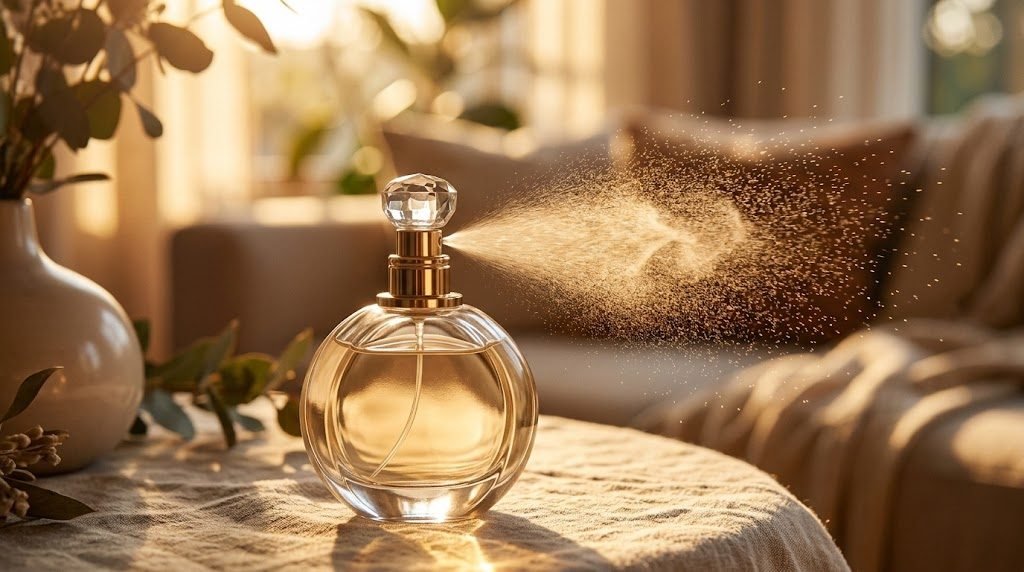
To truly understand perfume sillage, it helps to visualize a boat moving gracefully through calm waters. The disturbed water streaming behind the vessel is its wake; in the world of perfumery, sillage is the atmospheric wake left behind by volatile fragrance molecules suspended in air currents.
Originating from the French verb siller, meaning “to wake” or “to trail,” sillage is often confused with other scent performance terms. While many fragrance lovers bundle projection, longevity, and sillage into one idea, professional perfumers recognize them as distinct behavioral characteristics of volatile aromatic compounds.
Whether you are selecting a soft skin scent for warm mornings or a dramatic aura for crisp evenings, mastering sillage allows you to tailor your presence appropriately for every room you enter, ensuring your fragrance complements rather than overwhelms your environment.
Perfume Sillage vs. Projection vs. Longevity: What Is the Difference?
Disentangling these three core concepts is essential for reading fragrance reviews accurately and evaluating how a scent wears throughout the day:
- Perfume Sillage: The lingering trail a fragrance leaves behind in the air when the wearer is in motion across a room or outdoor space.
- Projection: How far a perfume radiates outward from warm skin while the wearer remains still, such as sitting at a desk or standing in conversation.
- Longevity: The total duration a scent remains detectable on skin or fabric from initial spray to final drydown, regardless of how far it radiates outward.
A fragrance can exhibit high longevity with minimal sillage, creating an intimate skin scent, or intense sillage paired with brief longevity, such as heavy citrus top notes that bloom intensely for twenty minutes before evaporating entirely into the atmosphere.
The Molecular Science Behind Perfume Sillage
Why do certain fragrances fill an entire hallway while others sit quietly close to the collarbone? The answer lies in molecular weight, volatility, and skin chemistry.
Perfumes are composed of diverse aromatic materials diluted in an alcohol base. When sprayed, ambient body heat causes the alcohol base to evaporate, releasing scent molecules into the surrounding atmosphere. The speed at which these molecules volatilize determines your scent trail.
According to historical perfumery principles documented on Wikipedia, research published by ScienceDirect on fragrance chemistry, and insights from the Fragrantica encyclopedia of perfumes, smaller and lighter aromatic molecules evaporate rapidly, creating an immediate splash of scent. Larger, heavier molecules cling tightly to skin surfaces and evaporate slowly over many hours.

How Perfume Sillage Depends on Fragrance Notes and Volatility
To understand scent diffusion, we must examine how specific fragrance notes and scent layers behave during wear:
- Top Notes (High Volatility): Ingredients like bergamot, lemon, pink pepper, and green tea have small molecular structures. They flash off rapidly, offering strong initial projection but brief sillage.
- Heart Notes (Medium Volatility): Floral elements like rose, jasmine, and lavender alongside juicy fruits form the core character. They evaporate at a moderate pace, forming the main body of your scent trail during the first two hours.
- Base Notes (Low Volatility): Heavy resins, vanilla, patchouli, sandalwood, oakmoss, and synthetic musks possess heavy molecular structures. They evaporate very slowly, sustaining subtle sillage long into the evening.
How Concentration Shapes Your Scent Aura
Many perfume enthusiasts assume higher perfume concentration automatically guarantees massive sillage. Paradoxically, the opposite is frequently true. To understand why, review our guide to perfume concentrations and longevity.
High-concentration formulations like Extrait de Parfum (20–40% oil) contain less evaporating alcohol. Because alcohol acts as the carrier propellant that flings molecules into ambient air, Extraits tend to sit closer to skin with rich longevity but moderate, elegant sillage. Conversely, Eau de Toilette (5–15% oil) contains more alcohol, creating an explosive, airy diffusion that dissipates faster.
| Fragrance Concentration | Oil Concentration | Average Sillage Intensity | Typical Longevity |
|---|---|---|---|
| Eau de Cologne (EDC) | 2% – 4% | Light & Brief | 1 – 2 Hours |
| Eau de Toilette (EDT) | 5% – 15% | Moderate to High (Airy) | 3 – 5 Hours |
| Eau de Parfum (EDP) | 15% – 20% | Balanced & Strong | 6 – 8 Hours |
| Extrait de Parfum / Parfum | 20% – 40% | Intimate to Medium (Dense) | 8 – 12+ Hours |
Fragrance Families That Rule Perfume Sillage
The chemical identity of specific raw materials dictates how effortlessly molecules travel through room air currents. When selecting a fragrance based on sillage preferences, exploring specific fragrance family categories yields predictable results.

1. Ambery & Oriental Families
Rich amber compositions containing benzoin, labdanum, vanilla, and sweet spices boast exceptional sillage. Their dense base structures combined with moderate heat sensitivity allow them to project powerful trails that linger in enclosed spaces for hours.
2. Woody & Chypres Compositions
Woody notes like patchouli, vetiver, and cedarwood alongside classic chypre elements create robust, distinct trails. Synthetic fixatives like ISO E Super or Ambroxan—widely studied across fragrance industry standards registered with the International Fragrance Association (IFRA)—are frequently added to woody formulas specifically to amplify radiant, floating sillage.
3. Fresh Citrus & Aquatic Scents
Fresh notes of sea salt, sparkling grapefruit, and light green leaves create vibrant, invigorating initial trails. However, because these light molecules dissipate swiftly, their sillage remains temporary unless grounded by modern fixative bases.
How to Test and Measure Perfume Sillage Accurately
Evaluating your own sillage is inherently tricky due to olfactory fatigue—commonly known as nose blindness. Within 15 to 30 minutes of applying a scent, your brain filters out continuous scent signals to stay alert for new environmental odors.
Because you cannot reliably smell your own scent trail, follow these objective, professional testing protocols:
- The Unworn Cardigan Test: Spray two sprays of perfume onto a clean, unscented cotton scarf or sweater in a warm room. Leave the room and close the door. Return 30 minutes later; as you walk through the doorway, observe how far from the garment you detect the air scent.
- The Passing Breeze Method: Apply your fragrance as usual before meeting a trusted friend. Walk past them at a normal distance in a calm indoor space without breeze, and ask them to note when and how strongly they catch your scent trail.
- The Paper Blotter Test: Wave a freshly sprayed olfactory blotter through calm air and walk into the space three seconds later to evaluate lingering ambient atmosphere.
When shopping or sampling new scents, learn how to evaluate perfume reviews like a pro so you can filter out exaggerated claims about performance.
How to Control, Boost, or Subdue Your Scent Trail
Mastering your scent aura requires adjusting application based on your daily environment, weather conditions, and personal comfort. Whether you want a whisper or a statement, simple mechanical tweaks yield dramatic control.
How to Increase Perfume Sillage and Projection
If your favorite perfume disappears too quickly into the surrounding air, try these expert techniques to amplify its presence:
- Apply to Warm Pulse Points: Spray where arterial blood flows closest to the skin surface—wrists, inner elbows, sides of the neck, and behind knees. Body heat acts as a natural radiator for aromatic oils.
- Moisturize Before Spraying: Dry skin absorbs perfume oils like a sponge, muting sillage. Apply a layer of unscented body lotion or rich body oil to lock moisture into the skin barrier before applying scent.
- Spray Fabric and Hair Lightly: Hair locks and clothing fibers hold onto fragrance molecules without burning through them as quickly as warm skin. Spray your hairbrush or clothes hem for an enduring trail as you move.
- Layer Strategically: Combine your EDP with matching body lotions or complementary shower creams following a structured body care and fragrance layering routine.
How to Tame an Overpowering Sillage
When a perfume turns out to be far more potent than anticipated, dialing back its projection prevents overwhelming colleagues or dinner guests:
- Lower Application Points: Spray exclusively on the torso, lower abdomen, or behind knees. This allows heat to push the scent upward gradually without concentrating it near people’s faces.
- Use the “Walk-Through” Mist Method: Spray once into the air in front of you and walk through the cloud for an even, delicate micro-distribution.
- Rub Warm Rubbing Alcohol: If you accidentally over-applied, dab an rubbing alcohol cotton pad onto pulse points to break down excess perfume oils gently.
Choosing the Right Sillage for Every Occasion and Season
A fragrance trail that feels dreamy during an outdoor autumn evening can become suffocating inside an enclosed summer office. Choosing your aura thoughtfully shows respect for your surroundings.
Matching Sillage to Professional and Social Settings
Match your scent presence to the spatial demands of your day:
- Workplace & Office: Choose intimate, soft-sillage fragrances with clean floral or soft woody profiles. Explore our dedicated office beauty and workplace fragrance guide to strike the perfect professional balance.
- Evening Parties & Celebrations: Formal events, club nights, and festive outdoor gatherings welcome bolder ambery or oriental scents with expansive trails. Review our curated party beauty and fragrance guide for night-out inspiration.
- Intimate Romantic Dates: Date nights call for close-range warmth rather than loud projection. Choose moderate-sillage scents with inviting vanilla, soft amber, or warm musk notes as detailed in our date night beauty and fragrance recommendations.
Environmental Impact: Temperature and Humidity
Weather plays a massive role in molecule expansion. Heat energizes volatile scent molecules, causing them to project faster and farther. High humidity traps lingering vapor in the air, amplifying sillage dramatically.
In hot summer conditions, heavy oriental fragrances can expand aggressively. Opt for crisp aquatics or bright green compositions as explained in our summer beauty and fragrance guide. Conversely, cold winter air slows down molecular movement, making rich, spicy notes ideal as detailed in our winter fragrance guide.
Key Takeaways
- Sillage is an atmospheric trail: Sillage measures the lingering scent left in the air as you walk, distinct from skin longevity or stationary projection.
- Concentration affects diffusion counterintuitively: Lighter concentrations like Eau de Toilette often diffuse faster and wider initially due to higher alcohol content, whereas Extraits sit closer with denser longevity.
- Molecular structure dictates trail: Heavy base notes (resins, woods, vanilla) create enduring sillage trails, while citrus and fresh notes flash off quickly.
- Hydrated skin amplifies projection: Applying unscented lotion before spraying prevents your skin from absorbing fragrance oils, boosting atmospheric release.
- Context matters always: Adapt your fragrance sillage to season, humidity, and setting to maintain an inviting, refined personal signature.
Finding your signature scent trail is an enjoyable personal journey. Explore our complete collection of perfume discovery guides or consult our fragrance recommendations by occasion to find scents that reflect your authentic style.
Frequently Asked Questions
What is perfume sillage?
Perfume sillage refers to the lingering trail or aura of scent left in the air when a fragrance wearer moves through a space. Pronounced “see-yahzh,” it comes from the French word for “wake,” describing how scent molecules hover in air currents behind you rather than how scent smells directly on skin.
How do you pronounce sillage in English?
Sillage is pronounced “see-yahzh” (rhyming loosely with “garage”). The “s” makes a soft sound, and the ending “-age” carries a French phonetic “zh” sound. Avoid pronouncing it as “sill-age” or “sill-ij.”
Why can’t I smell my own perfume sillage?
You cannot smell your own sillage easily because of olfactory fatigue, commonly called nose blindness. Your brain naturally desensitizes to constant olfactory inputs after 15 to 30 minutes to remain responsive to new environmental scents, even though people around you can still clearly detect your scent trail.
Does EDP or EDT have stronger sillage?
Eau de Toilette (EDT) often has a broader initial sillage because its higher alcohol content evaporates rapidly, throwing scent molecules outward. However, Eau de Parfum (EDP) maintains a richer, more sustained scent trail over longer hours due to its higher concentration of heavy base oils.
How do I make my perfume sillage last longer?
To lengthen your fragrance trail, prep your skin with an unscented moisturizer or body oil before spraying. Apply perfume to key body warm spots like pulse points, hair tips, and clothing hems, and consider layering with matching body products to maintain steady molecular evaporation throughout the day.
What causes bad or overwhelming sillage?
Overwhelming sillage occurs when high concentrations of heavy base notes are over-applied in warm, humid conditions or enclosed spaces. High heat accelerates molecular evaporation rapidly, causing dense resins, musks, and sweet vanillas to expand aggressively and saturate surrounding air.
Is high sillage always better in a fragrance?
High sillage is not inherently better than intimate sillage. While powerful scent trails suit outdoor festivities and chilly evenings, soft or intimate sillage is far preferable in office environments, high-temperature summer days, crowded flights, and quiet romantic dinners where intense projection can become invasive.