Personal Care Product Reviews: The Ultimate Honest Guide to Navigating Hype, Ingredients, and Quality in 2026
Personal care product reviews are your ultimate safeguard against the relentless waves of sponsored praise, viral hype, and conflicting opinions that dominate modern beauty culture. When every single launch is heralded as a miracle, figuring out what genuinely deserves a spot on your shelf requires a discerning eye, technical literacy, and a solid understanding of formulation basics. Whether you are building out a comprehensive regimen or simply looking to replace a depleted body wash, cutting through the marketing noise is essential for both your skin and your peace of mind.
Trustworthy personal care product reviews serve as a reliable roadmap through the crowded beauty landscape, helping consumers decode ingredient lists, assess real-world performance, and separate clever marketing from genuine efficacy. By learning how to analyze reviews critically and match product formulations to your specific skin type and lifestyle needs, you can build a sustainable, effective grooming routine without falling for empty promises.
To dive deeper into setting up a complete regimen, you can explore our The Complete Body Care & Grooming Routine From Cleansing to Fragrance Layering pillar guide. Furthermore, understanding general consumer psychology in modern markets is vital; you can read more via Wikipedia’s consumer behaviour analysis and explore governance frameworks on product safety through the U.S. Food and Drug Administration Cosmetics Guidance.
Why Most Personal Care Product Reviews Miss the Mark
The modern digital ecosystem is saturated with quick-take videos and incentivized unboxings that prioritize visual aesthetics over rigorous testing. Many reviewers receive products for free, creating an inherent bias that skews perception. Furthermore, skin biology is entirely individual; what feels deeply hydrating to one person might cause irritation or congestion for another. Understanding this inherent subjectivity is the first step toward becoming a more empowered consumer.
When reading critiques across social media and retail platforms, it helps to identify common pitfalls that diminish reliability. Recognizing these patterns allows you to spot genuine insights hidden among enthusiastic praise or overly harsh complaints. True expertise in evaluating modern cosmetics requires looking beyond surface-level aesthetics and examining how independent reviewers structure their testing methodologies across diverse skin types and environmental conditions.
Furthermore, the democratization of publishing means anyone can broadcast an opinion, yet very few creators possess the technical vocabulary to differentiate between superficial formulation adjustments and true scientific breakthroughs. When you learn to filter out emotional resonance and focus strictly on verified performance metrics, your purchasing decisions become infinitely more reliable, sustainable, and cost-effective over the long term.
Decoding Personal Care Product Reviews for Real-World Value
When analyzing personal care product reviews, you must train yourself to look for concrete behavioral indicators of unbiased testing. Real consumer advocacy involves long-term observation rather than immediate visceral reactions. Reviewers who document their skin condition over weeks provide invaluable data that flash-in-the-pan unboxings simply cannot replicate.
To ensure that your purchasing framework is robust, consider how professional testing standards compare to user feedback. For additional perspective on evaluating professional formulations, explore our guide on Beyond the Hype: How to Navigate New Beauty Launches Like an Expert.
The Trap of Instant Gratification Culture
A frequent flaw in contemporary evaluations is the demand for overnight transformations. High-performance body care and grooming formulas rely on consistent use over weeks—and sometimes months—to deliver noticeable changes in skin texture, barrier strength, or scent longevity. Reviews written after a single application often reflect temporary sensory appeal rather than true product performance.
To evaluate claims realistically, consider the biological timeline of skin cell turnover and barrier repair. For an expanded look at how skin biology dictates product success, read our guide on The Science of the Skin Barrier How a Biological Function Became a Global Beauty Movement.
Key Indicators of Short-Term Bias
- Heavy emphasis on initial scent or packaging rather than long-term results.
- Claims of dramatic physical changes within twenty-four hours of use.
- Lack of context regarding the reviewer’s underlying skin type or climate.
- Absence of information regarding patch testing or gradual introduction phases.
- Over-reliance on visual filters and studio lighting rather than natural daylight inspections.

Decoding Ingredient Lists Like a Professional Formulator
The most reliable personal care product reviews always anchor their assessments in the actual ingredient deck rather than marketing buzzwords. Cosmetics and body care formulas are regulated to list ingredients in descending order of predominance, giving you a clear window into what is actually driving the formula. Understanding this hierarchy allows you to bypass misleading front-label claims and evaluate whether a product’s price point matches its raw material composition.
Learning to recognize key humectants, emollients, and active compounds empowers you to look past catchy front-label claims. For instance, a lotion marketed around a rare botanical extract will often contain less than one percent of that ingredient, while the bulk of the hydration is delivered by foundational staples like glycerin or shea butter. Knowing how to interpret INCI (International Nomenclature of Cosmetic Ingredients) standards transforms you from a passive buyer into an active, informed evaluator.
Additionally, paying close attention to preservative systems, emulsifiers, and pH adjusters helps you anticipate potential sensitivities before applying a formula to compromised or freshly shaven skin. A formula that looks exceptional on paper can still fail in practice if its delivery system causes irritation, making comprehensive ingredient scrutiny an indispensable skill for every beauty enthusiast.
Essential Components to Look For
- Humectants: Ingredients like glycerin, hyaluronic acid, and panthenol that draw moisture into the outer layers of the skin.
- Emollients and Occlusives: Compounds such as ceramides, squalane, and natural plant oils that seal in hydration and reinforce the lipid barrier.
- Gentle Surfactants: Cleansing agents that lift impurities without stripping the skin’s natural protective microbiome.
- Antioxidants and Stabilizers: Botanical extracts and vitamins that protect the formula from oxidation while supporting skin defense.
For a comprehensive breakdown of cosmetic chemistry, our guide on Beauty Ingredients Explained: The Ultimate Honest Guide to Decoding Skincare and Cosmetic Formulas offers invaluable insights.
Comparing Product Categories Through Personal Care Product Reviews
Different body care and grooming formats serve distinct purposes, and comparing them directly requires understanding their functional limits. The table below outlines how various product types perform across key consumer priorities.
| Product Category | Primary Benefit | Longevity & Performance | Best Suited For |
|---|---|---|---|
| Rich Body Creams | Deep barrier repair and intense moisture retention | High; locks in hydration for 24+ hours | Dry, rough, or winter-stressed skin |
| Hydrating Body Lotions | Lightweight daily hydration and quick absorption | Moderate; ideal for reapplication | Normal skin types and humid climates |
| Body Mists & Sprays | Instant olfactory refresh and subtle layering | Low to moderate (2–4 hours) | Casual wear, post-workout, or layering |
| Exfoliating Body Washes | Chemical or physical surface renewal | Immediate cleansing with cumulative texture benefits | Keratosis pilaris and dull skin |
| Nourishing Grooming Oils | Targeted sealing and localized skin softening | High; clings to lipid layers effectively | Beards, cuticles, and extremely dry patches |
When reviewing these product categories, it is vital to match the texture to your local climate and daily activity levels. A rich body cream that performs exceptionally well during harsh winter months might feel suffocating during humid summer heatwaves. Top-tier product evaluations always account for seasonal shifts, ensuring that your grooming arsenal adapts fluidly throughout the year rather than remaining static.
Furthermore, evaluating how these textures interact with layered fragrances is a critical part of modern grooming. To see how specialized seasonal selections pair with your overall routine, check out our guide on The Ultimate Guide to Summer Beauty Skincare, Makeup, and Fragrance for Hot Weather.
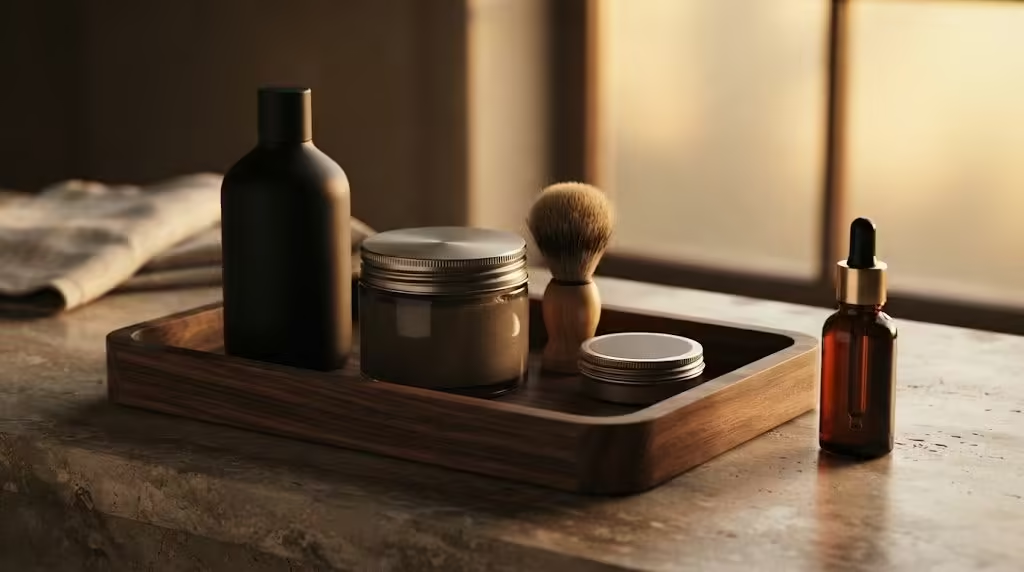
Evaluating Personal Care Product Reviews Through Fragrance and Sensory Experience
For many enthusiasts, the sensory profile of a personal care item is just as important as its functional efficacy. Scent evokes memory, elevates daily routines, and provides a quiet moment of self-care. However, synthetic fragrances and high concentrations of essential oils can occasionally trigger sensitivities, making transparent labeling crucial for anyone managing reactive skin conditions.
When assessing scented lotions, body washes, and grooming oils, look for reviews that detail how the scent evolves over time—from the initial top notes upon application down to the softer skin-musk dry down. A poorly formulated fragrance can smell pleasant in the bottle but turn harsh or metallic once it interacts with individual body chemistry and natural skin oils over the course of a long day.
To master the art of scent coordination and understand how aromatic compounds interact with your personal body heat, you can reference our expert breakdown on Fragrance Notes Explained: How to Read, Understand, and Master Scent Layers Like an Expert.
How to Evaluate Scent Performance
- Check whether the fragrance overpowers or harmonizes with your signature perfume.
- Assess if the scent fades cleanly or turns sour as it interacts with body heat.
- Verify whether the brand offers fragrance-free alternatives for reactive skin.
- Analyze top, middle, and base note transitions rather than judging solely on the initial spray.
- Consider sillage and projection limits to ensure office or intimate setting appropriateness.

Spotting Red Flags in Online Feedback
As you read through consumer forums, e-commerce feedback sections, and beauty blogs, developing a healthy skepticism will save you both money and skin irritation. Independent regulatory bodies such as the International Fragrance Association provide strict guidelines on safety standards, yet unregulated marketing claims still run rampant across the internet.
To ensure you are gathering objective insights, watch out for these common warning signs in product evaluations:
- Unrealistic Miracle Claims: Promises that a standard body wash or lotion can permanently alter skin structure or cure medical conditions.
- Uniform Five-Star Ratings: A complete absence of nuance or constructive criticism often indicates curated or incentivized feedback pools.
- Vague Terminology: Overuse of buzzwords like “detoxifying” or “medical grade” without any supporting formulation details or active percentages.
- Aggressive Urgency Tactics: Claims that you must purchase immediately before a revolutionary batch sells out forever.
- Dismissal of Negative Experiences: Reviewers who attack users reporting breakouts or irritation rather than addressing formulation incompatibility.
To sharpen your critical eye further, take a look at our insights on Beyond the Hype: How to Navigate New Beauty Launches Like an Expert.

Building a Bulletproof Testing Protocol for New Products
Before committing a newly purchased item into your daily rotation, establishing a systematic testing protocol protects your skin barrier from adverse reactions. Even products backed by stellar personal care product reviews can occasionally clash with your unique skin microbiome. Implementing a controlled introduction phase allows you to isolate variables and identify the exact source of any unexpected irritation.
Start by performing a standard patch test on the inner forearm or behind the ear for at least twenty-four to forty-eight hours. Once cleared, introduce the product to a small, localized area of the body rather than applying it head-to-toe all at once. This cautious approach ensures that if a negative reaction occurs, it remains minimal and contained, sparing you discomfort while preserving your skin’s natural balance.
Tracking your experiences in a dedicated beauty journal or digital notes app can also refine your shopping habits over time. Documenting how your skin responds to specific concentrations of glycerin, urea, or botanical extracts gives you empirical data on what works best for your body, turning every past purchase into valuable knowledge for future decisions.
Key Takeaways for Smart Consumer Choices
Mastering the evaluation of personal care items transforms shopping from an impulsive gamble into a rewarding, intentional ritual. Keep these core principles in mind whenever you assess a new product or regimen:
- Prioritize Ingredient Reality: Look past front-label marketing and examine the actual active and foundational components listed on the back.
- Account for Personal Biology: Remember that skin types, climates, and personal sensitivities mean no single review applies universally.
- Value Consistency Over Speed: Give effective body care formulas adequate time to deliver genuine structural improvements.
- Cross-Reference Multiple Sources: Balance quick social media impressions with detailed, technical beauty journalism and peer reviews.
- Maintain a Testing Protocol: Always patch-test new additions to safeguard your skin barrier against unexpected formulation conflicts.
Building a thoughtful routine is an ongoing journey of discovery. We invite you to explore more expert guides across Golden Hour to continue refining your personal care and fragrance philosophy with confidence and clarity.
Frequently Asked Questions
What makes a personal care product review trustworthy?
A trustworthy personal care product review focuses on detailed ingredient analysis, realistic long-term testing timelines, and clear disclosure of the reviewer’s skin type and climate rather than relying on emotional hype or sponsored praise.
How can I tell if an ingredient in a body lotion is effective?
You can determine ingredient efficacy by checking its position in the ingredient deck; foundational humectants and emollients should appear near the top, while active botanical extracts or vitamins should be supported by clinical context.
Why do some highly rated body products irritate my skin?
High ratings often reflect popularity or pleasant initial sensory appeal rather than universal compatibility, meaning common irritants like heavy synthetic fragrances or potent essential oils can still trigger reactions in sensitive skin types.
How long should I test a new body care product before judging it?
Most body care and grooming products require at least two to four weeks of consistent daily use to demonstrate measurable improvements in skin hydration, texture, and overall barrier function.
Should I match my body lotion scent to my perfume?
Matching your body lotion scent to your perfume is not strictly necessary, but choosing complementary fragrance families or unscented bases prevents competing notes from distorting your signature scent trail.
Are expensive personal care products always better than drugstore options?
Price does not dictate performance; many affordable drugstore formulations utilize the exact same high-grade humectants, ceramides, and gentle surfactants found in luxury lines without the markup for branding and packaging.
How do I find reviews that match my specific skin concerns?
Look for niche beauty forums, independent editorial reviews, and community feedback filters where users explicitly state their skin type, climate, and specific concerns such as dryness, keratosis pilaris, or sensitivity.