Beyond the Hype: How to Navigate New Beauty Launches Like an Expert
Tracking the endless wave of new beauty launches on your favorite social media app often feels like stepping into a chaotic, overcrowded department store where every brand is shouting about their latest miracle formula. With a constant stream of new beauty launches dropping weekly, the pressure to keep up can leave you confused, financially drained, and burdened with products your skin does not actually need. How do you separate genuine scientific innovation from clever marketing spin when faced with endless seasonal drops, limited editions, and influencer collaborations?
Quick answer: To confidently evaluate new beauty launches, ignore the emotional marketing and focus strictly on the formula. Look for proven active ingredients at effective percentages, verify claims through independent dermatological or fragrance chemistry sources, and always consider whether the product fills a genuine gap in your current routine before making a purchase.
The Science vs. The Hype of New Beauty Launches
We are living in an era where beauty consumers are smarter and more informed than ever, yet the sheer volume of information can still be intensely paralyzing. Brands know that modern buyers actively look for specific active ingredients and technical terminology, leading to a prevalent industry phenomenon known as “science-washing.” This manipulative tactic happens when a brand uses complex, clinical-sounding jargon to sell a formula that is ultimately basic, ineffective, or simply repackaged from an older, discontinued line.
Understanding the actual biology of your skin is the crucial first step in combating this relentless hype. For a deep, comprehensive dive into how biological functions are routinely co-opted by marketing teams, read our pillar guide on The Science of the Skin Barrier: How a Biological Function Became a Global Beauty Movement. When you intimately understand how your skin’s microbiome actually works, you can look at highly publicized new beauty launches and immediately know if they respect your skin’s natural ecosystem or threaten to disrupt it.
Furthermore, recognizing the broader industry shifts can help you keep a level head when the next big trend arrives. Our cultural relationship with cosmetics is constantly evolving as we move away from aggressive, quick fixes toward gentle, sustainable, long-term routines. Exploring The Shift in Fragrance and Beauty Culture reveals how moving past the hype allows you to confidently find what genuinely works for your unique profile amid the overwhelming sea of products.
It is crucial to remember that true, verified beauty science moves remarkably slowly. While brands might claim groundbreaking discoveries every single quarter to drive sales, genuine cosmetic chemistry breakthroughs take years of exhaustive research, development, and rigorous safety testing before they ever reach the consumer market.

How to Evaluate New Beauty Launches in Skincare
When revolutionary skincare innovations hit the market, the brand’s promises are usually incredibly grand. New beauty launches frequently claim to permanently erase pores, reverse decades of aging overnight, or instantly lift sagging skin. As a consumer, your best defense against disappointing new beauty launches is a highly critical eye, ample patience, and a solid baseline understanding of cosmetic chemistry.
Spotting True Clinical Backing in New Beauty Launches
Marketing words like “miracle,” “instant,” “detoxifying,” and “poreless” are major red flags that should instantly make you skeptical. Instead, meticulously look for concrete clinical backing. True innovations in new beauty launches are usually supported by extensive in-vivo (tested on human skin) and in-vitro (tested in a laboratory setting) trials.
When checking these bold claims, authoritative medical resources like the American Academy of Dermatology (AAD) can provide a necessary reality check on what certain topical ingredients can and cannot biologically achieve. Never take a brand’s in-house consumer perception study (where participants simply state how a product made them “feel”) as hard scientific proof of efficacy.
Deciphering Ingredient Lists (INCI)
If a product proudly claims to use a revolutionary, proprietary complex, always flip the bottle over and check the official ingredient list, known as the INCI list. Ingredients are listed in descending order of concentration, meaning the most prominent materials sit squarely at the top. The most heavily proven, dermatologist-backed ingredients—like retinoids, ascorbic acid (Vitamin C), and niacinamide—should appear relatively high on the list if they are meant to be the star players.
Additionally, you must learn to spot “fairy dusting,” a practice where a brand includes a highly sought-after ingredient at an abysmally low percentage just to feature it on the front label. If a luxury serum boasts about rare peptides but lists them after the preservatives, you are paying for marketing, not results.
The Role of Ingredient Synergies
Sometimes, exciting new beauty launches aren’t about introducing a brand-new, never-before-seen ingredient, but rather a sophisticated new way of combining existing ones. Ingredient synergy is where the true magic of modern formulation happens. For example, perfectly pairing Vitamin C with Vitamin E and Ferulic acid significantly stabilizes the fragile formula and exponentially boosts its environmental antioxidant efficacy.
However, more active ingredients are not always better for your face. Layering too many potent, highly concentrated actives can quickly lead to severe irritation, redness, and long-term skin barrier damage. Before adding a highly concentrated serum to your nightly regimen, it is crucial to understand how to structure your routine safely.
Structuring Your Routine Safely
We highly recommend consulting The Ultimate Guide to Skincare Layering to ensure your newest acquisition plays nicely with your existing favorites. Mixing conflicting ingredients, like strong AHAs with prescription retinoids, will only cause inflammation and set your skincare goals backward.
Navigating New Beauty Launches in Fragrance
The global fragrance industry is equally, if not more, guilty of intentionally overwhelming consumers with a constant barrage of releases. Keeping up with modern scent trends means successfully navigating a chaotic tidal wave of flankers, holiday limited editions, and “groundbreaking” celebrity scents. Evaluating these new beauty launches requires a slightly different, more nuanced approach than skincare, as fragrance appreciation is highly subjective and deeply tied to personal memory.
Understanding Notes, Chemistry, and New Beauty Launches
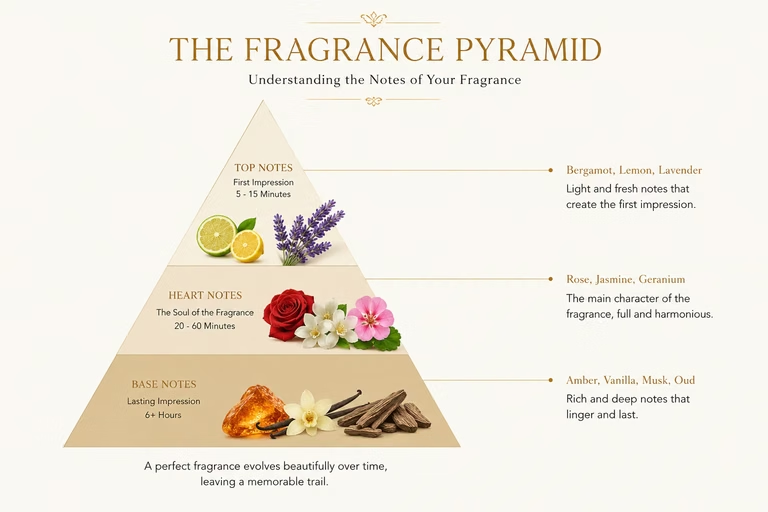
When assessing modern perfumery debuts, train yourself to ignore the overly romanticized ad campaigns featuring dramatic cliff diving, glamorous Parisian galas, or celebrity endorsements. Focus entirely on the olfactive family and the specific note pyramid. Does the structural composition logically align with the scent profiles you already know you love?
To become fluent in this complex, invisible language, you must educate your nose. Check out Fragrance Notes Explained: How to Read, Understand, and Master Scent Layers Like an Expert. This foundational knowledge prevents you from falling for beautifully packaged new beauty launches that ultimately smell exactly like something you currently own.
The Vital Role of Synthetic Molecules
It is also vitally important to recognize the essential role of synthetic molecules in modern perfumery. While “all-natural” remains a highly popular marketing buzzword, synthetic aromachemicals are absolutely essential for formula stability and ethical environmental sourcing (preventing the tragic over-harvesting of endangered plants like Indian Sandalwood). They also allow perfumers to create entirely new, abstract scent profiles that do not exist in nature.
To ensure global safety, strict organizations heavily regulate these complex raw materials. The International Fragrance Association (IFRA) tests and restricts allergens to ensure strict consumer safety worldwide, proving that synthetic does not automatically mean harmful.

Sillage, Projection, and Performance Claims
Many highly anticipated new beauty launches boldly boast “beast mode” performance, promising room-filling projection or extreme 24-hour longevity. However, real-world performance is strictly dictated by the concentration of perfume oils and the molecular weight of the raw ingredients utilized. Heavy, dense base notes like aged woods, synthetic musks, and sticky resins will always biologically outlast small, highly volatile citrus top notes.
To truly understand how a hyped perfume will actually perform on your unique skin chemistry throughout a long workday, it is incredibly helpful to understand the underlying mechanics behind the scent cloud. Read Perfume Sillage Explained: How to Master Your Fragrance Trail and Projection to decode these aggressive marketing claims accurately.
Furthermore, different seasons drastically affect how a fragrance projects. A scent that feels beautifully fresh in summer might completely disappear in the freezing winter air. To map out your wardrobe correctly, explore our guide on Perfume Recommendations by Season: Find Your Perfect Scent Year-Round.
Comparing High-End vs. Accessible New Beauty Launches
One of the biggest, most debated questions surrounding hyped new beauty launches is whether exorbitant luxury price tags genuinely equate to vastly better performance. The honest truth is highly nuanced and often surprising. While heritage luxury brands often invest heavily in heavy, elegant packaging and completely custom fragrance profiles, accessible brands frequently utilize the exact same core active ingredients sourced from the exact same global suppliers.
Here is a detailed breakdown to help you objectively weigh your options when comparing new beauty launches across drastically different price points:
| Evaluation Factor | High-End / Luxury Brands | Accessible / Drugstore Brands |
|---|---|---|
| Packaging & Experience | Heavy glass bottles, custom-tooled metal pumps, luxurious unboxing experience, magnetic caps. | Functional, lightweight, often utilizing standardized plastic, heavily focused on cost-efficiency and mass distribution. |
| Formula Elegance & Texture | Highly sophisticated textures, cosmetically elegant, invisible finishes, proprietary masking scent blends. | Can occasionally be slightly thicker, tackier, or pill under makeup, though mass-market textures are rapidly improving every year. |
| Active Ingredients | May feature exceedingly rare botanical extracts or incredibly expensive, patented complex delivery systems (like liposomes). | Almost always relies on standard, heavily proven, widely available actives like basic hyaluronic acid, glycerin, or retinol. |
| Overall Best For… | Treating yourself, luxurious gifting, and enjoying a highly sensory, spa-like daily self-care ritual. | Building a consistent, highly effective, scientifically sound daily routine on a strict personal budget. |
If you are actively struggling to decipher the incredibly saturated makeup category specifically amid the endless flood of fresh arrivals, our comprehensive guide on Demystifying Makeup and Cosmetics offers excellent, grounded advice on safely building a cosmetic routine that thoroughly respects your specific skin type without breaking the bank.
The Environmental Impact of Constant New Beauty Launches
Beyond personal budgeting and skin health, we must briefly address the environmental toll of participating in every single micro-trend. The current pace of new beauty launches requires massive amounts of raw resource extraction, global shipping, and, ultimately, plastic waste generation. The pressure to buy a new blush or a new serum every three weeks is inherently unsustainable.
Many brands are making genuine strides toward refillable packaging, post-consumer recycled plastics (PCR), and carbon-neutral shipping. However, the most sustainable product you can possibly use is the one you already own. Before buying into the hype of new beauty launches, practice “shopping your stash” to ensure you actually need what is being sold.
For official guidelines on cosmetic safety and how products are legally regulated regarding their packaging and ingredient safety, the U.S. Food and Drug Administration (FDA) Cosmetics portal provides transparent, government-level insights that strip away all marketing fluff.

Avoiding Social Media Fatigue with New Beauty Launches
Social media algorithms on platforms like TikTok and Instagram are meticulously designed by engineers to create an overwhelming sense of urgency. When every major beauty influencer is suddenly touting the exact same new serum on the exact same Tuesday, it is a coordinated, paid marketing push—not an organic, life-changing discovery. Take a deliberate step back and consciously give these heavily pushed new beauty launches a few weeks to settle into the real consumer market.
Genuine, reliable reviews from normal consumers who pay with their own money take significant time to surface. Human skin physically takes about 28 days to go completely through a cellular turnover cycle. Therefore, any enthusiastic review posted just two days after a skincare release is based purely on packaging and first impressions, not long-term, measurable physiological results.
The Importance of Sampling New Beauty Launches
For perfumes, the learning curve is equally steep. Mastering How to Read and Evaluate Perfume Reviews Like a Pro will save you from incredibly expensive, disappointing blind-buying regrets. Never underestimate the immense financial power of a simple tester.
Whenever humanly possible, actively acquire a small sample or a moderately priced travel size before financially committing to a massive full bottle. This deliberate strategy gives your skin ample time to react to the chemical formula. Crucially, it also gives your nose the necessary time to experience the full, evolving dry-down of a complex fragrance over several consecutive hours, rather than just judging the fleeting top notes at the department store counter.

Key Takeaways for Shopping New Beauty Launches
- Wait for the dust to genuinely settle: Never rush to buy exciting new beauty launches on release day. Patiently wait for unsponsored, long-term reviews from verified buyers who have actually emptied the bottle.
- Decode the complex ingredients: Look straight past the beautiful, aesthetic front label. Read the INCI list to ensure the marketed active ingredients are actually present in meaningful, effective amounts.
- Check your current stash: Before purchasing, diligently verify that you do not already own a perfectly good, half-used product that serves the exact same purpose in your routine.
- Understand the underlying chemistry: Familiarize yourself with basic skincare formulations and fundamental fragrance notes so you can immediately spot and ignore empty marketing fluff.
- Demand brand transparency: Actively support independent brands that are brutally honest about their clinical testing procedures, raw material sourcing, and inherent product limitations.
Explore More Golden Hour Guides
If you found this deep-dive guide genuinely helpful in navigating the complex, often frustrating world of new beauty launches, we warmly invite you to explore more of our expert resources. Whether you are carefully refining your daily skincare regimen or embarking on a journey for a new signature scent, our rigorously independent guides are here to help you make confident, educated choices. Start by discovering how to perfectly adapt your routine year-round with The Complete Guide to Seasonal and Occasion Beauty.
Frequently Asked Questions
Why do cosmetic brands release new beauty launches so frequently?
Brands release products frequently to stay highly relevant in fast-moving, competitive retail environments and to continually appease demanding social media algorithms. Constant newness reliably generates free press coverage and keeps the specific brand at the top of consumers’ minds, even if the actual scientific innovation behind the product is incredibly minimal.
How can I confidently tell if new beauty launches are actually worth the money?
Look strictly for concrete clinical data, independent reviews written after a full month of steady use, and a clear, highly transparent ingredient list. If the product effectively solves a specific problem in your routine much better than your current lineup, it may be worth the investment. Always ignore the artificial urgency of limited drops.
Do I absolutely need to update my routine with every major trend?
Absolutely not. Unwavering consistency is the single most important factor in achieving healthy skincare results. If your current, boring routine is successfully maintaining a healthy skin barrier and adequately addressing your core concerns, introducing trendy items can actually severely disrupt your progress and cause completely unnecessary irritation.
How long should I ideally wait before buying newly launched perfumes?
You should wait at least a few weeks so you can physically test a sample in person. Perfumes desperately need to be worn on your living skin to see how they uniquely interact with your specific body chemistry. Blind buying based purely on initial internet hype almost always leads to intense disappointment and wasted money.
What does the phrase “clinically proven” really mean on packaging?
It essentially means the product was tested in some form of clinical setting, but the term itself is largely unregulated by the FDA. You must always look for specific, published details: how many actual people were in the trial, how long did it last, and was it a placebo-controlled blind study? Vague, boastful claims usually indicate incredibly weak testing parameters.
Are popular “clean beauty” releases actually better for my skin?
“Clean beauty” is a heavily utilized, entirely unregulated marketing term, not a scientific standard. Many synthetic ingredients are perfectly safe and highly effective, while many natural, plant-derived essential oils are extremely common, highly potent allergens. You should focus strictly on actual skin compatibility and proven safety data rather than trendy clean marketing labels.