The Best Winter Perfumes for Women: An Honest Guide to Cold-Weather Scents
The best winter perfumes are those that can cut through freezing air and linger on your skin long after the sun goes down. Searching for these cold weather scents can be deeply frustrating, especially when your favorite summer florals suddenly disappear the moment you step out into the January frost. Cold weather physically slows down the evaporation of fragrance molecules, turning delicate, sheer scents into faint whispers that vanish in mere minutes. If you want a fragrance that actually performs, projects, and lasts through the winter, you need heavier base notes that are explicitly designed to thrive in low temperatures.
Quick answer: The best winter perfumes rely on rich, dense, and slow-evaporating base notes like amber, vanilla, sandalwood, patchouli, oud, and warm spices. These heavier molecular structures allow the fragrance to cut through cold air and project beautifully from your skin without fading. For maximum longevity during the winter months, you should always choose an Eau de Parfum or Extrait concentration rather than a lighter Eau de Toilette.
To fully understand how to navigate seasonal shifts in your scent wardrobe and build a collection that works year-round, we highly recommend starting with our ultimate guide to women’s fragrance. Before you buy another bottle, learning how to evaluate the best winter perfumes on your own skin is essential to avoid disappointment. Below, we break down exactly why winter demands a fundamentally different approach to perfumery, which specific fragrance families perform best in the cold, and how to find your perfect, long-lasting cold-weather signature scent.
Why the Best Winter Perfumes Smell Different
Fragrance is, ultimately, an invisible game of chemistry, physics, and temperature. Perfume requires body heat to evaporate off your skin and project into the air around you, creating what enthusiasts call a “scent bubble” or sillage. When the environmental temperature drops drastically in the winter, your skin temperature often follows suit, significantly slowing down this crucial evaporation process.
This biological and environmental shift is exactly why the bright, volatile top notes of sparkling citrus, aquatic accords, and delicate white florals feel flat, metallic, and lifeless in January. They simply lack the molecular weight to sustain themselves in the cold. To learn more about how molecular weight impacts this evaporation process, understanding volatility is the key to mastering your fragrance wardrobe. In stark contrast, heavier molecules—like natural resins, dense woods, and synthetic musks—are thick and slow-moving. The biting cold actually tempers their raw intensity, turning what might be an overwhelming, cloying scent in July into a deeply comforting, enveloping halo in December.
Ultimately, choosing the best winter perfumes is not just about matching the cozy “mood” of the season, but ensuring you are practically getting the performance, projection, and longevity you pay for. The structure of the perfume must match the environment it is worn in.
Top Fragrance Families for the Best Winter Perfumes
Not all perfumes are structurally built to withstand a winter chill. If you want to invest in a scent that performs flawlessly, you need to understand which structural categories and olfactory families thrive when the temperature plummets. Our comprehensive fragrance families guide goes into deeper technical detail, but here are the primary categories to prioritize when shopping for the best winter perfumes.
The Golden Warmth of Ambers and Resins
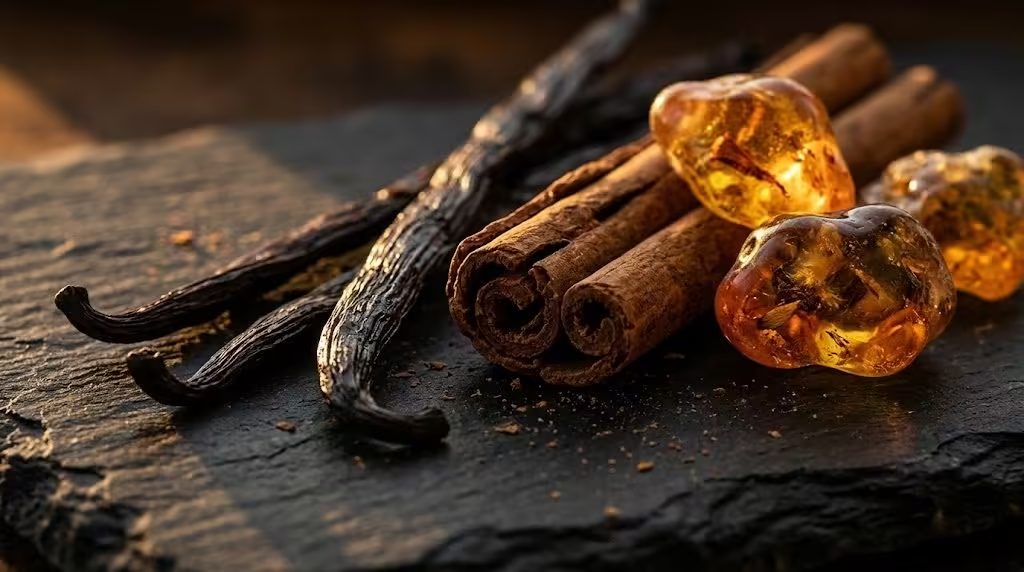
Often historically referred to as “oriental” fragrances in traditional perfumery, the amber family is the undisputed king of winter scents. It is important to note that “amber” is not actually a single raw material harvested from nature. Rather, it is a fantasy accord—a blend traditionally created by perfumers using labdanum (a sticky shrub resin), benzoin (tree resin), and vanilla.
These rich resins create a thick, golden, and slightly sweet foundation that is common in almost all of the best winter perfumes. Resinous perfumes excel in the cold specifically because they are almost entirely composed of heavy base notes that cling to the skin for upwards of twelve hours.
The Enveloping Comfort of Gourmands
Gourmand perfumes feature literal, edible notes like dark chocolate, roasted coffee, burnt caramel, toasted almond, and sticky honey. In the high heat of summer, these food-like profiles can feel suffocating, cloying, and overly sweet. In the dead of winter, however, a masterfully balanced gourmand provides a profound, psychological sense of comfort and warmth.
A sophisticated warm vanilla perfume paired with a touch of wood smoke, leather, or sharp spice is an absolute staple for the colder months. The real secret to wearing a gourmand in winter without smelling like a literal bakery is to ensure the sweetness is anchored by darker, more austere notes like earthy patchouli, vetiver, or dry cedar.
The Grounded Depth of Woody Perfume Notes
Woods provide vital structure, elegance, and sophistication to a fragrance. Ingredients like Australian or Indian sandalwood offer a creamy, milky smoothness that melts into the skin, while Virginian cedarwood brings a dry, crisp, pencil-shavings quality that feels incredibly refined. Oud (agarwood) introduces a rich, medicinal, and sometimes animalic or smoky depth that commands attention.
Woody perfumes for women have become incredibly popular as modern consumers move away from overly sweet, fruity profiles. They are elegant, highly grounded, gender-neutral in their appeal, and slice through freezing temperatures with effortless ease.
The Sharp Edge of Spicy Florals
If you cannot bear to part with flowers in the winter, you simply need to choose the right blooms. Delicate lily of the valley, sheer peony, and airy freesia will not survive the frost. However, a dark, jammy, crimson rose paired with crushed cardamom, leathery saffron, or fiery clove certainly will.
Spicy florals take traditional feminine elements and give them a sharp, warming edge. This creates a beautiful, captivating contrast—the delicate softness of the flower petals set against the aggressive bite of the winter spices.
Deep Dive: Understanding Winter Fragrance Ingredients
To truly master your selection of the best winter perfumes, it helps to understand the raw materials that go into them. Perfumery is an art of blending, and the way these ingredients are sourced and processed drastically impacts how they perform on your skin in December.
For instance, natural vanilla absolute is incredibly expensive and complex, possessing woody, leathery, and almost tobacco-like nuances that synthetic vanillin lacks. When searching for a warm vanilla perfume, those seeking depth should look for fragrances explicitly highlighting “Madagascar Vanilla” or “Vanilla Absolute,” as these offer a darker, more mature scent profile suited for cold evenings. If you are curious about the journey of these raw materials, our detailed breakdown of how perfume is made reveals the incredible labor behind these extracts.
Similarly, the use of heavy musks and resins is highly regulated to ensure safety and sustainability. Organizations like the International Fragrance Association (IFRA) set strict standards on how much of certain heavy, sensitizing ingredients (like oakmoss or certain synthetic musks) can be used. This pushes modern perfumers to innovate, creating brilliant new synthetic winter molecules like Ambroxan, which provides a massive, radiant, amber-woody aura that performs exceptionally well in sub-zero temperatures.
Comparing Winter Scent Profiles
To help you decode the overwhelming options at the perfume counter and quickly identify which winter profile suits your personal style and daily routine, use this detailed comparison table. It breaks down the most prominent winter archetypes.
| Fragrance Profile | Key Notes to Look For | The Vibe & Atmosphere | Best Occasion |
|---|---|---|---|
| Amber & Resins | Labdanum, Benzoin, Myrrh, Frankincense, Tolu Balsam | Luxurious, Golden, Mysterious, Opulent | Evening wear, formal winter events, galas |
| Dark Gourmand | Vanilla, Tonka Bean, Coffee, Dark Chocolate, Praline | Comforting, Sweet, Enveloping, Nostalgic | Casual days, cozy weekend wear, coffee dates |
| Dry Woods | Sandalwood, Cedar, Vetiver, Oud, Guaiac Wood | Elegant, Grounded, Sophisticated, Assertive | Office wear, daytime professional, boardroom |
| Spiced Floral | Rose, Saffron, Cardamom, Clove, Cinnamon | Bold, Romantic, Sharp, Passionate | Date night, holiday parties, intimate dinners |
| Smoky Leather | Birch Tar, Suede, Tobacco, Incense, Cade | Edgy, Rebellious, Intimate, Warm | Late-night outings, creative spaces, winter walks |
Choosing the Best Winter Perfumes by Category
When curating your cold-weather fragrance wardrobe, it helps to think in terms of specific olfactory archetypes. While we always strongly encourage you to test fragrances on your own skin before purchasing, seeking out these specific profiles will dramatically improve your success rate. For a deeper dive into how individual ingredients behave dynamically over time, check out our guide on how fragrance notes are explained.
The Smoky, Grown-Up Vanilla
If you are looking for a warm vanilla perfume that doesn’t smell like a teenager’s body spray, avoid the sheer, sugary, cupcake-like mists of summer. Instead, look for vanilla that has been intentionally toasted, smoked, or soaked in aged bourbon. The addition of dry incense, rich tobacco leaf, or a crackling wood fire accord turns a simple baking ingredient into a highly complex, mature winter staple. This profile is incredibly long-lasting because both the vanilla absolute and the smoke accords are heavy, persistent molecules that anchor to the skin.
The Boozy, Festive Scent
Fragrances that incorporate notes of dark rum, aged cognac, or peaty whiskey are truly exceptional in the winter. These “boozy” notes are usually constructed using rich, fruity esters and oakwood absolutes extracted from actual liquor barrels. They perfectly mimic the warming, flush sensation of drinking a strong cocktail on a freezing night. Paired with a touch of dark plum, sharp cinnamon, or smooth leather, a boozy fragrance feels instantly festive and is perfectly suited for evening holiday parties. For more specific event recommendations, explore our perfume by occasion recommendations.
The Creamy, Intimate Sandalwood
Not all of the best winter perfumes need to be loud, aggressive, or room-filling. For those who prefer a more intimate, close-to-the-body “skin scent” experience, a sandalwood-heavy fragrance is the ideal choice. High-quality sandalwood has a naturally creamy, almost buttery texture that sits close to the skin but lasts for a staggering eight to ten hours. It provides a comforting, cashmere-sweater feeling that is incredibly subtle yet deeply, fundamentally satisfying in chilly weather.
The Green Winter Pine
While we often associate winter with heavy sweets and spices, there is a whole category of winter fragrances for women dedicated to the crisp, bracing scent of a winter forest. These feature notes of pine needles, juniper berries, fir balsam, and icy mint. They replicate the sensation of breathing in sharp, freezing mountain air. These are perfect for those who dislike sweet perfumes but still want a scent that captures the essence of December and January.
How to Make Your Fragrance Last in Cold Weather
Even the absolute best winter perfumes on the market can struggle to perform if your skin is not prepped correctly. Winter air is notoriously dry, and dry skin absorbs expensive perfume oils incredibly rapidly, destroying both the longevity of the scent and its projection. According to the American Academy of Dermatology, maintaining the integrity of your skin barrier in winter is crucial for overall skin health, and it just so happens to be the ultimate secret to maximizing perfume performance as well.
Hydrate and Prime Before You Spray
Never apply an expensive luxury perfume directly to dry, flaky skin. Always start your routine with a rich, unscented body lotion, a thick body butter, or a nourishing body oil right out of the shower while your skin is still damp. This vital step creates a lipid barrier that traps the volatile fragrance oils on the surface of your skin, allowing them to evaporate slowly and evenly throughout the day. If you need help adjusting your overall body care regimen for the harshest season, thoroughly review our winter beauty routine guide.
Target Warm, Insulated Pulse Points
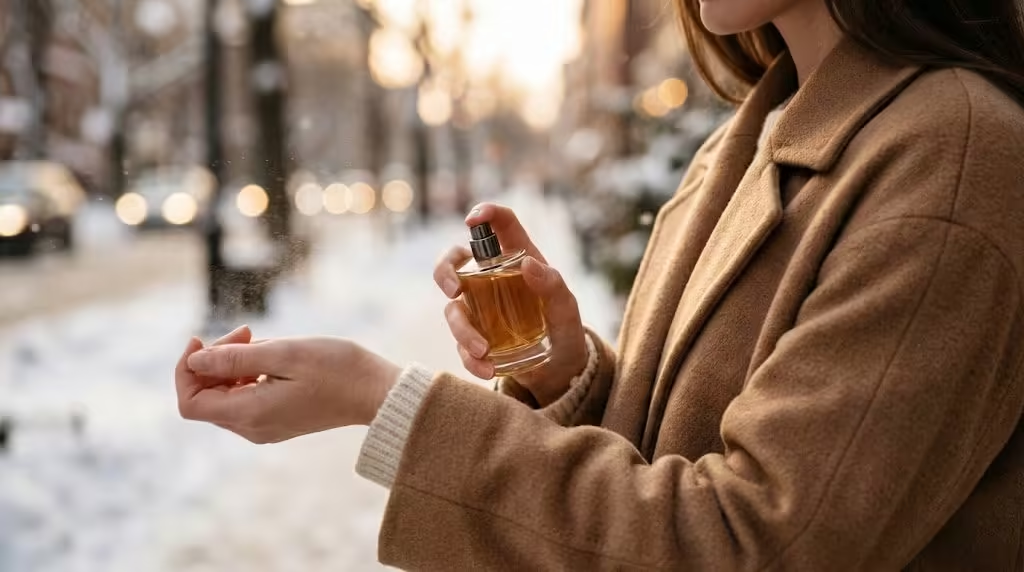
In the peak of summer, you might casually spray your hair, your shoulders, or your flowing clothing. In the winter, because the ambient air is so aggressively cold, you need to strategically leverage your own body heat to push the fragrance out into the room. Focus your sprays on pulse points that are slightly insulated by your winter clothing: the base of the throat, the center of the chest, and the inside of the elbows underneath your heavy wool sweater. The trapped heat will act exactly like a radiator, slowly diffusing the scent bubble upward.
Always Consider Concentration
Winter is absolutely not the time to rely on an Eau de Toilette (EDT) or a sheer body mist. The higher alcohol content and much lower perfume oil concentration found in these lighter formulas will simply vanish into the frost within an hour. You must upgrade to an Eau de Parfum (EDP) or a highly potent Extrait de Parfum. These higher concentrations contain significantly more raw perfume oil, which practically guarantees a denser, richer, and far longer-lasting scent trail. For a full, scientific breakdown on how concentration impacts sillage, read our definitive guide to perfume longevity and projection.
The Psychology of Winter Scents
Beyond the simple chemistry of evaporation and skin temperature, there is a profound psychological element to choosing the best winter perfumes. Scent is tied directly to the limbic system, the part of the brain responsible for emotion and memory. In the winter, when daylight hours are incredibly short and seasonal affective disorder (SAD) is common, the fragrances we choose can act as a form of olfactory armor and comfort.
Gourmand scents trigger nostalgic memories of baking, holidays, and safety. Woody scents ground us, reducing anxiety and promoting a sense of calm resilience against the harsh weather. By intentionally selecting winter fragrances for women that evoke warmth, you are not just smelling good—you are actively utilizing aromatherapy to improve your daily mood during the darkest months of the year.
Key Takeaways for Winter Fragrance Shopping
- Temperature heavily dictates performance: Cold air physically suppresses fragrance molecules, meaning light, citrusy summer scents will perform poorly and fade rapidly in the winter.
- Always look for heavy base notes: The best winter perfumes rely on heavy, slow-evaporating ingredients like amber, vanilla, dark woods, and resins to project consistently in freezing air.
- Moisturize relentlessly to boost longevity: Dry winter skin eats perfume oils. You must always apply your fragrance over a rich, thick layer of unscented body cream or oil to create a lasting base.
- Upgrade your fragrance concentration: Opt exclusively for Eau de Parfum (EDP) or Extrait de Parfum to ensure your scent has the density to cut through the cold air.
- Embrace the dark and bold: Winter is the safest, most forgiving time to experiment with bold, spicy, smoky, and challenging fragrance profiles that might feel overwhelming or cloying in the summer heat.
Finding a signature fragrance that perfectly captures the mood of the winter season while actually lasting on your skin takes a bit of patience and experimentation. We strongly encourage you to sample widely, order decants, and wear a scent for a full day in the cold before committing to a full bottle. For more honest, hype-free, and expert advice on building your beauty routine, explore the rest of the guides at Golden Hour.
Frequently Asked Questions
What makes the best winter perfumes last so long?
The best winter perfumes contain a high percentage of heavy base notes like amber, woods, vanilla, and spices. These larger molecular structures evaporate very slowly, allowing the fragrance to survive in cold air rather than vanishing immediately like lighter citrus or aquatic notes.
Can I still wear floral perfumes in the cold weather?
Yes, you can absolutely wear florals in the winter by choosing heavier, richer, and more indolic blooms. Swap delicate spring flowers like sheer peony and freesia for dark, velvety notes like Turkish rose, tuberose, or jasmine, especially when they are blended with warm spices or dark woods.
Why does my perfume not last as long in the winter?
Your perfume fades faster in winter primarily because cold air causes dry, flaky skin, which absorbs fragrance oils incredibly rapidly. Additionally, the cold environmental temperatures physically suppress the evaporation of the scent, making it project much less effectively than it does on warm, hydrated summer skin.
Should I spray perfume on my winter coat or scarf?
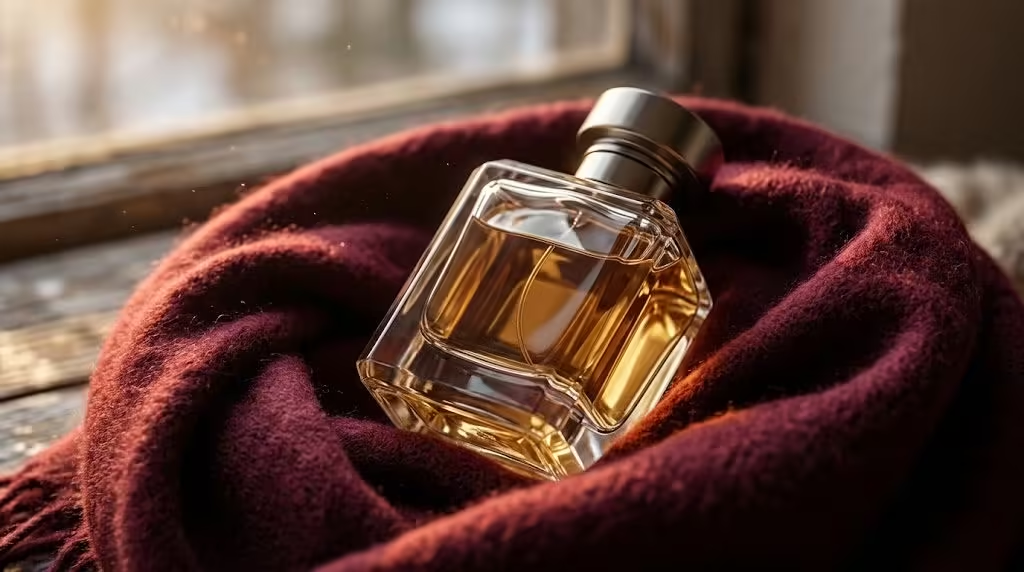
Spraying perfume on a winter scarf or a heavy wool coat is an excellent way to dramatically boost longevity, as natural fabrics hold onto scent oils for days or even weeks. However, you must always spot-test first, as the dark, heavy oils found in rich winter perfumes can occasionally stain light-colored wool, silk, or cashmere.
Is Eau de Parfum better than Eau de Toilette for winter?
Eau de Parfum is significantly better for winter wear than Eau de Toilette. Because it has a much higher concentration of raw perfume oils (usually 15-20%) and less alcohol, an EDP provides the density, weight, and staying power needed to actively cut through freezing temperatures.
What are gourmand fragrances and why are they popular in winter?
Gourmand fragrances feature literal edible, dessert-like notes such as natural vanilla, burnt caramel, roasted coffee, and dark chocolate. They are highly popular in winter because their sweet, rich profiles provide a deep sense of psychological comfort, nostalgia, and warmth during the colder, darker months.
How do I properly store my winter perfumes during the summer?
You should store your winter perfumes in a cool, completely dark place, such as a closed closet or a dedicated drawer, away from direct sunlight and humidity. Temperature fluctuations can degrade the heavy natural resins and vanilla absolutes over time, so keep them out of the bathroom.
Can I layer a summer perfume to make it work for winter?
Yes, you can winterize a summer perfume by layering it over a heavy, single-note base. Applying a rich vanilla body oil, a sandalwood lotion, or a dense amber perfume oil first will anchor the lighter summer citrus or floral notes, giving them the depth and longevity needed for cold weather.