Perfume Longevity Tests: The Ultimate Honest Guide to Measuring How Long Your Fragrance Really Lasts
Conducting accurate perfume longevity tests is the only definitive way to discover if a fragrance is truly worth the investment, bypassing the endless marketing hype to reveal how long a scent actually survives on your unique skin. We all know the intense disappointment of purchasing a highly praised, expensive fragrance only to have it vanish entirely before your morning commute is even over. With an influx of viral social media marketing promising “24-hour beast mode wear,” learning how to rigorously test a scent’s true lifespan is a non-negotiable skill for any modern fragrance lover.
Quick answer: To perform accurate perfume longevity tests, apply the fragrance to clean, unscented skin and evaluate it over 8 to 12 hours. Monitor three distinct phases: the opening (0–15 minutes), the heart (15 minutes–3 hours), and the final dry-down. True longevity is measured by how long the base notes remain detectable on your skin.
Why You Need Realistic Perfume Longevity Tests in 2026
The contemporary beauty and fragrance industry is absolutely saturated with exaggerated claims, and fragrance marketing is consistently one of the worst offenders. Brands routinely boast about eternal staying power based on tests conducted exclusively on blotter paper in climate-controlled, sterile laboratories. But you do not wear perfume on a piece of paper; you wear it on your living, breathing skin in the unpredictable real world.
Understanding how to read and evaluate perfume reviews requires knowing exactly how these performance tests are actually conducted by critics and consumers alike. When influencers or reviewers talk about a scent lasting from dawn until dusk, you need to understand their testing environment, their skin type, and their application methods. By running your own meticulous perfume longevity tests, you bypass the algorithm-driven hype and discover how a chemical formula truly interacts with your specific body chemistry.
Furthermore, the rise of synthetic aromachemicals like Ambroxan and Iso E Super has changed the way perfumes behave over time. These molecules can disappear and reappear throughout the day, tricking your nose into thinking a scent has faded when it is actually still projecting heavily. Testing helps you decode these modern fragrance tricks.
The Core Science Behind Perfume Longevity Tests
Before you begin spraying, it is vital to understand why certain perfumes last longer than others from a purely scientific standpoint. Perfumery is an exercise in chemistry, specifically concerning the molecular weight of the ingredients used in the formulation. Light molecules evaporate quickly, while heavy molecules take hours, sometimes days, to fully burn off.
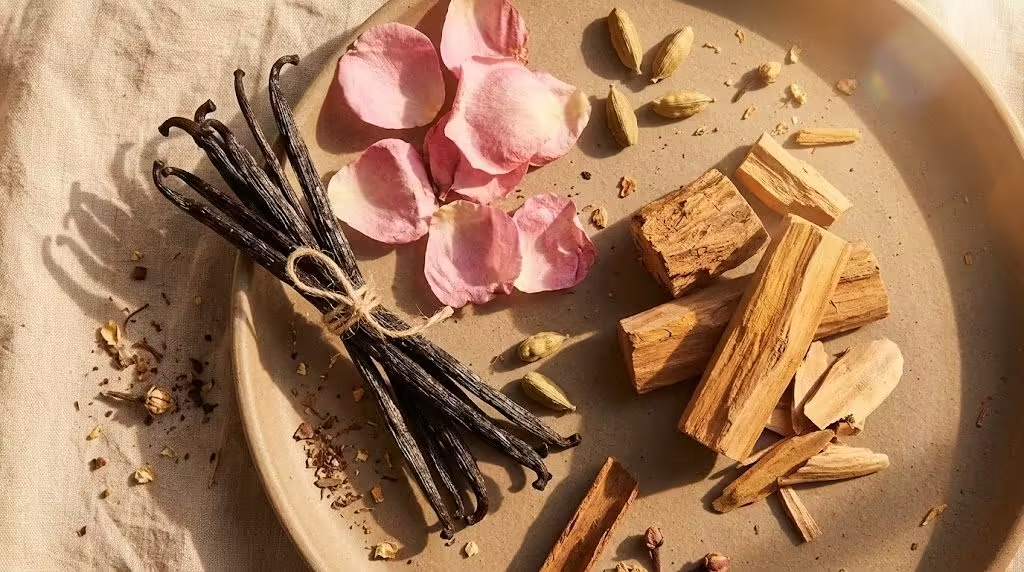
Top notes, which typically consist of citrus fruits (like bergamot, lemon, and yuzu), aldehydes, and light herbs, have incredibly low molecular weights. They are designed to burst immediately upon atomization, creating a beautiful but fleeting opening that rarely lasts beyond thirty minutes. In contrast, base notes like natural oud, heavy patchouli, vanilla absolute, and rich ambers possess very high molecular weights, acting as fixatives that bind the lighter notes to the skin.
When you conduct perfume longevity tests, you are essentially observing the real-time evaporation rate of these different chemical layers. A fragrance that smells incredibly powerful in the first five minutes might completely disappear within an hour if it lacks a solid base of heavy molecules to anchor it down.
How to Prepare Your Skin for Perfume Longevity Tests
The canvas you spray your fragrance onto is just as important as the perfume itself. If you test a luxury extrait on bone-dry, unexfoliated skin, it will not perform to its full potential, leading to an unfair negative review. Preparation is key to obtaining an accurate baseline.
First, ensure your skin is completely clean. Any residual body wash, old perfume, or scented laundry detergent on your cuffs will cross-contaminate the test and skew your perception of the fragrance notes. Wash the testing area (usually the inner forearm or wrist) with a gentle, unscented soap and warm water.
Second, hydrate your skin barrier deeply. Fragrance oils require a lipid barrier to cling to; otherwise, dry skin will rapidly absorb the oils, causing the scent to vanish prematurely. Apply a thin layer of unscented body lotion or a pure occlusive like Vaseline to the pulse points, allowing it to sink in fully for ten minutes before you begin your perfume longevity tests.
The Golden Hour Method: Step-by-Step Perfume Longevity Tests
To get an honest, comprehensive assessment of any fragrance, we evaluate it through its natural, undisturbed lifecycle. Here is our exact editorial framework for testing perfume longevity, breaking down the sensory experience from the very first spray to the final, intimate whisper of scent on the skin.
1. The Scent and The Opening (0–15 Minutes)
The opening is historically the most deceptive and highly engineered part of any fragrance. Brands intentionally load the top notes with bright, volatile molecules to make a strong, immediate first impression—this is what sells the bottle at the department store counter. During the first 15 minutes of your test, pay close attention to the initial blast, but strictly refrain from judging the perfume’s actual staying power here.
Simply document the opening profile. Is it sharp and alcoholic? Is it smooth and well-blended? Note these details, but remember that the true character of the fragrance has not yet revealed itself. Wait patiently for the alcohol to completely evaporate.
2. The Heart Phase (15 Minutes – 3 Hours)
Once the volatile top notes burn off, the heart (or middle notes) emerges to take center stage. This phase constitutes the core identity of the perfume, often composed of lush florals, warm spices, or lighter, more aromatic woods. If you want to understand how fragrance notes are structured and layered, this phase is your best teacher.
When conducting perfume longevity tests, the heart phase tells you exactly what the fragrance will smell like to the people around you for the majority of the working day. Check the scent every hour during this window. If the heart notes begin to break apart or turn sour before the two-hour mark, the structural integrity of the formula is likely compromised.
3. The Dry-Down Phase (3 Hours+)
The dry-down is where the true, undeniable test of endurance happens. This phase relies entirely on heavy, large molecules like synthetic musks, oakmoss, amber, and heavy woods. These base notes act as the foundation, anchoring the remnants of the scent securely to your skin chemistry.
If you want to dive deeper into the science of how perfume actually works on your skin, the dry-down is fascinating. A high-quality, well-blended fragrance will maintain a coherent, pleasant, and smooth scent profile during the dry-down, rather than instantly turning into a generic, dusty, or unpleasantly metallic musk.
4. Final Longevity Assessment and Rating
Longevity is defined as the total amount of time from application until the scent is completely undetectable on the skin, even when pressing your nose directly to your wrist. We rigorously categorize longevity into three realistic, everyday tiers:
- Poor to Moderate: 2 to 4 hours (Highly typical for citrus-heavy summer scents, delicate florals, and Eau de Colognes).
- Good to Reliable: 5 to 7 hours (The standard baseline for well-formulated designer Eau de Parfums and everyday office scents).
- Excellent to Eternal: 8 to 12+ hours (Usually strictly reserved for heavy ambers, rich pure ouds, gourmands, and dense Extraits).
Measuring Projection Alongside Your Perfume Longevity Tests
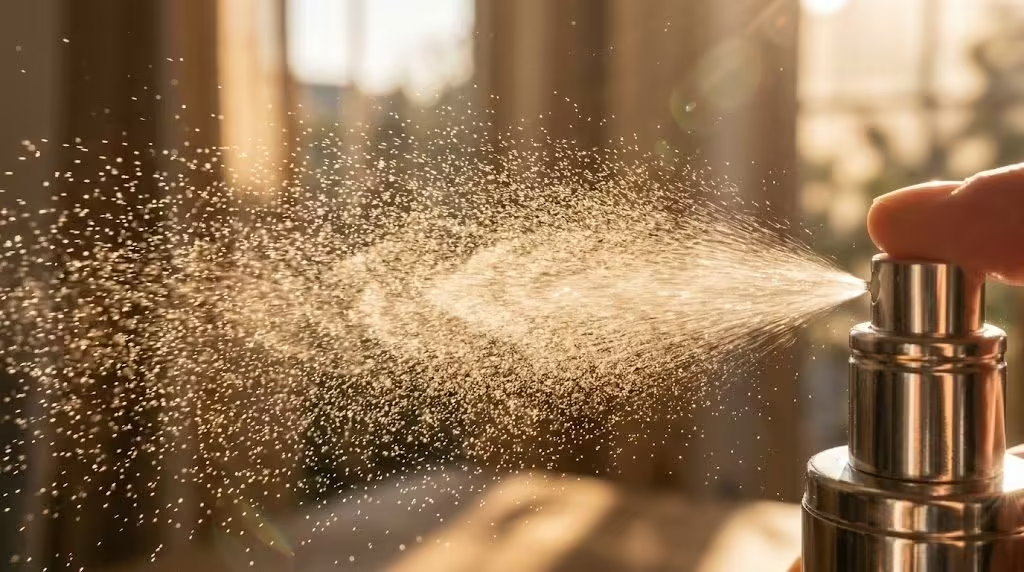
It is incredibly common in the fragrance community to confuse longevity and projection, but they are entirely different, distinct metrics of performance. Longevity dictates how long the scent lasts on a surface; projection dictates how far it travels through the air to reach other people’s noses.
A beautifully crafted perfume can have absolutely incredible longevity (lasting 14 hours as a quiet skin scent) but terrible projection (no one else can smell it unless they hug you). Conversely, some cheap, volatile scents project massively for one hour and then vanish without a trace.
When you test perfume longevity and projection, you must check how far the scent radiates at the 1-hour mark, the 4-hour mark, and the 8-hour mark. If it fills an entire room when you walk in, it has high projection (often called a strong sillage trail). If someone has to lean in closely to smell it on your neck, it has low projection, which is often perfectly desirable for intimate or professional settings.
Variables That Dramatically Affect Perfume Longevity Tests
No two perfume longevity tests will ever yield completely identical results, even if you test the exact same bottle on two different days. Several external, environmental, and biological factors can dramatically alter how long a fragrance lasts on your skin.
Fragrance Concentration (EDT vs. EDP)
The literal ratio of pure perfume oil to the alcohol and water carrier plays a monumental role in longevity. Understanding perfume concentrations like EDP, EDT, and Extrait helps you set highly realistic expectations before you begin testing. An Eau de Toilette (EDT) is chemically designed with more alcohol to project loudly but evaporate faster, whereas an Extrait de Parfum sits closer to the skin but lasts significantly longer due to its high oil content.
Skin Chemistry, Diet, and pH
Your unique biology changes everything. The International Fragrance Association (IFRA) notes that individual skin chemistry, including natural pH levels, sebum production, and even body temperature, can slightly alter both the scent profile and its longevity. Furthermore, a highly spiced diet can alter how your sweat interacts with the perfume’s base notes, sometimes enhancing them, sometimes destroying them.
Climate, Humidity, and Temperature
Ambient heat rapidly accelerates the evaporation of fragrance oils. A heavy, dense vanilla perfume might easily last 10 hours in a dry, air-conditioned office setting in December, but completely burn off in just 4 hours on a humid, 35-degree summer day at the beach. Always note the current weather conditions and humidity levels when logging your testing results.
Common Mistakes When Conducting Perfume Longevity Tests
Even seasoned fragrance collectors make fundamental errors when testing their new purchases. To ensure your perfume longevity tests are accurate, you must avoid these common biological and environmental pitfalls that skew your perception.
Falling for Olfactory Fatigue (Nose Blindness)
This is the number one reason people mistakenly believe their perfume has terrible longevity. Olfactory fatigue, commonly known as nose blindness, occurs when your brain actively tunes out a continuous scent to prevent sensory overload. You might think your perfume faded after two hours, but everyone else in the room can still smell it strongly. To combat this, always ask a friend or family member if they can still detect the fragrance before you officially declare it gone.
Testing Too Many Scents at Once
It is tempting to walk into a boutique and spray six different perfumes up and down your arms. However, conducting perfume longevity tests this way is entirely useless. The heavy base notes of one fragrance will cross-contaminate the delicate top notes of another, creating a confusing olfactory mess. Test a maximum of two fragrances at a time—one on your left wrist, one on your right.
Relying Solely on Paper Blotters
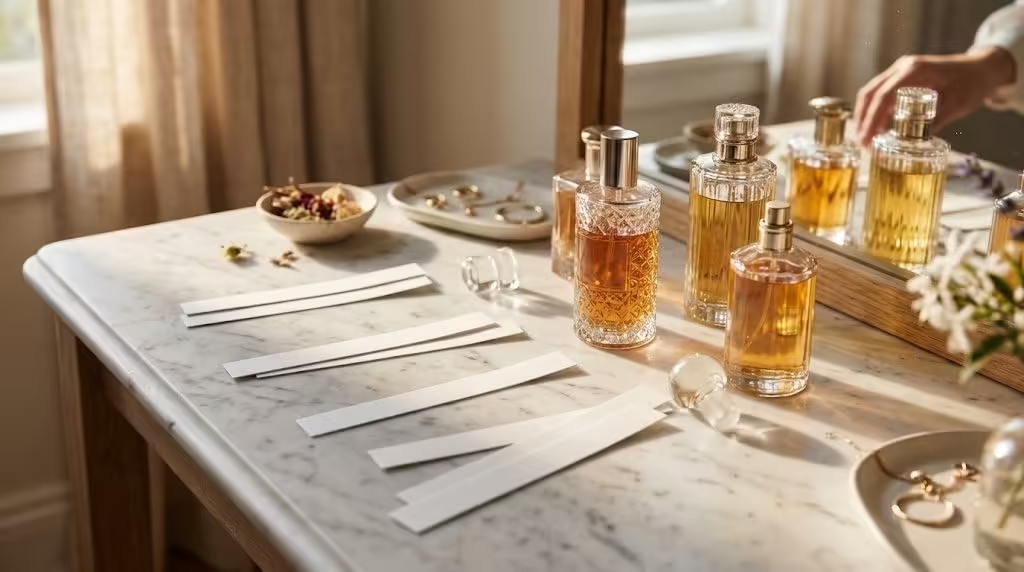
Paper does not have a pulse, body heat, or natural lipid oils. Testing on paper is excellent for getting a general idea of the top and heart notes, but it will never show you true longevity. A scent that lingers for three weeks on a paper blotter in your drawer might only last four hours on your warm, living skin.
Occasion, Value, and The Final Verdict
It is time to debunk one of the most pervasive myths in the beauty industry: not every perfume needs to last for 12 hours. A light, uplifting, and highly volatile citrus scent meant for a quick post-gym refreshment, or a delicate floral designed for a casual summer brunch, only needs to last 3 to 4 hours to beautifully fulfill its purpose.
By learning about debunked perfume myths, you understand that assessing a fragrance’s value requires aligning its actual longevity with its intended occasion and emotional purpose.
| Occasion / Setting | Ideal Longevity | Best Suited Fragrance Profiles | Required Projection |
|---|---|---|---|
| Office / Corporate Work | 6–8 hours | Clean musks, soft florals, smooth woods, iris | Low to Moderate (Intimate) |
| Date Night / Romance | 4–6 hours | Spicy, sweet gourmands, rich ambers, leather | Moderate (Enchanting trail) |
| Gym / Quick Errands | 2–4 hours | Citrus, aquatic, sharp green notes, tea | Moderate (Refreshing burst) |
| Formal Events / Winter Nights | 8–12+ hours | Natural oud, heavy florals, deep patchouli, resins | High (Room-filling sillage) |
The ultimate verdict of any perfume longevity test ultimately comes down to personal value. If an outrageously expensive designer fragrance fades in two hours and leaves you feeling cheated, it fundamentally fails the value test. But if a reasonably priced, beautiful scent lasts for four hours and brings you immense joy during that window, it might be perfectly adequate for your collection. For extensive community data on scent longevity, large crowdsourced databases like Fragrantica can provide highly useful averages, though personal testing remains the indisputable gold standard.
Key Takeaways
- Never judge a perfume’s longevity by its immediate opening; wait at least 3 hours for the dry-down phase to truly reveal the scent’s underlying staying power and base notes.
- Always test fragrances on completely clean, highly moisturized skin, as dry skin will rapidly absorb essential perfume oils and artificially shorten the fragrance’s natural lifespan.
- Learn to strictly distinguish between longevity (how long it lasts) and projection (how far it radiates); a well-blended scent can last all day but intentionally remain intimately close to the skin.
- Beware of olfactory fatigue (nose blindness); your brain will eventually tune out your own scent, so always ask a third party for their opinion before deciding the longevity is poor.
- Match your rigorous longevity expectations to the fragrance’s specific concentration and its intended occasion; not every scent is designed to be a 12-hour performer.
Are you ready to finally find a fragrance that actually lasts and suits your unique chemistry? Explore our honest, strictly hype-free reviews and discover your next signature scent by browsing our complete, editor-tested fragrance archives here at Golden Hour.
Frequently Asked Questions
How do you perform accurate perfume longevity tests at home?
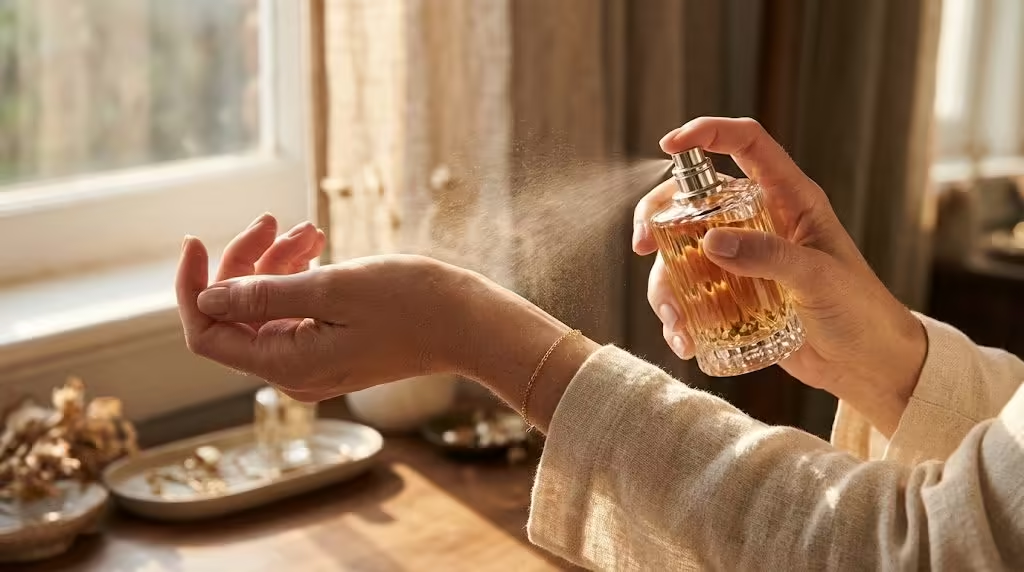
To perform highly accurate perfume longevity tests, simply apply two sprays of the fragrance to a clean, unscented pulse point (like your inner wrist or forearm). Note the exact time of application, and intentionally check the scent every two hours without washing or scrubbing the area. Record exactly when the scent transitions from the heart notes to the dry-down, and finally, record the hour when it becomes completely undetectable to your nose.
Does spraying perfume on clothes make it last significantly longer?
Yes, spraying perfume directly on your clothes significantly increases overall longevity. Natural fabric fibers expertly trap the heavy fragrance oils, preventing them from evaporating as quickly as they do on hot, warm skin. However, you must know that testing on clothes will drastically alter the scent’s natural development, often completely suppressing the rich base notes while artificially prolonging the bright, volatile top notes.
Why does my expensive perfume disappear completely after just an hour?
Your expensive perfume might disappear quickly due to several factors: severely dry skin, a very warm and humid climate, or simply possessing a very light fragrance concentration (like a summer Eau de Cologne). Alternatively, and most commonly, you may be experiencing “nose blindness” (olfactory fatigue), where your brain completely blocks out a continuous scent. Always ask a friend if they can still smell it.
Is a 12-hour beast-mode perfume always better than a 4-hour perfume?
No, a longer-lasting perfume is absolutely not inherently better in quality. Heavy, 12-hour fragrances often heavily rely on incredibly dense synthetic musks or intense ambers that can become cloying and overwhelming in enclosed, professional spaces like offices or cars. A 4-hour perfume is often much lighter, more refreshing, elegantly blended, and far better suited for casual daytime wear or hot summer weather.
Can using a moisturizer really improve my perfume longevity tests?
Yes, applying an unscented moisturizer, body butter, or pure body oil to your pulse points before spraying your fragrance creates a vital lipid barrier on your skin. This protective barrier gives the essential perfume oils a physical surface to bind to, dramatically slowing down the natural evaporation process and noticeably improving both the overall longevity and the scent’s projection.
Exactly how long should a standard Eau de Parfum (EDP) last?
A standard, well-formulated Eau de Parfum (EDP) should generally last anywhere between 5 to 8 hours on normal skin. However, this lifespan varies wildly depending on the specific fragrance notes heavily used in the composition; a bright, citrus-based EDP will always fade much faster than a rich vanilla, leather, or oud-based EDP, regardless of having the exact same oil concentration level.
Do perfume testing strips at the mall show a scent’s true longevity?
No, perfume testing strips (commonly known as blotters) absolutely do not show true longevity or performance. Paper does not have human body heat, natural oils, or a specific pH level, meaning the fragrance will evaporate much slower and completely differently than it would on a human body. A scent that lasts for several days on paper may only survive a few hours on your skin.