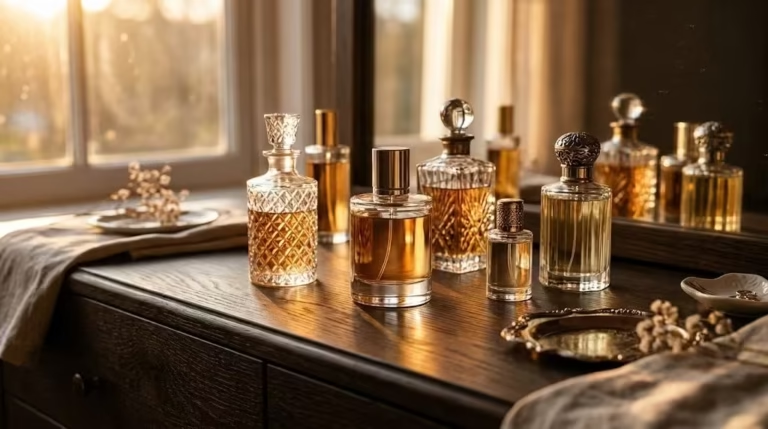
Eau de Parfum vs Eau de Toilette: The Complete Guide to Finding Your Ideal Fragrance Concentration
Navigating the perfume counter can feel overwhelming when standing before near-identical bottles labelled with different French terms, which is why understanding eau de parfum vs eau de toilette is essential for every fragrance lover seeking clarity. Choosing between these concentrations often leaves buyers second-guessing whether the higher price tag translates to better quality or simply a stronger scent. Understanding how these formulations behave on your skin eliminates the guesswork and prevents costly blind-buying mistakes, ensuring your investment matches your daily lifestyle and personal expectations.
Quick answer: The primary distinction in the eau de parfum vs eau de toilette debate comes down to fragrance oil concentration. Eau de Parfum (EDP) contains 15% to 20% perfume oil, lasting roughly six to eight hours with rich depth. Eau de Toilette (EDT) holds 5% to 15% oil, lasting four to six hours while offering a lighter, airier projection.
Understanding Fragrance Oil Concentration in Eau de Parfum vs Eau de Toilette
To truly understand how perfumes behave on skin, it helps to start with the foundational principles outlined in our perfume fragrance fundamentals guide. Every spray perfume consists of raw fragrance concentrate—a mixture of natural essential oils, aroma chemicals, and resins—dissolved in an alcohol and water base. The ratio of pure fragrance oil to alcohol determines a scent’s official classification, longevity, and projection profile.
Higher oil concentrations do not merely increase strength; they fundamentally alter how scent notes unfold throughout the day. When alcohol evaporates after application, the remaining aromatic oils bond with your skin’s natural lipid layer. Formulations with higher oil fractions evaporate at a slower, more measured pace, preserving intricate heart and base notes for hours longer.
While industry standard guidelines defined by organizations such as the International Fragrance Association (IFRA) set safety limits for raw ingredients, individual perfume houses retain some creative liberty when blending EDP and EDT versions. This means an EDP and an EDT from the same brand might feature subtly distinct recipe tweaks, rather than just a simple adjustment of alcohol dilution levels. Furthermore, scientific insights published by sources like Encyclopædia Britannica’s science archive on perfume highlight how solvent ratios dictate volatility across different aromatic compounds. For readers looking to deepen their foundational knowledge before purchasing, our perfume discovery guide offers valuable insights into exploring fragrance families.
The Complete Fragrance Concentration Scale
Fragrance exists along a spectrum ranging from delicate body mists to dense, precious extraits. Knowing where each concentration sits helps align your purchase with your lifestyle and sensory preferences:
- Parfum / Extrait de Parfum: 20% to 40% oil concentration. The most concentrated and opulent form, lasting over 8–12 hours with close-to-skin projection.
- Eau de Parfum (EDP): 15% to 20% oil concentration. The global benchmark for longevity and richness, offering 6–8 hours of noticeable presence.
- Eau de Toilette (EDT): 5% to 15% oil concentration. A refreshing, lighter option lasting 4–6 hours, ideal for daytime wear and warmer climates.
- Eau de Cologne (EDC): 2% to 4% oil concentration. Uplifting and brief, dominated by top citrus notes, lasting around 2 hours.
- Eau Fraîche: 1% to 3% oil concentration. Formulated mostly with water and minimal alcohol, providing a light personal refresh for 1–2 hours.

Eau de Parfum (EDP) Deep Dive: Characteristics and Performance
Eau de Parfum is often celebrated as the gold standard for daily fragrance enthusiasts seeking enduring wear. Formulated typically with 15% to 20% pure aromatic compounds, EDPs deliver a lush, full-bodied olfactive experience that develops gradually over many hours.
Because EDP formulations contain less alcohol than lighter concentrations, they evaporate more slowly from pulse points. This slower rate of evaporation creates a velvety ambiance around the wearer, emphasizing rich base notes like creamy sandalwood, warm amber, dark vanilla, and dense resins. If you prefer deep, enveloping scent profiles, exploring best perfumes for women across EDP formulations reveals how beautifully complex accords settle on warm skin. Beginners starting their collection can also consult our perfume basics for beginners guide for foundational tips on testing and wearing high-concentration scents.
Key Benefits of Choosing Eau de Parfum
Investing in an Eau de Parfum offers distinct advantages for specific wearers and occasions:
- Exceptional Longevity: EDPs reliably last six to eight hours (and often longer on clothing), eliminating the need for mid-day reapplication.
- Rich Depth and Evolution: The higher oil density allows for a multi-layered journey from crisp top notes to lingering base accords.
- Skin-Friendly Evaporation: Lower alcohol concentration means EDPs are often less drying on sensitive skin types during prolonged contact.
- Subtle, Enveloping Projection: EDPs tend to create an intimate “scent bubble” rather than leaving an overpowering trail across a room.
When EDP Is the Better Choice
An EDP shines brightest during cooler autumn and winter months when cold air tends to mute delicate scents. It is also the ideal choice for evening events, special occasions, and long workdays where re-spraying isn’t practical. For specialized evening events, consult our curated date night beauty guide to see how an EDP can elevate your personal presence.
Eau de Toilette (EDT) Deep Dive: Characteristics and Performance
Derived from the French term faire sa toilette (meaning to get ready), Eau de Toilette was historically designed as an invigorating, refreshing step in one’s morning grooming ritual. Containing 5% to 15% fragrance concentrate diluted in a higher proportion of alcohol, an EDT delivers a brilliant, energetic burst of aroma immediately upon application.
The higher alcohol content acts as a volatile launchpad, causing volatile top notes—such as sparkling bergamot, crisp apple, aquatic accords, and fresh herbs—to radiate outward instantly. While this initial burst feels vibrant and expansive, the scent naturally tapers off faster than an EDP, making it an agile companion for dynamic, casual lifestyles.
Men looking for fresh daily options often gravitate toward EDT formulations due to their crisp, unobtrusive character. Reading through detailed men’s perfume reviews shows how lighter formulations maintain an effortless balance between presence and subtle sophistication.
Key Benefits of Choosing Eau de Toilette
An Eau de Toilette offers several unique functional advantages:
- Vibrant Initial Radiance: High alcohol volatility creates an instant, diffusive burst that fills the immediate air with fresh brightness.
- Light and Unobtrusive Presence: Less risk of overwhelming colleagues or companions in enclosed environments.
- Affordability: Lower fragrance oil concentrations generally translate to a more accessible price point per bottle volume.
- Versatile Application: Perfect for effortless re-spraying throughout the day or switching scents between daytime work and evening plans.
When EDT Is the Better Choice
Eau de Toilette is the perfect choice for sweltering summer days, tropical humidity, workout sessions, and tight office spaces. Heat intensifies fragrance evaporation, so an EDT prevents heavy notes from becoming oppressive or cloying. Explore our practical office beauty guide to master professional, considerate fragrance choices for shared workspaces.

Comparing Eau de Parfum vs Eau de Toilette Side-by-Side
Understanding the key differences between an eau de parfum vs eau de toilette formulation helps you match your fragrance selection to your practical daily needs. The table below outlines how these two popular categories compare across essential performance metrics.
| Metric | Eau de Parfum (EDP) | Eau de Toilette (EDT) |
|---|---|---|
| Fragrance Oil Concentration | 15% – 20% pure oil | 5% – 15% pure oil |
| Average Longevity | 6 to 8+ hours | 4 to 6 hours |
| Alcohol Content | Moderate (80%–85%) | Higher (85%–90%) |
| Olfactory Emphasis | Heart and warm base notes | Top and vibrant heart notes |
| Sillage (Scent Trail) | Intimate to moderate, persistent | Radiant initial burst, softer trail |
| Best Season & Setting | Fall/Winter, evening, special events | Spring/Summer, daytime, casual wear |
| Average Price Point | Higher initial investment | More budget-friendly |
Do EDP and EDT Versions of the Same Perfume Smell Identical?
One of the most common misconceptions among fragrance buyers is assuming that an EDP is simply a stronger, concentrated duplicate of the EDT bearing the exact same name. In reality, master perfumers—often referred to as noses—frequently reformulate the formula when creating different concentration tiers for a single fragrance line.
Because different natural raw materials and aroma chemicals evaporate at varying rates, adjusting the oil percentage alters the equilibrium of the composition. If a perfumer simply increased the oil concentration of a light, citrusy EDT, the delicate top notes might become muffled by heavier fixatives. To prevent this, perfumers rebalance the scent pyramid when developing an EDP.
For example, a famous floral EDT might emphasize sparkling green leaves and crisp pear in its top notes, whereas its EDP counterpart might quiet the fruity elements and introduce rich jasmine sambac, tuberose, or warm patchouli in the base. To master interpreting these variations, review our step-by-step guide on fragrance notes explained.

Longevity, Sillage, and Projection Explained in Eau de Parfum vs Eau de Toilette
When comparing eau de parfum vs eau de toilette, three technical terms define how a scent behaves in real life: longevity, sillage, and projection. Understanding these mechanics helps set realistic expectations for your fragrance wardrobe.
Longevity: How Long Scent Remains on Skin
Longevity refers to the total duration a fragrance remains detectable on your skin from initial spray to final dry-down. While EDPs naturally possess higher longevity due to oil content, individual skin chemistry, hydration levels, and climate play massive roles. Dry skin absorbs aromatic oils rapidly, shortening longevity regardless of concentration, whereas well-hydrated skin retains scent particles far longer.
Sillage: The Memory of Your Scent Trail
Derived from the French word for “wake” (like the path left behind by a boat in water), sillage describes the aromatic trail left behind as you move through space. Contrary to popular belief, a higher concentration like EDP does not always mean broader sillage. EDTs, with their higher alcohol content, often throw a wider initial sillage trail during their first hour because the evaporating alcohol propels scent molecules farther into the surrounding air.
Projection: How Far Scent Radiates
Projection measures how far outwards a fragrance extends while you are standing still. An EDT typically projects forcefully for the first 30 to 60 minutes before rapidly receding. An EDP projects steadily at arm’s length for several hours, maintaining a consistent, refined aura rather than an explosive radius.
How to Choose Between EDP and EDT for Your Lifestyle
Selecting between an eau de parfum vs eau de toilette depends less on which concentration is “objectively superior” and more on your environment, climate, daily routine, and personal sensory preferences. Let’s look at how to match each type to your personal habits.
Consider Your Local Climate and Seasonality
Temperature and environmental humidity dramatically affect fragrance performance. High ambient heat causes alcohol and aromatic compounds to evaporate rapidly, while cold weather slows evaporation down significantly. Matching concentrations to seasonal shifts ensures optimal performance year-round:
- Spring & Summer: Opt for an EDT. Light citrus, green, and floral notes remain fresh without turning cloying in thermal heat. For detailed season-specific ideas, check out our guide on summer beauty and fragrance layering.
- Autumn & Winter: Transition to an EDP. Dense accords of wood, spice, amber, and gourmand vanilla thrive in crisp air, lingering comfortably under warm layers of clothing.
Evaluate Your Workplace and Social Setting
Your daily environment should heavily influence your choice. In healthcare facilities, modern corporate offices, or crowded public transit, high-projection fragrances can cause discomfort to those around you. An EDT provides a subtle, fresh presence that stays polite. For quiet dinner dates, formal galas, or evening outdoors, the rich intimacy of an EDP creates a memorable personal aura.
Factor in Your Skin Type and Chemistry
Your skin’s surface composition fundamentally interacts with fragrance oils. Naturally oily skin types retain fragrance molecules exceptionally well, meaning an EDT may perform as long as an EDP would on someone else. Conversely, individuals with dry skin benefit significantly from the rich oil base of an EDP. Applying an unscented body lotion prior to spraying helps lock in scent molecules across all concentrations, a technique detailed in our complete body care and grooming routine.

How to Test Perfumes Accurately Before Buying
Blind-buying fragrances based purely on online reviews or social media trends often leads to disappointment. Learning how to properly sample scents ensures you invest only in bottles you truly adore.
- Never rely solely on paper blotters: Test strips show only how top notes behave on paper. Always test your final contenders directly on clean skin to observe how your personal chemistry alters the blend.
- Limit sampling to two scents per visit: Apply one candidate to your left wrist and another to your right wrist. Testing more than two scents simultaneously causes olfactory fatigue, clouding your judgment.
- Track the full dry-down cycle: Do not buy immediately after spraying. Allow the fragrance to evolve across a full four-to-six-hour cycle to experience the heart and base notes before making a decision. Learn more about evaluating scents critically with our guide on how to read perfume reviews like a pro.
Key Takeaways
- Oil Concentration Defines the Type: Eau de Parfum contains 15%–20% perfume oil, whereas Eau de Toilette contains 5%–15%.
- Longevity Varies by Design: EDP formulations generally last 6–8 hours; EDT formulations typically last 4–6 hours.
- Formulations Are Rarely Identical: Perfumers often adjust note pyramids between EDP and EDT versions of the same line, emphasizing different accord layers.
- Climate Matters: Choose lighter EDTs for warm spring and summer weather; reserve richer EDPs for cold autumn and winter months.
- Purpose Dictates Choice: EDTs excel for daytime refreshing, office wear, and active settings, while EDPs offer depth for evenings and extended wear.
Finding your ideal fragrance concentration is a deeply personal journey of sensory discovery. Explore our comprehensive collection of perfume discovery guides on Golden Hour to continue building a scent wardrobe that reflects your unique style and personality.
Frequently Asked Questions
Is Eau de Parfum always better quality than Eau de Toilette?
No, Eau de Parfum is not inherently better quality than Eau de Toilette. The difference lies in the concentration of fragrance oils and alcohol ratio, not the quality of ingredients. A beautifully crafted EDT from a reputable house uses the same high-grade materials as an EDP, offering a lighter, airier expression suited for warmer weather and daytime wear.
Why does Eau de Toilette sometimes seem to smell stronger at first than Eau de Parfum?
Eau de Toilette often smells more intense initially because of its higher alcohol concentration. Alcohol evaporates rapidly upon spraying, carrying volatile top notes forcefully into the air. In contrast, the higher oil fraction in an Eau de Parfum slows down evaporation, releasing notes more gradually and consistently over a longer period.
Can I wear Eau de Parfum during hot summer days?
Yes, you can wear Eau de Parfum in summer, but application should be adjusted. Heat intensifies fragrance projection, which can make heavy EDP accords feel overwhelming. Choose EDPs featuring fresh, aquatic, or floral profiles rather than heavy amber or spices, and apply sparingly to pulse points to maintain a comfortable scent bubble.
Why does the exact same perfume smell different as an EDP versus an EDT?
Perfumers frequently alter formula proportions when adapting a scent between EDP and EDT concentrations. Rather than simply changing alcohol levels, they rebalance top, heart, and base notes to ensure harmony. An EDT may emphasize sparkling fruits or citrus, while the EDP version highlights rich florals, resins, or wood accords.
Does Eau de Parfum last longer on clothes than Eau de Toilette?
Yes, Eau de Parfum typically lasts significantly longer on fabric than Eau de Toilette. Fabric fibers absorb and hold concentrated aromatic oils effectively without the warming effect of skin. An EDP sprayed on a coat or scarf can remain subtly detectable for days, whereas an EDT will fade much faster.
How many sprays of EDP versus EDT should I apply?
Generally, two to three sprays of Eau de Parfum are sufficient for full-day wear due to its higher oil concentration. For Eau de Toilette, three to five sprays across pulse points like wrists and neck provide balanced projection without overwhelming nearby people, making it ideal for daily casual application.
Does skin type affect how long EDP and EDT last?
Yes, skin type plays a major role in fragrance longevity. Oily skin naturally holds scent molecules longer because surface lipids trap aromatic oils. Dry skin absorbs liquid quickly, causing scents to fade faster. Applying unscented lotion before spraying helps extend the longevity of both EDP and EDT formulations.
Is Eau de Parfum always more expensive than Eau de Toilette?
Generally, yes, Eau de Parfum costs more per milliliter than Eau de Toilette because it contains a higher percentage of precious perfume oils. However, because EDP requires fewer sprays and less frequent reapplication throughout the day, a bottle of EDP often lasts longer in practical use, balancing the overall cost over time.