Beyond the Hype: How to Find the Best Face Moisturizer for Your True Skin Type
Finding the best face moisturizer feels nearly impossible when every jar promises a miracle and your bathroom cabinet is already cluttered with half-used, disappointing purchases. Whether your skin feels tight and flaky by noon or slick with excess oil before your morning commute is over, the problem usually comes down to using the wrong formula for your skin’s unique biology. The beauty industry profits from this confusion, pushing trendy ingredients instead of helping you understand fundamental skin science.
Quick answer: The right moisturizer for you depends entirely on your skin type and barrier health. Oily skin requires lightweight, water-based humectants (like hyaluronic acid) in a gel format. Conversely, dry skin needs rich emollients and occlusives (like ceramides and petrolatum) to trap moisture and repair the lipid barrier.
Understanding Why Every Skin Type Needs the Best Face Moisturizer
There is a persistent myth that oily or acne-prone skin does not need hydration. In reality, skipping moisturizer often forces your skin to overcompensate by producing even more sebum, leading to a frustrating cycle of breakouts and dehydration. Every skin type requires adequate water content to function correctly, shed dead cells, and protect against environmental damage.
Your skin acts as a protective shield between your internal systems and the harsh outside world. Dermatologists frequently refer to the stratum corneum—the outermost layer of the epidermis—using a “brick and mortar” analogy. The skin cells are the bricks, and the natural lipids (fats) are the mortar holding them together. When this mortar is compromised by harsh cleansers, cold weather, or over-exfoliation, microscopic cracks form. Water escapes through these cracks (a process called Transepidermal Water Loss, or TEWL), and irritants get in. A high-quality moisturizer acts as supplemental mortar, patching the gaps and sealing in vital hydration.
According to clinical research on skin hydration, a properly formulated moisturizer not only temporarily smooths the skin but actively helps restore its biological defense mechanisms over time. This is why investing in the right formula is non-negotiable for long-term skin health.

The Science of Hydration: Decoding Moisturizer Ingredients
If you want to find the best face moisturizer, you must look past the marketing claims on the front of the box and read the ingredient list on the back. The most effective moisturizers do not rely on a single “hero” ingredient; rather, they use a carefully calibrated blend of three distinct types of moisturizing agents. Understanding how these three categories work together is the secret to buying skincare that actually performs.
1. Humectants: The Water Magnets
Humectants are ingredients that attract water molecules like a sponge. They pull moisture from the deeper layers of your skin (the dermis) up into the top layer (the epidermis), and in humid environments, they can even draw moisture from the air. Because they are lightweight and non-greasy, humectants are the foundation of gel moisturizers and hydrating serums.
Common humectants include hyaluronic acid, glycerin, aloe vera, panthenol (Vitamin B5), and urea. While humectants are excellent at instantly plumping the skin and smoothing fine dehydration lines, they cannot work alone. If you apply a pure humectant in a dry climate without sealing it in, it can actually pull water out of your skin and evaporate into the air, leaving you drier than before.
2. Emollients: The Barrier Smoothers
Emollients are conditioning ingredients that sink into the microscopic gaps between your skin cells. They soften the skin, improve its texture, and help repair the lipid barrier. Emollients are what give a cream its luxurious, spreadable texture and make your face feel instantly softer upon application.
Look for ingredients like ceramides, squalane, fatty acids, cholesterol, and plant oils (like jojoba, rosehip, or sunflower seed oil). Ceramides are particularly crucial, as they naturally make up about 50% of your skin’s lipid barrier. If your skin is inflamed, red, or chronically dry, prioritizing a ceramide-rich moisturizer is essential for long-term repair.
3. Occlusives: The Moisture Sealants
Occlusives act like a physical lid or a protective blanket over the skin. They are typically thick, heavy, and sit on the surface to physically block water from evaporating. While they don’t necessarily increase the water content of the skin on their own, they are the most effective way to lock in the hydration provided by humectants.
Petrolatum (petroleum jelly) is the most effective occlusive known in skincare, preventing up to 99% of TEWL. Other common occlusives include shea butter, cocoa butter, beeswax, mineral oil, and dimethicone (a type of silicone). Because of their heavy nature, occlusives are best suited for very dry skin, compromised barriers, or nighttime routines.
Moisturizer Ingredient Comparison
| Ingredient Category | Primary Function | Best For | Common Examples |
|---|---|---|---|
| Humectants | Attracts and binds water to the skin. | All skin types, especially oily/dehydrated. | Glycerin, Hyaluronic Acid, Aloe Vera |
| Emollients | Smooths, softens, and repairs the lipid barrier. | Normal, combination, and dry skin. | Ceramides, Squalane, Plant Oils |
| Occlusives | Forms a physical seal to prevent water loss. | Very dry skin and nighttime routines. | Petrolatum, Shea Butter, Dimethicone |
For a deeper dive into decoding your product labels, our comprehensive guide on understanding complex skincare ingredients offers a complete breakdown of cosmetic chemistry for beginners.

How to Choose the Best Face Moisturizer by Skin Type
The biggest mistake consumers make is buying a moisturizer based on a friend’s recommendation or a viral social media video. Skincare is deeply subjective. What gives a dry-skinned influencer a glass-like glow will likely cause a massive breakout for someone with oily, congestion-prone skin.
The Best Face Moisturizer for Oily and Acne-Prone Skin
If you have oily skin, your sebaceous glands are already producing plenty of natural emollients and occlusives (sebum). What your skin usually lacks is water. Therefore, your ideal moisturizer should be extremely high in humectants and very low in heavy occlusives. Look for “water creams,” “gel moisturizers,” or lightweight lotions.
Seek out formulas featuring glycerin, hyaluronic acid, and niacinamide. Niacinamide is particularly beneficial as it helps regulate sebum production and calm the inflammation associated with breakouts. Always look for the term “non-comedogenic” on the label, which indicates the product has been formulated to avoid clogging pores. Avoid heavy waxes, coconut oil, and thick butters.
The Best Face Moisturizer for Dry and Dehydrated Skin
Dry skin inherently lacks both oil and water. It often feels tight, looks dull, and is prone to flaking and premature fine lines. To combat this, you need a heavy-hitting cream that balances all three ingredient categories. A thick, nourishing texture is your best friend here.
Prioritize moisturizers that prominently feature ceramides, shea butter, and squalane. Night creams are excellent for dry skin because they typically contain a higher percentage of occlusives to prevent water loss while you sleep. If your skin is exceptionally dry, you might even benefit from “slugging”—the practice of applying a thin layer of pure petrolatum over your moisturizer at night to lock everything in.
The Best Face Moisturizer for Combination Skin
Combination skin is notoriously tricky to manage because it features an oily T-zone (forehead, nose, and chin) alongside dry or normal cheeks. You have two options: use a middle-ground product, or “zone map” your skincare.
A lightweight, ceramide-based lotion is usually the best middle ground. It is hydrating enough for the dry areas without suffocating the oily zones. Alternatively, you can apply a gel moisturizer all over your face, and then tap a slightly richer cream only onto your dry cheeks. This customized approach ensures every part of your face gets exactly what it needs without compromise.
The Best Face Moisturizer for Sensitive and Reactive Skin
If your skin turns red at the slightest provocation, stings when you apply products, or is prone to conditions like eczema or rosacea, your priority must be barrier repair and irritation reduction. Less is more when it comes to sensitive skin. You need a short, straightforward ingredient list devoid of common allergens.
Strictly avoid essential oils, artificial fragrances, drying alcohols (like SD alcohol or denatured alcohol), and chemical exfoliants in your daily moisturizer. Look for soothing ingredients like colloidal oatmeal, centella asiatica (cica), allantoin, and panthenol. If you are struggling with chronic redness, understanding the science of skin barrier repair is your first step toward recovery.
Where Does Moisturizer Go in Your Routine?
Even the most expensive, scientifically advanced moisturizer will fail if you apply it incorrectly. The order in which you layer your skincare dictates how well the ingredients penetrate and perform. As a general rule, skincare should be applied from the thinnest, most watery consistency to the thickest, heaviest texture.
Start with a gentle cleanser, followed by watery toners or essences. Next, apply your active serums (like Vitamin C in the morning or Retinol at night). Your moisturizer should always be the final skincare step (followed only by sunscreen in the daytime). Applying moisturizer before a thin serum will block the serum’s active ingredients from reaching your skin. For a complete, step-by-step masterclass, bookmark our ultimate guide to skincare routine layering.
Application Techniques That Maximize Efficacy
To get the most out of your humectant-heavy moisturizers, apply them to damp skin. After cleansing or using a hydrating mist, do not dry your face completely. While the skin is still slightly moist, massage your cream into your face and neck. The humectants will grab onto that surface water and pull it down into the skin, resulting in a significantly plumper, more hydrated appearance.
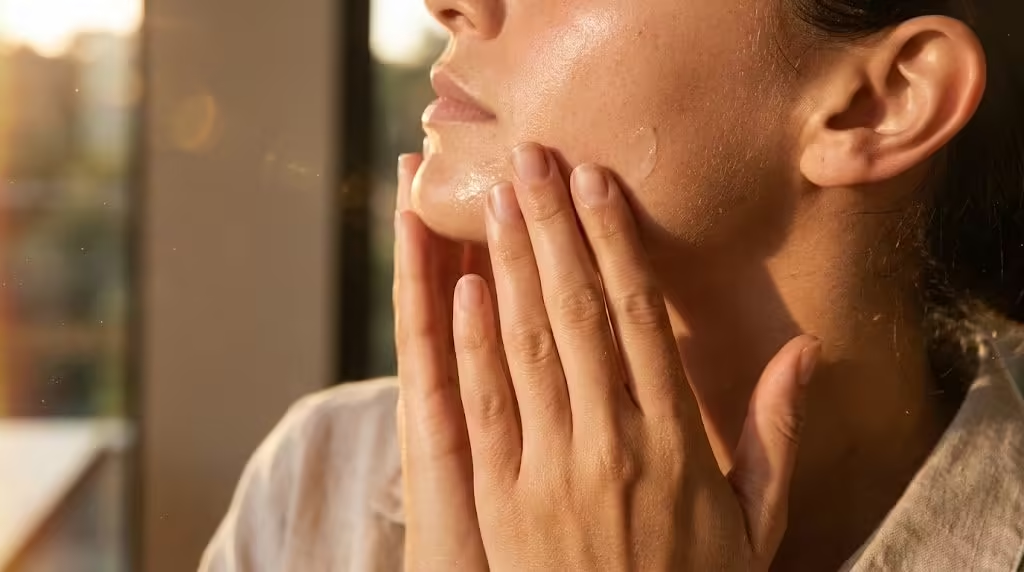
Additionally, pay attention to how you touch your face. Instead of aggressively rubbing the product in, which can cause micro-tears and stretch the skin, use gentle, upward sweeping motions. Finish by lightly pressing and patting the cream into the skin with the palms of your hands. The natural heat from your hands helps the product melt and absorb more efficiently.
Climate, Seasons, and Adapting Your Hydration Strategy
Your skin does not live in a vacuum; it responds aggressively to its environment. The best face moisturizer for you in the humid heat of July will likely feel woefully inadequate during a freezing, windy January. Adapting your moisturizer to the seasons is a hallmark of a mature, effective skincare routine.
Summer and High Humidity
In hot, humid weather, there is plenty of moisture in the air for your skin’s humectants to draw from. Furthermore, excess sweat and sebum can mix with heavy creams, leading to congested pores and a greasy finish. During these months, transition to lightweight lotions or oil-free gel creams. If you find even a gel cream feels too heavy during the day, a hydrating sunscreen might provide all the daytime moisture you need.
Winter and Dry Climates
Cold winter air holds very little moisture, and indoor central heating actively strips water from your skin. This is the time to bring out the heavy artillery. Switch your lightweight lotion for a dense, buttery cream rich in ceramides and occlusives. If you are building a routine for the colder months, ensure you check our honest advice on mastering skincare basics to keep your barrier intact through the frost.

Common Moisturizer Myths, Debunked
The beauty industry is rife with misinformation designed to sell you more products. Let’s address the most pervasive myths about skin hydration so you can make informed, practical choices.
Myth 1: Drinking water is enough to keep your skin hydrated.
While staying internally hydrated is vital for overall organ function, water reaches the skin last. If your external lipid barrier is damaged, no amount of drinking water will stop it from evaporating into the air. You must treat dehydration topically with humectants and occlusives.
Myth 2: SPF mixed into your moisturizer is all you need.
While a moisturizer with SPF 30 is better than nothing, most people do not apply nearly enough of it to achieve the stated sun protection. To get proper coverage, you need about a quarter-teaspoon of product for your face. Applying that much thick moisturizer will often leave you looking incredibly greasy. It is generally safer to use a dedicated moisturizer followed by a dedicated sunscreen. For more on this, read our comprehensive guide on how to choose the right sunscreen without the hype.
Myth 3: Expensive moisturizers always work better.
Price rarely correlates with efficacy in basic moisturizers. A simple, $15 drugstore cream formulated with glycerin and petrolatum will often outperform a $200 luxury cream filled with irritating essential oils and synthetic fragrances. The American Academy of Dermatology consistently recommends basic, affordable, fragrance-free formulations for optimal skin health.
Key Takeaways for Finding Your Perfect Formula
- Identify your true skin type: Assess whether your skin primarily lacks oil (dry), lacks water (dehydrated), or produces excess oil (oily) before shopping.
- Look for the golden trio: The most effective formulas contain a balanced mix of humectants (to hydrate), emollients (to smooth), and occlusives (to seal).
- Texture matters more than claims: Gels are for oily skin, lotions for combination skin, and heavy creams/balms for dry skin.
- Apply to damp skin: Maximize your moisturizer’s efficacy by locking in surface water immediately after cleansing.
- Layer correctly: Moisturizer is the final step of your skincare routine, sealing in all underlying serums and treatments.
Ultimately, the search for the perfect hydrating product requires patience and a willingness to listen to your skin rather than marketing hype. By prioritizing barrier health and matching ingredients to your specific biological needs, you can achieve a consistently comfortable, healthy, and radiant complexion.
Ready to refine the rest of your routine? Explore more honest, science-backed advice at Golden Hour. Start by discovering how to choose the right cleansers, or dive into our detailed fragrance guides to curate your perfect daily aesthetic.
Frequently Asked Questions
What happens if I stop using a face moisturizer?
If you stop using moisturizer, your skin’s protective barrier can weaken, leading to increased water loss. For dry skin, this causes flaking, redness, and accelerated signs of aging. For oily skin, dehydration often triggers the sebaceous glands to overproduce oil, resulting in a greasy complexion and increased acne breakouts.
Can I use my body lotion on my face?
It is generally not recommended to use body lotion on your face. Body formulas are typically thicker, contain heavier occlusives, and often feature stronger fragrances that can clog facial pores and trigger breakouts. Facial skin is thinner and more sensitive, requiring specifically formulated, non-comedogenic ingredients.
How long does it take for a new moisturizer to work?
You should feel the immediate hydrating and smoothing effects of a new moisturizer within minutes of application. However, to see true improvements in your skin barrier’s health, texture, and resilience, you need to use the product consistently for about 28 days, which matches the natural skin cell turnover cycle.
Should my daytime and nighttime moisturizers be different?
They do not have to be different, but using two formulas can be beneficial. Daytime moisturizers should be lightweight to sit well under makeup and sunscreen. Nighttime moisturizers can be much thicker and richer in restorative ingredients like ceramides and peptides, as the skin goes into repair mode while you sleep.
Why does my moisturizer pill and roll off my skin?
Pilling occurs when products don’t absorb properly and clump together on the skin’s surface. This usually happens if you apply an oil-based moisturizer over a water-based serum, if you use too much product, or if you don’t wait long enough between skincare layers. Applying to damp skin often resolves this issue.
Do I need a separate eye cream, or can I use my face moisturizer?
In most cases, a gentle, fragrance-free face moisturizer is perfectly safe and effective to use around the eye area. Dedicated eye creams are only necessary if your regular moisturizer is too heavy and causes milia (tiny white bumps), or if you are trying to target specific concerns like dark circles with active ingredients.
Is it normal for a moisturizer to sting slightly when applied?
No, a basic hydrating moisturizer should never sting or burn. If it does, your skin barrier is likely compromised, or you are experiencing an allergic reaction to an ingredient like fragrance or a chemical preservative. Switch to a minimalist, sensitive-skin formula with soothing ingredients like colloidal oatmeal immediately.