What Does the Neroli Perfume Note Really Smell Like? An Honest Guide to Citrus-Floral Scents
Scrolling through fragrance reviews on TikTok or Reddit can leave you completely baffled about the neroli perfume note. One reviewer calls it a crisp, freshly laundered white shirt, another complains it smells like harsh bathroom soap, and a third describes it as sweet honeyed sunshine.
When you are shopping online for humid summers or dry air-conditioned offices—and trying to avoid blind-buy regrets or overpriced counterfeits—conflicting descriptions make choosing a bottle feel like guesswork. Let us strip away the poetic marketing fluff and break down what the neroli perfume note actually smells like on real skin, why it behaves the way it does, and how to tell if it belongs in your collection.
Quick Answer: What Does the Neroli Perfume Note Smell Like?
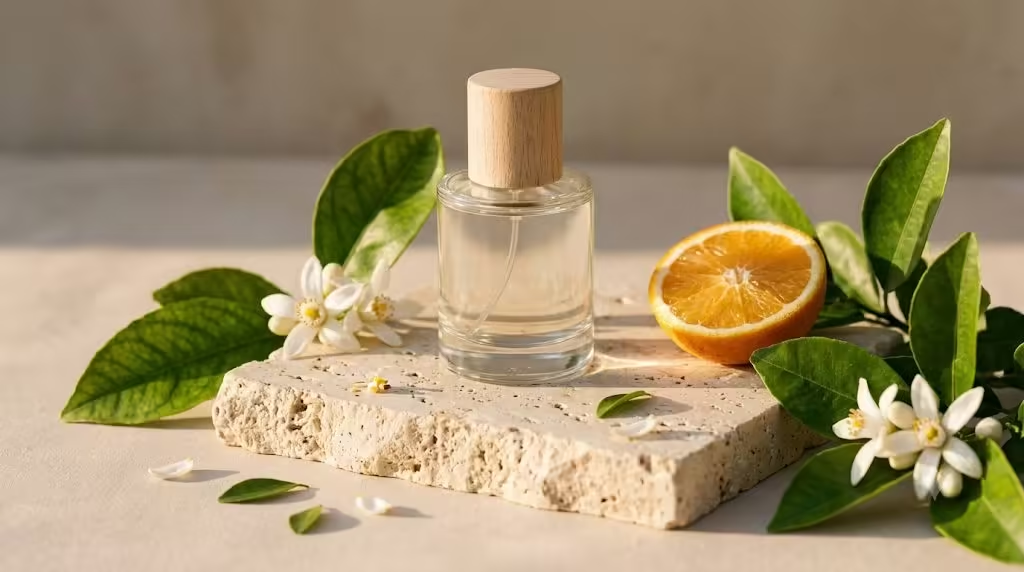
Quick answer: The neroli perfume note smells crisp, green, slightly bitter, and radiantly floral—like crushed citrus leaves, fresh orange zest, and clean white petals with a subtly soapy finish. Unlike sweet orange juice or heavy jasmine, neroli feels airy, sparkling, and refreshing, making it a staple top-to-heart note in classic colognes and modern unisex fragrances.
The Botanical Origin of the Neroli Perfume Note
Before you can recognize the neroli perfume note in a perfume bottle, it helps to know where it comes from and why perfumers treat it differently from standard citrus oils. Every nuance of its scent traces directly back to a single tree species and a very specific artisanal extraction method.
As explored across our Golden Hour beauty and fragrance editorial guides, understanding raw materials is the fastest way to stop falling for vague brand storytelling. Neroli is an essential oil steam-distilled from the small, waxy white blossoms of the bitter orange tree (Citrus aurantium var. amara), a hardy evergreen prized across the Mediterranean basin.
You can read more about the botanical history of neroli essential oil, which takes its name from Anne Marie Orsini, the 17th-century Princess of Nerola in Italy, who famously used the essence to scent her leather gloves and bathwater. Today, the finest neroli oil is still harvested primarily in Tunisia, Morocco, Egypt, and Southern France during a brief spring flowering window between late April and May.
According to botanical taxonomy documented by Encyclopaedia Britannica on the bitter orange tree, this single plant is uniquely generous to perfumers because its peel, leaves, twigs, and flowers each yield completely distinct aromatic oils. Harvesting the blossoms requires gentle hand-picking at dawn before the midday sun evaporates their delicate volatile compounds.
How Steam Distillation Shapes the Neroli Perfume Note
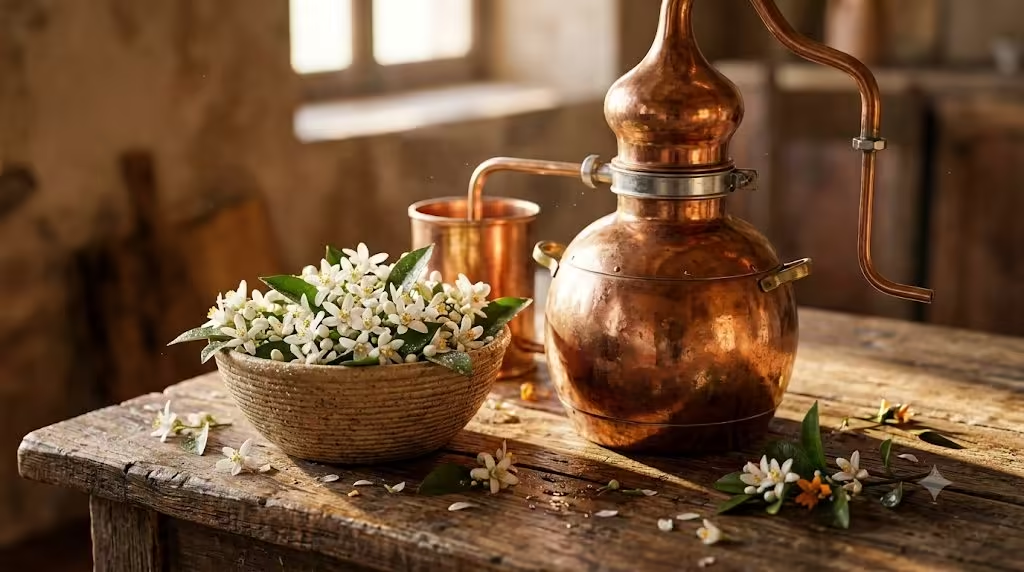
How a flower is extracted changes its aroma completely. To produce authentic neroli oil, harvesters pick bitter orange blossoms just as the white buds begin to open and place them into a copper alembic still with spring water and gentle steam.
- High heat isolates light, sparkling molecules: Steam distillation captures only the lightest, most volatile aromatic compounds—such as linalool, limonene, and linalyl acetate—while leaving heavier, syrupy floral molecules behind in the floral water.
- A natural green bitterness emerges: Because tiny green calyxes and tender stems remain attached to the freshly picked buds during distillation, the resulting oil carries a sharp, leafy snap rather than pure floral sweetness.
- Valuable orange flower water is created simultaneously: The condensed steam left behind after skimming off the essential oil becomes traditional orange blossom hydrosol, widely used in Middle Eastern and South Asian culinary and skincare traditions.
- Low yield drives high prices: It takes roughly 1,000 kilograms of hand-harvested blossoms to yield just one kilogram of pure neroli essential oil, which explains why authentic neroli-heavy fragrances often sit in higher price brackets.
Breaking Down the Four Scent Layers of the Neroli Perfume Note
If you hold a blotter strip dipped in pure neroli oil up to your nose, you will not smell just one flat aroma. Instead, the neroli perfume note unfolds in four distinct layers over the first thirty to forty-five minutes on your skin.
1. Sparkling Bitter Citrus Zest
In the first five seconds after spraying, neroli delivers a bright, zesty burst reminiscent of freshly grated bitter orange peel and unripe green mandarin. There is zero sugary pulpiness here; it is dry, tart, and invigorating, waking up your senses immediately in warm weather.
This opening sparkle comes primarily from d-limonene and beta-pinene, the same crisp terpenes found in cold-pressed citrus rinds. Unlike lemon, which can sometimes veer toward household cleaner territory, bitter orange zest feels rounded and slightly pithy.
2. Crushed Green Leaves and Twigs
Right beneath the citrus sparkle sits a distinct botanical greenness. Think of snapping a fresh citrus twig between your fingers—slightly astringent, leafy, and herbal, similar to crisp green fragrances that mimic garden foliage after morning rain.
This leafy undertone prevents the fragrance from smelling overly sweet or juvenile. It gives the neroli perfume note an architectural, structured backbone that appeals equally to people who normally avoid floral perfumes.
3. Airy, Dewy White Florals
Once the sharpest citrus top notes settle after ten to fifteen minutes, neroli reveals its floral heart. It smells like delicate white petals cooled by morning dew—clean, translucent, and luminous without the heady, tropical creaminess of tuberose or gardenia.
If you struggle with dense white florals triggering headaches in crowded rooms or warm commutes, neroli offers a breathable alternative. Its floral character stays translucent and sunlit rather than thick or velvety.
4. A Clean, Slightly Soapy Dry-Down
This is the facet that divides fragrance lovers most sharply. Because neroli shares aromatic molecules with traditional European castile soaps and classic eau de cologne formulas, your brain may register its dry-down as squeaky-clean luxury soap or crisp cotton sheets.
On well-moisturized skin, that soapy edge softens into a comforting, freshly showered skin aura. On very dry skin, however, the sharp citrus and clean floral molecules can feel slightly brisk or astringent.
Neroli vs. Orange Blossom vs. Petitgrain: Key Differences
One of the biggest sources of confusion when reading a perfume pyramid is seeing neroli, orange blossom, and petitgrain listed across similar citrus-floral scents. Even though all three come from the exact same bitter orange tree, they smell noticeably different in a finished bottle.
Learning how perfumers categorize these botanicals in our complete guide to fragrance notes helps you predict whether a perfume will lean sharp and herbaceous or rich and honeyed before you spend a cent.
| Feature | Neroli | Orange Blossom | Petitgrain |
|---|---|---|---|
| Plant Part Used | Fresh bitter orange blossoms (with tiny green buds) | Fresh bitter orange blossoms | Leaves and green twigs of the bitter orange tree |
| Extraction Method | Steam distillation | Solvent extraction (yields an absolute) | Steam distillation |
| Primary Scent Profile | Crisp, citrusy, green, slightly bitter, airy floral | Rich, sweet, warm, honeyed, narcotic white floral | Woody, sharp, herbaceous, tart green leaf |
| Position in Pyramid | Top to upper-heart note | Heart (middle) note | Top note |
| Overall Vibe | Fresh white linen, sunny Mediterranean breeze, clean soap | Golden honey, warm skin, lush evening florals | Crushed foliage, botanical apothecary, unisex cologne |
Why Orange Blossom Smells Sweeter Than Neroli
When perfumers want orange blossom absolute, they wash the flowers in a solvent rather than distilling them with steam. That gentle, lower-temperature process preserves a naturally occurring molecule called indole along with methyl anthranilate, creating a thick, syrupy, grape-like floral sweetness.
By contrast, steam distillation strips away most of those heavy indolic compounds when making the neroli perfume note. If you find mainstream sweet white florals cloying in hot climates, neroli gives you the crisp radiance of the flower without the sugar rush.
Where Petitgrain Fits Into the Picture
Petitgrain is steam-distilled strictly from the leaves and green twigs of the bitter orange tree rather than the petals. It carries almost none of the floral sweetness of neroli, smelling intensely green, woody, and tart—making it a frequent partner alongside neroli in classic colognes to amplify freshness.

How the Neroli Perfume Note Pairs With Other Fragrance Families
Because the neroli perfume note sits neatly at the crossroads between citrus and floral categories, perfumers use it as a versatile bridge ingredient across almost every scent family. Knowing its favorite pairing partners helps you choose a blend that matches your personal style and local climate.
Citrus and Aromatic Colognes
In traditional European colognes, neroli is paired with bergamot, lemon, rosemary, and lavender. If you love fresh citrus perfumes that hold up in warm weather, look for formulas that anchor neroli with herbaceous aromatics so the freshness does not vanish in twenty minutes.
This combination feels crisp, energetic, and timeless. It is ideal for morning workouts, hot commutes, and humid afternoons when heavier scents feel stifling.
White Florals and Clean Musks
When blended with luminous jasmine fragrances, clean white musk, or soft iris, neroli softens into a polished “your skin but cleaner” aura. The musk slows down neroli’s evaporation rate, extending its crisp floral heart well into the afternoon.
Adding soft musk or cashmeran also smooths out any sharp green edges. The result feels effortless, modern, and intimate rather than loudly perfumed.
Woody, Amber, and Spicy Bases
Modern niche perfumers love contrasting bright neroli against warm, grounded base notes like cedarwood, vetiver, amber, or cardamom. If you are curious how different structural pairings change wearability, our comprehensive fragrance families guide explains how base notes anchor lighter top ingredients.
Dry woods and warm spices absorb neroli’s soapy edge, creating a balanced, gender-neutral scent that transitions effortlessly from humid mornings to cool air-conditioned evenings. Pairing neroli with cardamom or green tea is especially popular in contemporary fragrances designed for year-round wear.

Who Should Wear Neroli (and Who Might Dislike It)?
No fragrance note suits everyone, and honest buying advice means telling you when to walk away from a hyped bottle just as clearly as when to try it.
You Will Likely Love the Neroli Perfume Note If:
- You live in a hot or humid climate: In 30°C+ heat across South Asia, the Middle East, or humid summers anywhere, heavy vanilla and syrupy florals can feel suffocating, whereas neroli cuts right through humidity with cooling clarity.
- You prefer gender-neutral, effortless scents: The neroli perfume note avoids overly powdery or sugary tropes, smelling equally natural on a crisp cotton kurta, an office blazer, or a casual weekend T-shirt.
- You want an office-safe signature: Its clean, polite projection rarely overwhelms closed meeting rooms, hospitals, or crowded public transit.
- You appreciate crisp, freshly showered aesthetics: If you gravitate toward white linen, minimalist skincare, and clean botanical soaps, neroli mirrors that exact mood effortlessly.
You Might Want to Skip or Sample Carefully If:
- You dislike “soapy” or clean laundry accords: If aldehydic or soapy perfumes remind you of harsh bar soap rather than luxury spa linens, high-dose neroli may trigger that exact association on your skin.
- You expect eight hours of loud projection: Because neroli consists largely of volatile top-note molecules, pure neroli colognes naturally fade faster than heavy amber or oud compositions unless backed by strong base fixatives.
- You crave rich gourmand sweetness: If your ideal fragrance smells like caramel, vanilla bean, or ripe berries, neroli’s green bitterness will likely feel too sharp or austere.
How to Choose a Quality Neroli Perfume Without Falling for Hype
Social media is full of viral “clean girl” and “old money summer” perfume recommendations that promise 12-hour longevity from a fresh citrus bottle—a physical impossibility in perfumery chemistry. Use these practical checks to buy smartly and avoid disappointment or counterfeits.
1. Check the Concentration and Anchoring Base Notes
Pure Eau de Cologne formulas with 2–4% fragrance oil are meant to be splashed generously and reapplied every two to three hours. If you want lasting wear without constant respraying, look for an Eau de Parfum (EDP) that pairs the neroli perfume note with anchoring base notes like ambroxan, vetiver, sandalwood, or benzoin, as detailed in our guide to perfume concentrations and longevity.
2. Test on Warm Skin Through the Full Dry-Down
Never judge a neroli fragrance solely on a paper blotter strip inside an air-conditioned store. Paper holds onto sharp citrus top notes artificially long, whereas warm skin reveals within twenty to thirty minutes whether the formula turns pleasantly creamy-clean or overly sharp and metallic on your specific skin chemistry.
Applying an unscented moisturizer beforehand also helps slow down evaporation. Hydrated skin holds onto delicate citrus-floral molecules significantly longer than dry skin.
3. Watch Out for Phototoxicity and Heat Storage Issues
Natural citrus and bitter orange oils can occasionally contain trace IFRA-regulated compounds like bergapten if cold-pressed peel oils are blended alongside steam-distilled neroli. Always spray citrus-heavy perfumes on clothing or shaded pulse points before stepping into intense midday sun.
Additionally, store neroli bottles in a cool, dark drawer rather than a sunny dresser or steamy bathroom. Delicate citrus terpenes oxidize quickly under UV light and heat, turning a sparkling floral into a flat, turpentine-like smell within months.
4. Buy Decants or Official Discovery Sets First
Because authentic neroli oil is expensive to harvest and distill, counterfeit bottles flooded onto third-party marketplaces often replace real neroli with cheap synthetic lemon cleaner aromas. Always purchase from authorized retailers or reputable decant sellers first so you can test a 2 ml vial across a full workday before committing to a full bottle.

Key Takeaways
- True scent profile: The neroli perfume note smells crisp, tart, green, and cleanly floral—combining bitter orange zest, crushed citrus leaves, and dewy white petals with a subtle soapy finish.
- Neroli vs. orange blossom: Both come from the bitter orange tree, but steam-distilled neroli is light, green, and refreshing, while solvent-extracted orange blossom absolute is thick, sweet, and honeyed.
- Ideal wear conditions: Neroli excels in warm, humid weather, daytime errands, and close-quarters office settings where heavy sweet perfumes feel overwhelming.
- Longevity expectations: Because neroli is primarily a volatile top-to-heart note, look for Eau de Parfum concentrations anchored with musk, cedarwood, or vetiver if you want all-day staying power.
- Smart testing: Always test neroli on warm, moisturized skin for at least 30 minutes to see how its clean, soapy facet interacts with your natural body chemistry.
If you are still narrowing down which scent families feel most like you, explore more honest, hype-free fragrance breakdowns and note guides across Golden Hour to build a wardrobe you genuinely love wearing.
Frequently Asked Questions
What does the neroli perfume note smell like in simple terms?
The neroli perfume note smells like a crisp blend of bitter orange peel, freshly crushed green citrus leaves, and clean white flower petals. Unlike sweet orange juice, it feels dry, sparkling, and airy with a subtle, freshly laundered soapy finish that wears effortlessly in warm weather.
Is neroli a masculine or feminine scent?
Neroli is completely unisex and has been used across men’s colognes and women’s perfumes for centuries. Its balance of sharp green citrus and clean white blossoms adapts easily to any wearer, leaning fresher when paired with herbs and woods or softer when blended with musk and jasmine.
What is the difference between neroli and orange blossom in perfume?
Neroli is steam-distilled from bitter orange blossoms, producing a light, green, slightly bitter, and soapy citrus-floral scent. Orange blossom absolute is extracted using solvents from the same flower, yielding a much richer, sweeter, honeyed white floral aroma that sits deeper in the heart of a fragrance.
Why does neroli smell like soap to some people?
Neroli smells soapy to many noses because its key aromatic molecules—especially linalool and linalyl acetate—have been used to scent classic European bar soaps and bathwaters for generations. On warm skin, neroli’s clean white floral dry-down naturally mimics the crisp sensation of freshly washed skin or linen.
Does neroli perfume last long on the skin?
Pure neroli is made of lightweight, volatile aromatic molecules, so simple neroli colognes typically last two to four hours on skin. To get six to eight hours of wear, choose an Eau de Parfum that pairs neroli with heavier base fixatives like white musk, cedarwood, vetiver, or amber.
What season is best for wearing neroli fragrances?
Spring and summer are the most popular seasons for neroli because its tart citrus and leafy green facets cut cleanly through heat and humidity. However, modern blends that combine neroli with warm cardamom, vanilla, or sandalwood also wear beautifully during autumn and mild winter days.
What notes pair best with neroli in a perfume?
Neroli blends seamlessly with bright citruses like bergamot and petitgrain, aromatic herbs such as rosemary and lavender, and soft florals like jasmine or iris. For deeper longevity and warmth, perfumers frequently anchor neroli with clean white musk, cedarwood, vetiver, cardamom, or golden amber.