The Honest Guide to All Types of Eyeliner: How to Choose, Apply, and Master Your Look
Welcome to the overwhelming world of eye makeup, where navigating the different types of eyeliner can feel like learning a completely new language. One wrong flick with an unforgiving formula can easily derail your entire morning routine. You deserve a clear, honest breakdown of what actually works for your eye shape, your skill level, and your daily lifestyle.
Quick answer: When comparing the different types of eyeliner, your choice should depend entirely on the look you want to achieve. Pencils are the most forgiving and ideal for soft, smudged looks; liquid pens offer crisp, dramatic lines; and gel pots provide long-lasting intensity that requires a separate brush. Start with pencil if you are a beginner, and graduate to liquid or gel as your confidence grows.
Every makeup aisle is flooded with a dizzying array of pencils, markers, pots, and powders. However, if you are looking to simplify building a flawless routine for your skin type, you only really need to understand three core categories. Let’s strip away the marketing jargon and look at how these formulas actually perform on real skin.
Understanding the Main Types of Eyeliner
Before you invest in a new product, it is crucial to understand the fundamental differences in cosmetic chemistry. Eyeliner formulas are designed with specific ratios of waxes, oils, and film-formers to achieve different results. By breaking down the three primary categories, you can stop fighting your makeup and start applying it with genuine confidence.
The Classic Pencil: Best for Beginners and Smokey Eyes
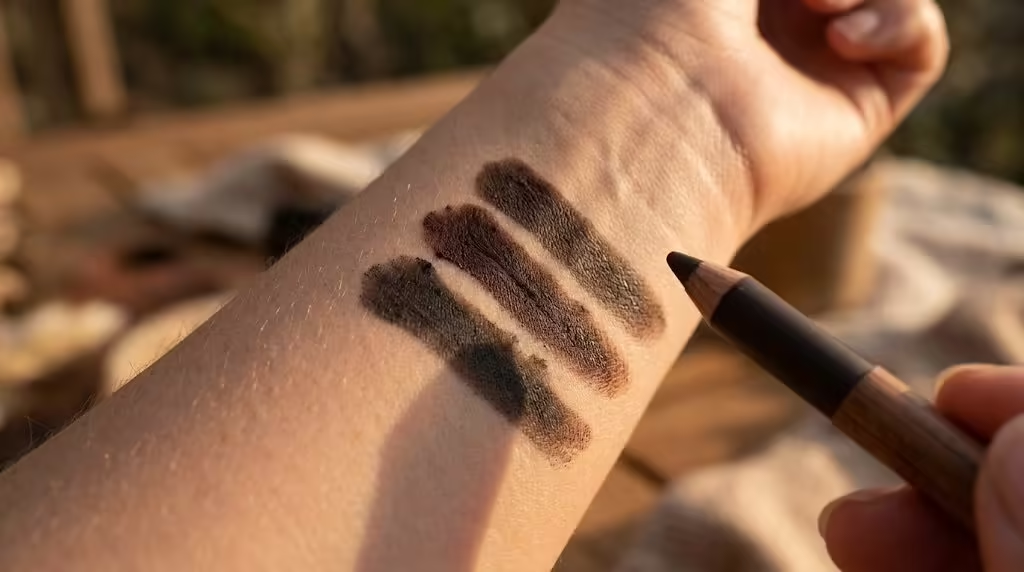
Pencil eyeliner is the oldest and most universally relied-upon format for a very good reason. Modern pencils usually fall into two broad categories: traditional wooden pencils that require a cosmetic sharpener, and mechanical, twist-up kohl or kajal liners. According to the history of eyeliner, kohl has been used for centuries across various cultures, evolving into the creamy, user-friendly formulas we rely on today.
Why You Need a Pencil
Pencils are incredibly forgiving and versatile. If your hand shakes during application, a pencil line can easily be smudged out with a dense brush or your fingertip to create a soft, lived-in look. Furthermore, pencil is the only truly safe formula to use on your waterline (the inner rim of your eye).
The Honest Trade-off of Pencils
The main drawback of pencil formulas is their overall longevity throughout a long workday. Because they are heavily wax and oil-based, they remain somewhat pliable and are prone to transferring onto your upper lid. If you have hooded eyes or oily eyelids, you will rarely achieve a razor-sharp, budge-proof wing with a traditional pencil.
Liquid Eyeliner: The Secret to Sharp, Winged Perfection
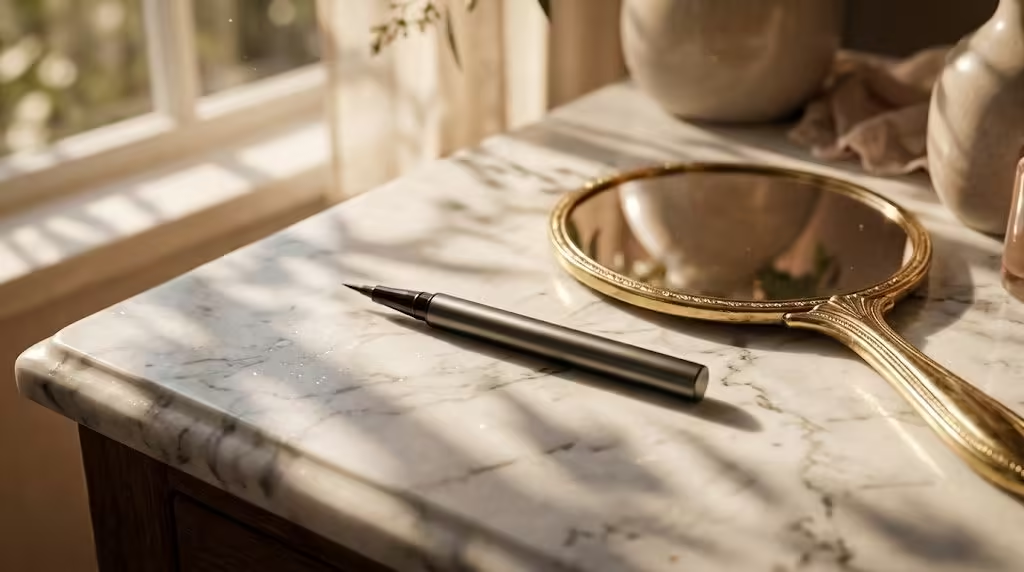
When you see a flawless, graphic cat-eye in editorial magazines or on social media, you are almost always looking at liquid eyeliner. Available primarily as a dip-wand tube or a convenient felt-tip pen, liquids dry down quickly to form a solid, flexible film on the skin.
Mastering the Liquid Formula
If you are attempting winged eyeliner for beginners, a high-quality felt-tip liquid pen is going to be your best friend. It holds and handles much like a standard marker, giving you excellent control over the pressure and thickness of your line. Liquid is completely unmatched for precision and usually boasts excellent staying power once fully dry.
The Liquid Learning Curve
Liquid formulas can sense fear and hesitate when you do. They are unforgiving; once the intense pigment sets, cleaning up a jagged mistake usually requires a cotton swab dipped in makeup remover, which can subsequently ruin your carefully applied concealer. Liquids should also never be applied to the waterline, as they will immediately bleed into the eye.
Gel Eyeliner: Ultimate Precision and Longevity
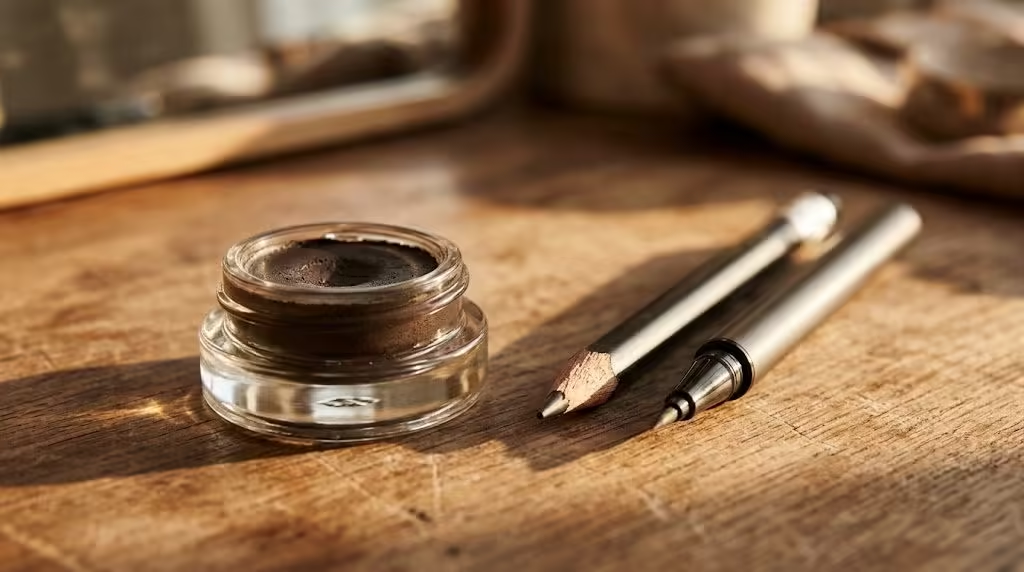
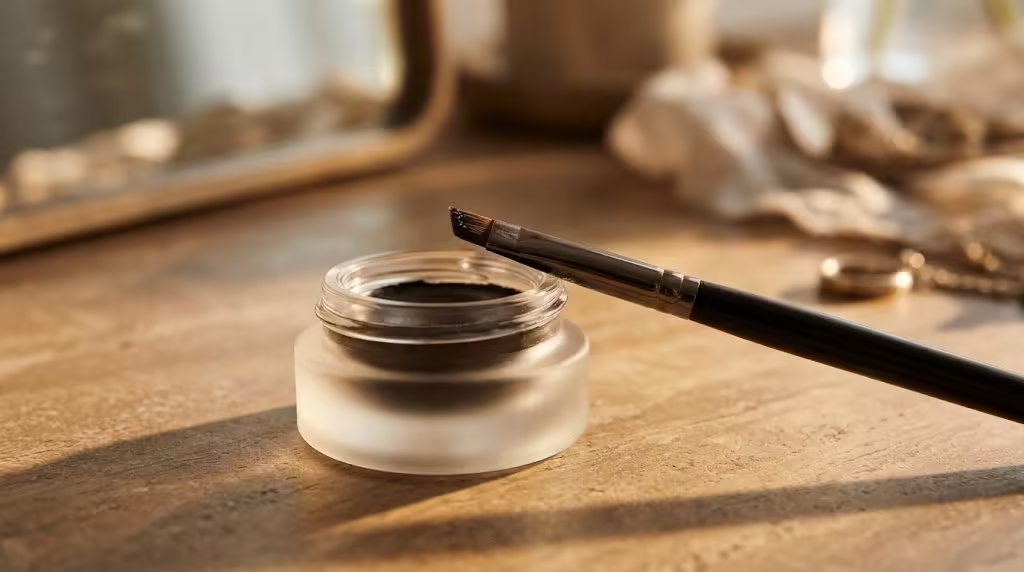
Gel eyeliner traditionally comes in a small, heavy glass pot and requires the use of a separate, angled makeup brush for application. This unique format bridges the gap perfectly between the soft, creamy blendability of a pencil and the rich, opaque pigment of a liquid liner.
Who Gel Eyeliner Is For
If you want serious drama and true all-day wear without the stiffness of a liquid, gel is the absolute best answer. It glides on smoothly without skipping or dragging over textured skin, making it an excellent choice for mature eyelids. One of the most important gel eyeliner tips is to work quickly and deliberately in small sections.
The Drawbacks of Gel
Gels require strict maintenance and care. You must remember to tightly close the glass pot immediately after every use, or the formula will dry out rapidly and become a solid, unusable puck. Additionally, you must wash your application brush regularly to prevent bacterial buildup and ensure a smooth, crisp line every single time you use it.
Comparing Liquid vs Pencil Eyeliner vs Gel
Are you still unsure which formula deserves a spot in your daily makeup bag? This honest, side-by-side breakdown compares the three primary types of eyeliner to help you make a confident purchasing decision.
| Feature | Pencil Eyeliner | Liquid Eyeliner | Gel Eyeliner |
|---|---|---|---|
| Best For | Beginners, smudged looks, waterlines | Graphic lines, cat-eyes, crisp wings | Bold pigment, long wear, mature skin |
| Ease of Use | Very Easy (Forgiving) | Requires Steady Practice | Moderate (Requires a brush) |
| Longevity | Low to Medium | High to Very High | Very High |
| Finish Options | Soft matte, metallic, or shimmer | Matte, satin, or glossy vinyl | Ultra-matte and deeply opaque |
Matching the Types of Eyeliner to Your Eye Shape
Understanding the chemical makeup of your eyeliner is only half the journey. The shape of your eye dictates how a formula will wear, fold, and transfer throughout the day. Tailoring your product choice to your specific anatomy will prevent endless frustration.
Almond and Round Eyes
If you have almond or round eyes, you have the most real estate to play with and can generally use any eyeliner type comfortably. A liquid pen is excellent for elongating round eyes into a subtle cat-eye. Conversely, a soft brown pencil smudged gently along the outer third of the lash line beautifully enhances almond shapes without looking overly harsh.
Hooded Eyes and Monolids
Hooded eyes and monolids face a unique challenge: the skin of the upper eyelid folds down over the mobile lid, which can instantly cause wet eyeliner to transfer upward. For these eye shapes, a fast-drying, waterproof liquid liner or a highly resilient gel is absolutely mandatory. You must apply the liner in thin, precise strokes and keep your eye closed until the formula is 100% dry to avoid the dreaded semi-circle transfer.
Color Theory: Moving Beyond Basic Black
Black eyeliner is a universal staple, but it is not always the most flattering choice for daytime wear or mature skin. Expanding your collection to include different shades can dramatically alter how bright, large, and rested your eyes appear.
The Power of Brown and Navy
Swapping your stark black liquid or pencil for a rich chocolate brown immediately softens your overall appearance. Brown provides the necessary definition at the lash line without overpowering lighter eye colors or fair skin tones. Navy blue eyeliner is another fantastic insider secret; the cool blue tones actively contrast with the whites of your eyes, making them appear brighter and less fatigued.
Using Nude on the Waterline
While black pencil on the lower waterline creates a sultry, closed-in smoky effect, a nude or cream-colored pencil does the exact opposite. Tracing a waterproof nude pencil along your lower waterline instantly neutralizes redness and creates the optical illusion of larger, more awake eyes. Avoid stark white pencils, as they often look unnatural and theatrical in harsh daylight.
The Secret to Truly Smudge-Proof Eyeliner
Finding a reliable, smudge-proof eyeliner is only one part of the battle against the elements. Even the most expensive, heavily-formulated waterproof liner will eventually melt if applied directly to an unprepared, oily canvas. Your eyelids naturally produce sebum throughout the day, which acts effectively as a built-in makeup remover.
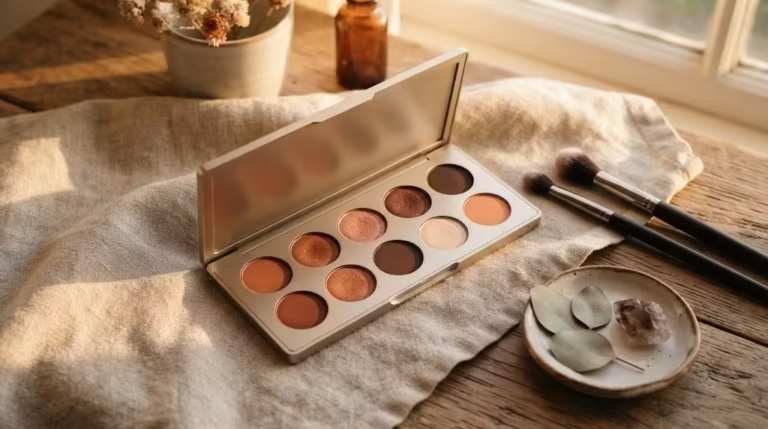
To lock your eyeliner in place securely, you must prep the lid properly. Start by sweeping a translucent setting powder or a dedicated matte eyeshadow base over your bare lids to absorb excess surface oil. If you are pairing your liner with powder shadows, consider finding the best eyeshadow palettes that offer high-quality, finely milled mattes to create a dry, reliable barrier.
Another crucial step is physically setting your pencil liner. After drawing your initial line, take a small, dense brush and press a matching powder eyeshadow directly on top of the creamy pencil. This sets the internal waxes and drastically increases its wear time. Finally, always prioritize your eye health and safety. The American Academy of Ophthalmology firmly recommends replacing your eyeliner every three months to prevent dangerous bacterial infections.

Choosing the Right Tools for the Job
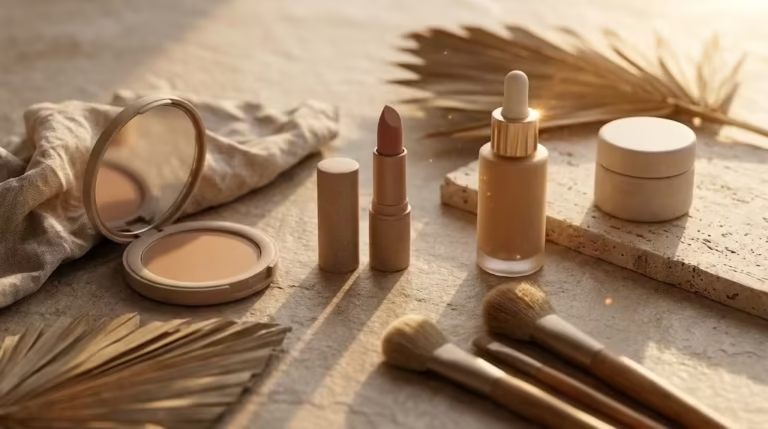
Your eyeliner is ultimately only as good as the physical tools you use to apply it to your skin. If you opt for a gel pot, you cannot compromise on the quality of your brush. An angled, stiff-bristled brush will give you the sharpest, most precise wing, while a tiny, pointed fine-liner brush offers delicate, whisper-thin control for the inner corners.
For those who prefer smudged, smoky pencils, a dense smudge brush or even a clean cotton swab is completely essential for diffusing the harsh edges without erasing the underlying pigment. Taking the time to explore and investing in essential makeup brushes and tools will elevate your application from amateur to professional, regardless of which specific formula you end up choosing.
Don’t forget the importance of a high-quality cosmetic sharpener. Using a dull wooden pencil not only ruins your precision but can actually scratch the delicate skin around your eyes. Make sure to clean your sharpener weekly with a cotton swab dipped in rubbing alcohol to prevent old, waxy buildup from ruining your fresh pencils.
How to Safely Remove Long-Wearing Eyeliner
The better your eyeliner stays on during the day, the harder it is going to be to remove at night. Vigorously scrubbing your delicate eye area with a harsh makeup wipe will lead to premature fine lines, broken eyelashes, and severe skin irritation. You need a dedicated removal strategy for stubborn waterproof formulas.
The most effective method is utilizing a two-step double cleanse. Begin with a rich, oil-based cleansing balm or a bi-phase micellar water formulated specifically for waterproof makeup. Gently press a saturated cotton pad against your closed eye and hold it there for a full ten seconds. This gives the oils time to break down the resilient film-formers in liquid and gel liners without requiring any aggressive rubbing or pulling.
Key Takeaways
- Pencil eyeliner is the most versatile and beginner-friendly option, perfect for soft looks and entirely safe for the sensitive waterline.
- Liquid eyeliner provides the sharpest, most dramatic wings but requires a steady hand, a bit of patience, and dedicated practice.
- Gel eyeliner offers intense, opaque pigment and exceptional longevity, though it requires a separate brush and quick application before it fully sets.
- Always prep your bare eyelids with setting powder or primer to prevent natural oils from breaking down your liner prematurely.
- Set creamy pencil liners with a matching eyeshadow powder to significantly boost their staying power and prevent upper lid transfer.
- Never scrub the delicate eye area; always use an oil-based makeup remover to gently dissolve waterproof formulas.
Mastering your eye makeup absolutely shouldn’t feel like a dreaded morning chore. By understanding the unique strengths and chemical behaviors of different formulas, you can stop fighting your cosmetics and start enhancing your natural features confidently. If you are curious about what actually goes into these long-lasting formulas, take a deeper dive into decoding skincare and cosmetic formulas with our honest ingredient guides.
Frequently Asked Questions
What is the easiest type of eyeliner for a complete beginner?
Pencil eyeliner is widely considered the easiest and most approachable for beginners. The wax-based formula is incredibly forgiving, allowing you to easily wipe away or smudge out small mistakes. A traditional wooden pencil or a creamy mechanical kohl pencil gives you maximum physical control without the paralyzing fear of harsh, unfixable liquid lines.
Can I use liquid eyeliner on my lower waterline?
No, you should never use liquid eyeliner on your delicate waterline. Liquid formulas contain film-formers that can easily bleed directly into the eye, causing severe irritation, stinging, and potential bacterial infection. Always stick to waterproof pencil or kohl liners that are specifically formulated and safety-tested for safe use on the inner rim.
Why does my winged eyeliner always look uneven or jagged?
Uneven winged eyeliner is usually caused by applying the product with one eye closed or physically pulling the skin taut during application. To get even wings, keep both eyes open and relaxed, looking straight ahead into a mirror. Map out the angle of the wing first, carefully following the natural upward curve of your lower lash line.
How do I stop my eyeliner from transferring to my upper lid?
Transfer happens when the natural oils on your eyelid slowly break down the waxes in the liner. To stop this frustrating issue, prep your bare lids with an eyeshadow primer and set it with translucent powder before applying any liner. Switching to a waterproof liquid or gel formula also heavily reduces the chance of transferring on hooded or oily eyelids.
What is the actual difference between kohl and regular pencil eyeliner?
Kohl eyeliner is typically much softer, creamier, and more intensely pigmented than a standard wooden pencil eyeliner. It is specifically formulated to be easily smudged for a dramatic smoky effect and to glide effortlessly along the waterline without painful tugging, whereas regular pencils can be slightly firmer and waxier for sharper lines.
How long does gel eyeliner last in the pot before drying out?
An open pot of gel eyeliner typically lasts about three to six months before it inevitably begins to dry out, shrink, and crack. To extend its usable life, only peel back half of the protective foil seal, and always store the glass pot upside down with the lid screwed on as tightly as possible to trap the essential moisture inside.
Is brown eyeliner better than black for older women?
Brown eyeliner is often highly recommended for mature skin because it provides necessary definition without the harsh, stark contrast of true black. Black can sometimes make the eyes look smaller or cast dark shadows, whereas a rich, warm brown softly enhances the lash line and generally looks more natural and flattering in daylight.
Can I use eyeshadow as a daily eyeliner?
Yes, using powder eyeshadow as eyeliner is a fantastic, soft alternative for everyday wear. By using a damp, angled brush, you can intensify the pigment of any dark eyeshadow and press it directly into the lash line. This method is exceptionally forgiving, easy to blend, and perfect for creating subtle, daytime-appropriate definition without harsh lines.