The Honest Guide to Choosing the Best Winter Perfumes for Men Without the Hype
When the temperature drops and the air turns crisp, finding the best winter perfumes for men becomes an absolute priority for anyone who wants to leave a lasting, sophisticated impression. The harsh reality of fragrance science is that the fresh, citrus-heavy cologne you relied on all summer simply will not survive in freezing temperatures. Cold air actively suppresses lightweight fragrance molecules, meaning you need a formulation built with richer, denser ingredients just to project properly off your skin. If you are tired of spending money on hyped-up designer bottles that disappear after an hour, it is time to fundamentally rethink how you approach cold weather fragrances.
Quick answer: The best winter perfumes for men are purposefully built on heavy, dense base notes like amber, woods, leather, oud, and vanilla, which thrive in cold, dry air. To ensure excellent sillage, you should look for higher oil concentrations (Eau de Parfum or Extrait de Parfum) and spray directly onto well-moisturized pulse points or natural fabrics like wool to maximize longevity and projection throughout the entire day.
Why the Best Winter Perfumes for Men Rely on Science, Not Hype
There is a specific, immutable scientific reason why your fragrance wardrobe needs a seasonal shift. In the online fragrance community, there is an endless amount of noise and marketing jargon about “beast mode” performance and extreme projection. However, the reality of how a scent performs comes down to simple thermodynamics, molecular chemistry, and how environmental temperature affects evaporation rates.
In hot summer weather, ambient heat accelerates the evaporation of lightweight top notes like lemon, bergamot, neroli, and mint. This heat pushes the scent off your skin, creating a wide scent bubble. In winter, the freezing air does the exact opposite. Low temperatures cause fragrance molecules to evaporate at a drastically slower rate, effectively trapping the scent against your body. If you wear a light, fresh, aquatic scent in December, it will lack the thermal energy to project entirely, rendering it completely unnoticeable to anyone standing more than a few inches away from you.
To truly understand how to build your seasonal fragrance wardrobe from the ground up, we highly recommend exploring our foundational guide to men’s fragrance. Understanding these core mechanics will save you from making expensive blind-buying mistakes based on social media trends.

Understanding the Evaporation Curve in Cold Climates
To choose a cold weather fragrance effectively, you need to understand the evaporation curve of perfume ingredients. All modern perfumes are constructed in a traditional pyramid consisting of top, heart (middle), and base notes. How these notes transition is entirely dependent on the climate.
- Top Notes: The initial burst of scent, typically utilizing volatile citrus oils or light fruits. In winter, these lightweight notes actually last slightly longer on the skin because the cold preserves them, but they have almost zero projection.
- Heart Notes: The core of the scent, usually consisting of florals, soft spices, or aromatic herbs. These dictate the personality of the fragrance as it settles into your skin over the first hour.
- Base Notes: The structural anchor of the formulation, utilizing heavy molecules like woods, musk, vanilla, resins, and leather. These are the heavy lifters that ensure winter fragrance longevity and give the scent its trail.
Heavy molecules physically require less ambient heat to remain stable and noticeable. This is precisely why master perfumers lean heavily into deep resins, dense woods, and warm spices during the colder months. If you want to delve deeper into how individual ingredients interact with your unique body chemistry, our honest guide on how to choose your perfume by fragrance notes breaks down exactly what to look for on an ingredient label.
The Impact of Winter Skin Chemistry
Your skin behaves differently in the winter, which drastically changes how a perfume performs. During the humid summer months, your body’s natural sebum (oil) production and sweat help to naturally project a fragrance outward, creating a slick base for the perfume oils to cling to. In the winter, harsh indoor heating and frigid outdoor winds strip your lipid barrier of essential moisture.
Dry, dehydrated skin is the natural enemy of perfume. It rapidly absorbs and metabolizes fragrance oils, causing even the most expensive luxury scents to fade prematurely. This biological shift is a primary reason why your grooming and application techniques must change when the seasons do.
Core Ingredients Defining the Best Winter Perfumes for Men
When searching for your signature cold-weather scent, you should actively seek out specific olfactory families. The global authority on fragrance standards, the International Fragrance Association (IFRA), strictly regulates ingredient usage for safety, which has led modern perfumers to create incredibly sophisticated, long-lasting synthetic and natural blends perfectly suited for freezing climates.
Woody and Earthy Foundations
Woody notes form the traditional, undisputed backbone of masculine perfumery. In the depths of winter, ingredients like creamy sandalwood, dry cedarwood, damp patchouli, and smoky vetiver take center stage. These foundational notes provide a grounding, earthy warmth that perfectly complements the heavy, textured winter fabrics like wool, cashmere, and tweed.
Sandalwood offers a rich, almost milky smoothness that feels inherently comforting and luxurious. Cedarwood, by contrast, provides a drier, pencil-shaving crispness that cuts through freezing air beautifully without becoming cloying. Patchouli, when blended with restraint by a skilled perfumer, adds a dark, chocolatey earthiness that feels incredibly sophisticated for evening wear.
Spices, Resins, and Warm Amber
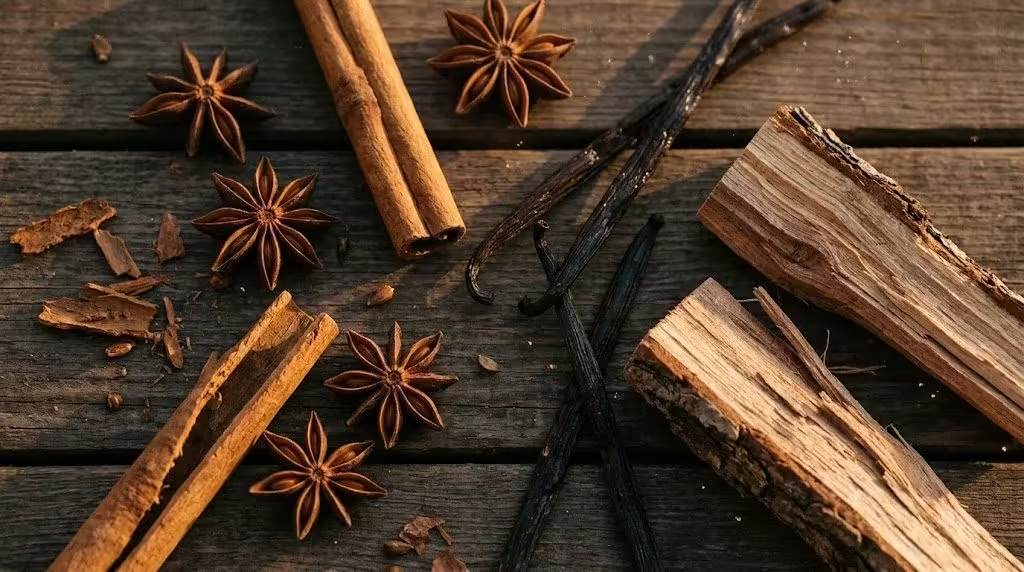
Often categorized under the broader Amber or “Oriental” fragrance family (you can learn more about standard fragrance categorizations via encyclopedic resources like Fragrantica), these notes provide the essential “heat” in cold weather perfumes. Think of ingredients like crushed cardamom pods, warm cinnamon bark, fresh nutmeg, and sharp black pepper.
Amber itself is not actually a single harvested ingredient. It is a crafted fantasy accord, historically formulated to mimic the warmth of ancient resins. As noted in the Encyclopedia Britannica’s historical overview of perfumery, the use of heavy resins like frankincense and myrrh dates back millennia due to their incredible staying power. Modern amber is usually constructed from labdanum, benzoin, and vanilla, creating a sweet, resinous, and deeply warm aura around the wearer. A strong amber base is almost always a guarantee of excellent cold-weather sillage.
Leather and Tobacco Signatures
For the man who wants to project quiet confidence, authority, and maturity, leather and tobacco notes are practically unmatched. These are highly complex, deeply nuanced, and often polarizing notes that can turn suffocating and cloying in the summer heat, but become purely magical when the temperature drops below fifty degrees.
Tobacco in fine perfumery is rarely reminiscent of a stale cigarette. Instead, it is usually rich, moist, and sweet—like unlit cherry pipe tobacco or freshly cured leaves blended with dark honey and tonka bean. Leather notes range wildly depending on the perfumer’s intent, moving from soft, buttery, refined suede to harsh, smoky, birch-tar-heavy Russian leather. These assertive profiles are ideal for formal events, winter galas, or sophisticated nights out in the city.
The Rise of Oud and Gourmand Notes
In recent years, two specific categories have dominated the winter fragrance market for men: Oud and Gourmands. Oud (agarwood) is a dark, resinous wood infected by a specific mold, yielding a scent that is incredibly dense, woody, slightly medicinal, and occasionally animalic. It is arguably the most powerful winter note available, projecting through the coldest of snowstorms with ease.
Gourmand fragrances feature edible, dessert-like notes. In winter, men’s fragrances masterfully incorporate dark chocolate, roasted coffee beans, burnt caramel, and raw vanilla. When balanced with bitter woods or spices, these sweet notes lose their feminine connotations and become highly alluring, cozy, and inviting winter signatures.
Comparing Seasonal Fragrance Needs
To make it incredibly clear why your summer scents are failing you right now, let’s look at a direct, side-by-side comparison of what makes a formulation successful in different climates. Using the wrong scent profile for the season is the single most common mistake we see in men’s grooming routines.
| Characteristic | Summer Fragrances | Winter Fragrances |
|---|---|---|
| Primary Dominant Notes | Citrus, aquatic sea salt, green leaves, neroli, mint | Woody amber notes, leather, rich tobacco, vanilla, oud |
| Molecular Weight | Lightweight (evaporates rapidly in heat) | Heavyweight (evaporates very slowly, requiring time) |
| Optimal Concentration | Eau de Cologne (EDC) or Eau de Toilette (EDT) | Eau de Parfum (EDP) or Extrait de Parfum |
| Overall Vibe & Impression | Fresh, clean, energetic, cooling, athletic, casual | Warm, cozy, seductive, enveloping, formal, mysterious |
How to Maximize the Best Winter Perfumes for Men on Your Skin
One of the biggest frustrations consumers face is spending well over $150 on a luxury bottle, only to find the scent vanishes before they even reach lunchtime. When evaluating winter fragrance longevity, you must look beyond the prestigious brand name, the sleek bottle design, and the persuasive marketing copy.
Concentration vs. Formulation
On the front of any perfume bottle, you will typically see the concentration listed: EDT (Eau de Toilette), EDP (Eau de Parfum), or Parfum/Extrait. While higher concentrations (EDP and Parfum) contain a greater percentage of pure perfume oil to alcohol and generally last longer, the underlying formulation matters just as much. A heavily dosed citrus EDP will still not outlast a well-formulated, resin-heavy EDT in the middle of January because citrus molecules simply cannot last.
However, as a general rule of thumb for winter purchasing, you should consistently gravitate toward EDPs and Extraits. The higher oil content naturally helps the fragrance cling to your skin despite the lack of body heat activating it. To fully understand the nuances between these terms, read our comprehensive guide on perfume concentration explained.
Application Techniques for Freezing Temperatures
How you apply your fragrance can drastically alter its performance, especially when battling the dual threats of dry indoor heating and freezing outdoor winds. Because your skin is likely parched in winter, prioritizing deep moisture is non-negotiable. If your skin is dry, it will literally drink the perfume oils, leaving no scent behind.
To combat this, apply a rich, unscented body lotion or a thin layer of petroleum jelly to your pulse points immediately after your shower, before spraying your perfume. This creates a physical adhesive barrier for the oils to sit on top of. For a complete understanding of how to prep your skin, explore our step-by-step complete body care and grooming routine.
The Advantage of Winter Wardrobes
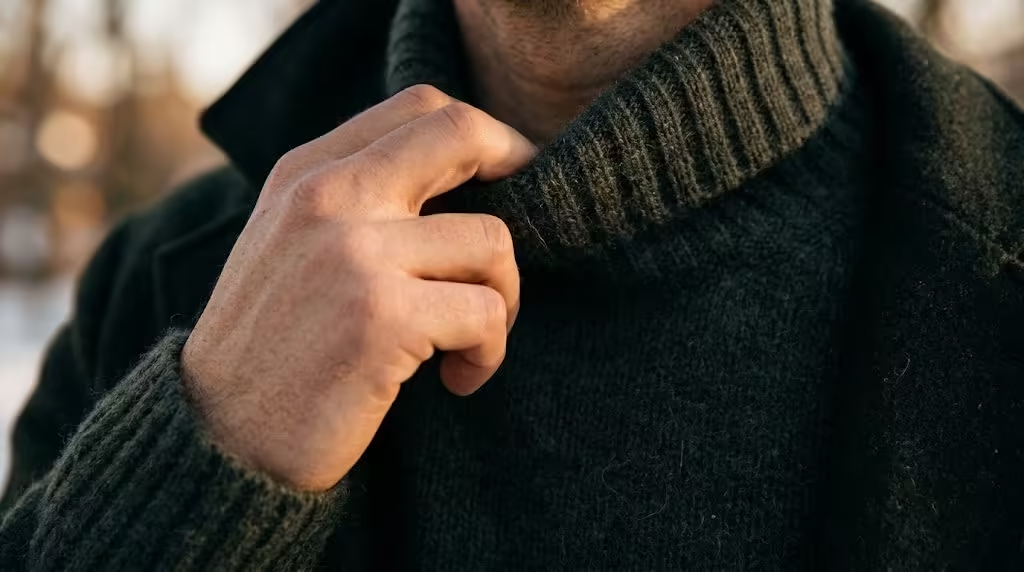
Winter clothing offers a unique, highly effective, and often overlooked advantage for fragrance lovers. Spraying lightly onto natural fibers like a heavy wool scarf, a thick cashmere sweater, or a tweed lapel will trap the heavy base notes indefinitely.
Because fabric does not generate heat or produce sweat like human skin, it doesn’t break down the fragrance oils. This technique allows the scent to project for days, rather than mere hours. (Always spray from a safe distance of at least six to eight inches to avoid oil stains). Just be highly mindful not to mix conflicting scent profiles on your heavy outerwear throughout the week, as a clash of leather and sweet vanilla from two different days can create an unpleasant, muddy scent.
Finding the Best Winter Perfumes for Men by Occasion
Heavy, robust masculine perfumes are not a one-size-fits-all solution. A smoky, intensely animalic leather fragrance might be absolutely perfect for a dimly lit, late-night whiskey bar, but it will quickly suffocate your coworkers in a small, heated morning conference room. It is absolutely crucial to match the intensity, projection, and profile of the scent to your specific environment.
Office and Professional Settings
In closed, centrally heated office environments, you want a scent that is rich but highly restrained. You do not want your fragrance entering the room before you do. Look for smooth, creamy woods like sandalwood paired with clean, uplifting spices like cardamom, ginger, or pink pepper. You should actively avoid overly sweet gourmands, heavy smoke, or aggressive animalic musk notes in professional settings.
The goal for a winter office scent is to create a subtle aura of warmth that invites people in without dominating the shared space. You want to smell put-together, reliable, grounded, and quietly confident. A sophisticated vetiver or a light cedarwood scent performs exceptionally well here.
Evening, Romance, and Date Nights
This is the arena where you can safely bring out the heavier olfactory artillery. Date nights in the winter practically demand alluring, deeply seductive notes that draw your partner closer. Sweet tobacco, rich amber, dark chocolate, boozy rum notes, and warm vanilla are exceptional choices for creating a sense of intimate magnetism.
You want a fragrance that evolves beautifully and seamlessly over a few hours, softening as the night goes on. If you are struggling to find the exact right romantic balance that isn’t overwhelmingly heavy, check out our dedicated guide to perfume longevity and projection to learn how to control your scent bubble.
Formal Galas and Holiday Events
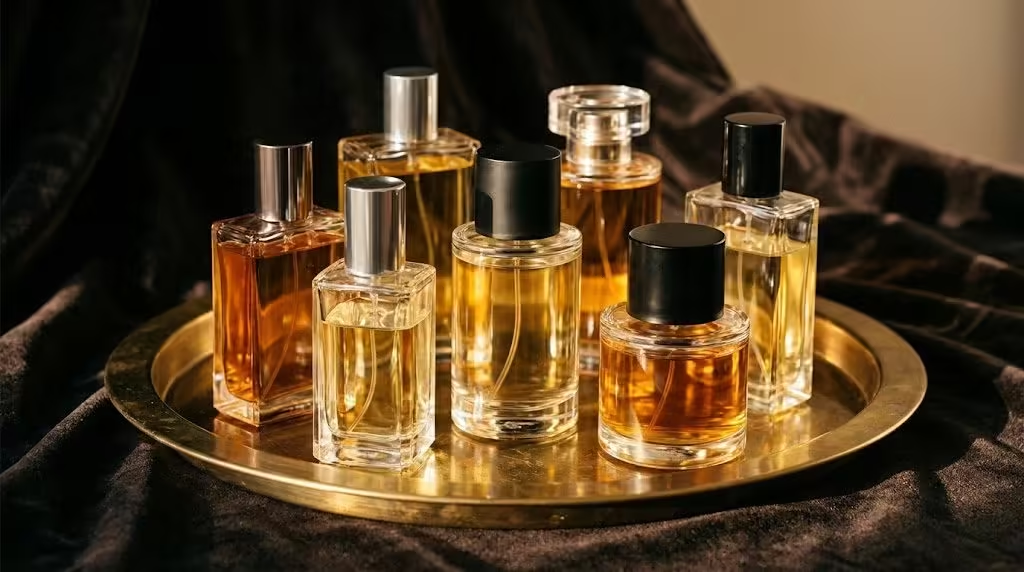
Winter is the season for black-tie events, holiday parties, and formal gatherings. For these occasions, you need a fragrance with elegance and grandeur. This is where high-quality Oud, rich iris (which gives a sophisticated, powdery, almost masculine-floral feel), and deep leather shine.
These fragrances announce your presence and pair perfectly with a tailored tuxedo or a sharp velvet dinner jacket. They are opulent, complex, and designed to cut through the scents of food, drinks, and a crowded room.
Casual and Weekend Wear
When you are running weekend errands in a thick puffer jacket, chopping wood, or grabbing a morning coffee on a freezing Sunday, you want something rugged and inherently comforting. Earthy vetiver, fresh pine needles, juniper berries, or a soft, well-worn suede note fits this casual vibe perfectly.
These weekend scents should feel exactly like a cozy olfactory sweater. They should be undemanding, universally pleasant, deeply grounded in nature, and completely free of any pretentious formality.
Navigating the Hype: Red Flags When Buying Winter Scents
The modern fragrance industry is unfortunately notorious for exaggerated marketing fluff, paid influencer hype, and misleading packaging. When hunting for the best winter perfumes for men, you must learn to protect your wallet from viral social media trends that do not translate to real-world wearability.
The Danger of Blind Buying Heavy Fragrances
Watch out for the immense temptation of “blind buys” (purchasing a full bottle without smelling it first) based purely on TikTok or YouTube reviews. What smells incredibly rich and complex on a reviewer living in a humid, tropical climate might smell completely flat, synthetic, and bitterly disappointing on your skin in the freezing streets of New York or London.
Fragrance is deeply subjective and heavily dependent on your personal skin pH and local climate. Never purchase a full bottle of a heavy winter scent without testing a small sample vial on your own skin for at least three full days.
Paper Blotters vs. Real Skin Testing
Never judge a heavy, resinous winter fragrance solely on a paper blotter in a climate-controlled, brightly lit department store. Paper cannot replicate the warmth, the natural oils, or the pH of human skin. You must spray the fragrance directly on your wrist, walk outside into the freezing cold air, and see exactly how the scent performs and evolves over at least four to six hours.
A high-quality formulation will have a beautiful, slowly evolving “dry down” (the final, longest-lasting stage of the scent), rather than turning harsh, metallic, or overly powdery. Take your time, let the fragrance settle, and let the base notes reveal their true character.
Key Takeaways
- Respect the chemistry of cold air: Freezing temperatures violently suppress scent projection. You must use heavy molecular notes like wood, amber, oud, and leather to successfully push through the cold air.
- Prioritize concentration correctly: Opt for Eau de Parfum (EDP) or Extrait de Parfum concentrations for winter wear, as the higher oil content naturally helps the scent adhere to dry skin and project longer.
- Moisturize heavily before applying: Parched winter skin absorbs and destroys fragrance oils rapidly. Always apply an unscented body lotion or a barrier ointment to your pulse points before your perfume to properly anchor the scent.
- Match the scent strictly to the occasion: Save the heavy, sweet tobacco and rich leather formulations for evening events, and rely on smooth, restrained, clean woody scents for the professional office.
- Never blind buy based on social media hype: Always test a heavy, complex fragrance on your actual skin and walk out into the cold air to experience its true, real-world performance before investing in a full bottle.
Explore More from Golden Hour
Building a grooming and fragrance routine that genuinely reflects your personal style takes time, patience, and education, but you do not have to navigate the endless hype alone. At Golden Hour, we are strictly committed to providing honest, expert beauty and grooming advice completely free from brand pressure or fabricated marketing claims.
If you found this comprehensive cold-weather guide helpful, we warmly invite you to explore more of our resources to refine your daily routine. Whether you are looking to master the basics of skin hydration, understand the nuances of layering, or want to dive deeper into the fascinating science of perfumery, our guides are designed to empower your choices with facts, not fluff.
Frequently Asked Questions
What are the defining characteristics of the best winter perfumes for men?
The best winter perfumes for men are purposefully formulated with heavy, slow-evaporating base notes like deep amber, raw vanilla, rich leather, dense woods, and warm spices. Because cold air naturally suppresses lightweight fragrance molecules, you strictly need these richer, denser ingredients to ensure the scent projects outward and lasts throughout the entire day.
Can I successfully wear my summer citrus cologne in the winter?
You technically can, but it will likely underperform drastically. Summer colognes rely heavily on light citrus and aquatic notes that evaporate incredibly quickly in cold weather. This results in a scent that sits far too close to the skin and often disappears entirely within an hour or two in freezing temperatures.
How many sprays of a heavy winter perfume should I apply?
Because cold weather fragrances are naturally heavier, denser, and much more concentrated, two to three sprays are usually more than sufficient. Apply directly to your pulse points (the sides of the neck and the inner wrists) or safely on natural clothing fibers to ensure excellent longevity without overwhelming the people around you in enclosed spaces.
Why does my luxury perfume fade so incredibly fast in cold weather?
Cold air lacks the ambient heat required to activate and project fragrance molecules properly, and harsh winter weather severely dries out your skin barrier. Dry, dehydrated skin absorbs perfume oils rapidly, destroying the scent profile. To easily fix this issue, always apply a layer of rich, unscented moisturizer before spraying your daily fragrance.
What is the actual difference between amber and woody fragrance notes?
Woody notes (like dry cedar, vetiver, and creamy sandalwood) provide a crisp, earthy, and highly grounding foundation to a scent. Amber, on the other hand, is not a single piece of wood but a warm, sweet, resinous fantasy accord (usually a precise blend of vanilla, labdanum, and benzoin) that gives a fragrance a cozy, enveloping, and slightly sweet warmth.
Should I choose an EDT or an EDP for the colder winter months?
For the colder months, an Eau de Parfum (EDP) or an Extrait de Parfum is generally the far superior choice. These formulations contain a noticeably higher concentration of raw perfume oils compared to a standard Eau de Toilette (EDT), which actively helps the heavier base notes cling to your skin and project effectively despite the lack of ambient heat.
How should I store my winter perfumes during the summer months?
To preserve the delicate balance of heavy resins and oils, winter perfumes should be stored in a cool, completely dark place, away from direct sunlight, humidity, and drastic temperature fluctuations. A bedroom drawer or a dedicated cabinet is ideal; never store luxury fragrances in a hot, humid bathroom, as it will rapidly degrade the top notes.
Can I wear a winter fragrance to the office if I spray lightly?
Yes, but you must choose the right profile. A heavy leather or sweet gourmand scent might still be too overpowering for close quarters, even with just one spray. For the office, stick to restrained, clean winter notes like sandalwood, cardamom, or vetiver, and limit your application to one or two sprays under your shirt to control the sillage.