The Ultimate Honest Guide: How to Choose an Amber Perfume for Women for Year-Round Wear
Finding the perfect amber perfume for women can feel like navigating a maze of conflicting marketing claims, exaggerated promises, and confusing fragrance notes. You want a warm, inviting, and long-lasting scent that feels like a luxurious second skin. However, discovering an amber fragrance that doesn’t feel suffocating, overly sweet, or severely dated can be a genuine challenge.
Most beauty counters will simply point you toward their newest release or the most expensive bottle on the shelf. This leaves you guessing how the fragrance will actually perform on your unique skin chemistry once you leave the store. Here at Golden Hour, we believe in cutting through the hype to help you find what truly works for your body and your lifestyle.
Quick answer: An amber perfume for women is a warm, sensual fragrance built around a core “fantasy” accord typically made of labdanum, benzoin, and vanilla. To wear amber year-round, choose lighter, floral, or solar-infused ambers for the spring and summer months, reserving the heavily spiced, resinous, and deeply woody variations for colder weather.
Let’s break down exactly what an amber fragrance is, decode its complex ingredients, and explore how to select the perfect bottle for every season and occasion.
What Exactly is an Amber Perfume for Women?
When you hear the word “amber” in perfumery, your mind might instantly jump to the fossilized tree sap used in ancient jewelry. However, that beautiful, prehistoric golden stone has absolutely no smell. In the fragrance world, amber is not a single botanical ingredient that you can distill, press, or extract.
Instead, the term “amber” refers to a “fantasy note”—a conceptual scent accord created by master perfumers to evoke the feeling of golden warmth, richness, and sensual depth. It was popularized in the late 19th century when prestigious fragrance houses began blending traditional natural resins with newly discovered synthetic vanilla molecules (vanillin). The most famous early example of this is the historic “Ambre 83” base created by De Laire, which became the structural foundation for many of the world’s most iconic vintage perfumes.
The result was a sweet, earthy, and deeply comforting scent profile that revolutionized modern perfumery and created an entirely new olfactory family. If you want to understand this category deeply, it helps to read our complete guide on How to Choose Your Perfume by Fragrance Notes: The Honest Guide. But for now, just know that when you are shopping for an amber perfume for women, you are actually looking for a masterful blend of rich, heavy base notes.
The Great Confusion: Amber vs. Ambergris
Before we dive into the ingredients, it is crucial to clear up a common industry myth. Many people confuse “amber” with “ambergris,” but they are entirely different materials yielding entirely different scent profiles.
Ambergris is a rare, naturally occurring byproduct of the digestive system of sperm whales, historically aged in the ocean for decades. It has a salty, musky, marine, and slightly animalic aroma. Today, true ambergris is almost never used due to its exorbitant cost and ethical concerns, replaced instead by synthetic molecules like Ambroxan. While Ambroxan is fresh and musky, a traditional amber perfume for women is warm, sweet, and resinous. Always check if a brand means “amber” (warm and sweet) or “ambergris/ambroxan” (salty and musky) when reading their marketing copy.
The “Holy Trinity” of an Amber Perfume for Women
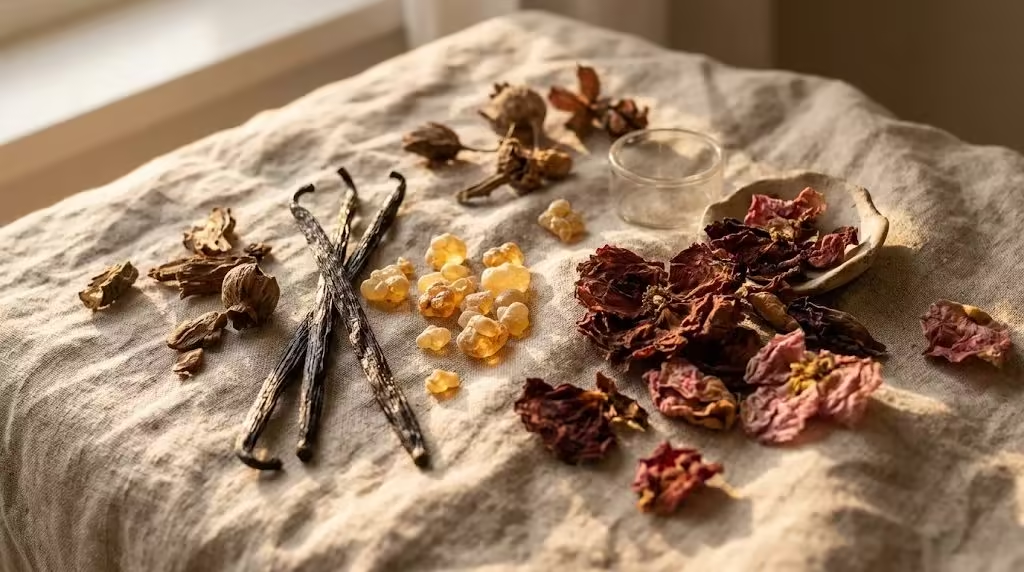
While every luxury perfume house has its own highly guarded proprietary recipe, a true amber fragrance is almost always built on a foundation of three core materials. The renowned Perfume Society categorizes these resins as the essential building blocks of the Oriental/Amber fragrance family. Understanding these three pillars will help you decode any perfume description and predict how a scent will behave.
1. Labdanum: The Earthy Backbone
Labdanum is a sticky, dark brown resin obtained from the leaves and stems of the rock rose plant (Cistus ladanifer), which grows wildly in the Mediterranean. It is the absolute core of any authentic amber perfume for women. Labdanum provides a leathery, slightly animalic, and deeply earthy backbone.
Without labdanum, an amber scent would lack its characteristic mature depth and groundedness, smelling like a simple vanilla candle rather than fine fragrance. Interestingly, if the plant is steam-distilled instead of solvent-extracted, it yields Cistus oil, which is sharper and more pine-like—but it is the thick, syrupy labdanum absolute that gives amber its magic.
2. Benzoin: The Powdery Bridge
Benzoin is a balsamic resin harvested from the bark of certain styrax trees native to Asia. It has a distinctly sweet, powdery, and slightly spicy aroma that smells remarkably like cinnamon mixed with warm vanilla powder. Benzoin acts as the crucial bridge in the formula.
It smooths out the rough, leathery edges of the labdanum and seamlessly connects it to the sweeter vanilla notes. Benzoin is also a phenomenal natural fixative, meaning it physically slows down the evaporation rate of the other ingredients, directly contributing to the legendary longevity of an amber perfume for women.
3. Vanilla: The Comforting Sweetness
Vanilla—whether derived from natural Madagascar pods or created synthetically—is the final pillar. It provides the creamy, comforting, and universally appealing sweetness that makes amber fragrances so addictive. In high-end perfumery, the vanilla used is often dark, boozy, and woody.
Perfumers may also use supporting players like Tonka Bean (which adds a cherry-almond nuance), Peru Balsam, or Tolu Balsam to enrich this sweet base. The balance of these three elements—labdanum’s earth, benzoin’s spice, and vanilla’s cream—determines the entire personality of the fragrance.
Why Choose an Amber Perfume for Women as Your Signature Scent?
The primary reason fragrance lovers gravitate toward an amber perfume for women is its unparalleled longevity. Because the amber accord relies entirely on heavy base notes, these fragrances can easily last eight to twelve hours, or even days on clothing.
In fragrance chemistry, base notes are composed of large, heavy molecules. They take a significant amount of time to evaporate from the skin, unlike the tiny, highly volatile molecules found in citrus top notes. If you are tired of your perfume disappearing by lunch, an amber-based fragrance is the ultimate solution. For a deeper dive into this phenomenon, review our guide on Perfume Longevity & Projection: The Ultimate Guide to Making Your Scent Last and Radiate.
Amber is also incredibly versatile when blended properly. Depending on what the perfumer layers over the top of the amber base, the resulting perfume can be made to smell clean and skin-like for the office, or dark, smoky, and mysterious for an evening gala.
How an Amber Perfume for Women Interacts with Your Skin Chemistry
Amber is deeply responsive to body heat and natural skin chemistry. Unlike a sharp citrus or aquatic scent that blasts you immediately out of the bottle and then vanishes, a quality amber perfume for women “blooms” slowly as your skin warms it up.
If you have naturally dry skin, you might find that perfumes fade quickly because your skin absorbs the oils. The heavy resins in an amber perfume act as an anchor, clinging to dry skin much better than lighter floral or fruity notes. Conversely, if you have oily skin, the natural lipids in your skin will amplify the sweet and animalic facets of the labdanum, making the fragrance project even further.
This dynamic interaction creates an intimate, lingering scent trail—often referred to as sillage—that draws people in rather than aggressively announcing your presence. To understand more about how your biological makeup changes a scent, read The Honest Guide to Fragrance Science: How Perfume Actually Works on Your Skin.
How to Choose the Right Amber Perfume for Women by Season
There is a persistent, outdated myth in the beauty community that you can only wear amber perfumes in the dead of winter. This simply isn’t true. While a heavy, syrupy amber can indeed feel cloying on a humid August afternoon, you do not have to abandon your favorite scent family entirely during the warmer months.
The secret to wearing an amber perfume for women year-round is paying close attention to the modifier notes—the top and heart notes that lift and shape the heavy base. Here is how to seamlessly adjust your amber choices as the seasons change, building on the concepts in our broader article, Perfume Recommendations by Season: Find Your Perfect Scent Year-Round.
Spring: Luminous and Floral Ambers
In the spring, you want an amber perfume for women that feels like gentle sunshine warming up a blooming garden. Look for fragrances where the heavy resinous notes are intentionally balanced by bright, fresh white florals like neroli, orange blossom, or jasmine.
These are categorized as “Amber Florals.” The floral elements provide a necessary airiness, preventing the vanilla and benzoin from feeling too dense as the ambient temperature rises. You should also seek out perfumes with top notes of bergamot, mandarin, or pink pepper, which add a sparkling, effervescent opening.
Summer: Solar and Salty Ambers
Summer ambers are all about replicating the sensual scent of warm, sun-baked skin after a long day at the beach. You want to strictly avoid anything heavily spiced, smoky, or overly syrupy during high heat and humidity.
Instead, look for “Solar Ambers.” These modern compositions often feature sheer notes of coconut water, tiare flower, ylang-ylang, and a touch of sea salt. The marine saltiness cuts directly through the natural sweetness of the amber accord, creating a radiant and incredibly sexy profile that thrives beautifully in the heat.
Autumn: Spiced and Woody Ambers
As the air turns crisp and the leaves change, your amber perfume for women can start to get richer, deeper, and more complex. Autumn is the absolute perfect time to introduce warm spices and soft woods back into your daily fragrance rotation.
Look for an amber that features prominent notes of cardamom, cinnamon, sandalwood, or cedar. These woody and spicy additions complement the natural earthiness of autumn weather. The dry, aromatic warmth of the woods perfectly balances the creamy, sweet depth of the amber base.
Winter: Rich, Resinous, and Gourmand Ambers
Winter is the season where traditional, heavy ambers truly shine. The freezing air compresses fragrance molecules, meaning you need a robust, dense scent to cut through the chill and radiate from beneath heavy wool coats and scarves.
This is the time to embrace dark, smoky, and intensely sweet profiles. Look for “Gourmand Ambers” that feature edible, rich notes like dark chocolate, espresso, burnt caramel, or heavy incense and patchouli. These perfumes wrap around you like a heavy cashmere blanket, offering profound emotional comfort and massive longevity.
Finding Your Ideal Amber Perfume for Women: Fragrance Sub-Families
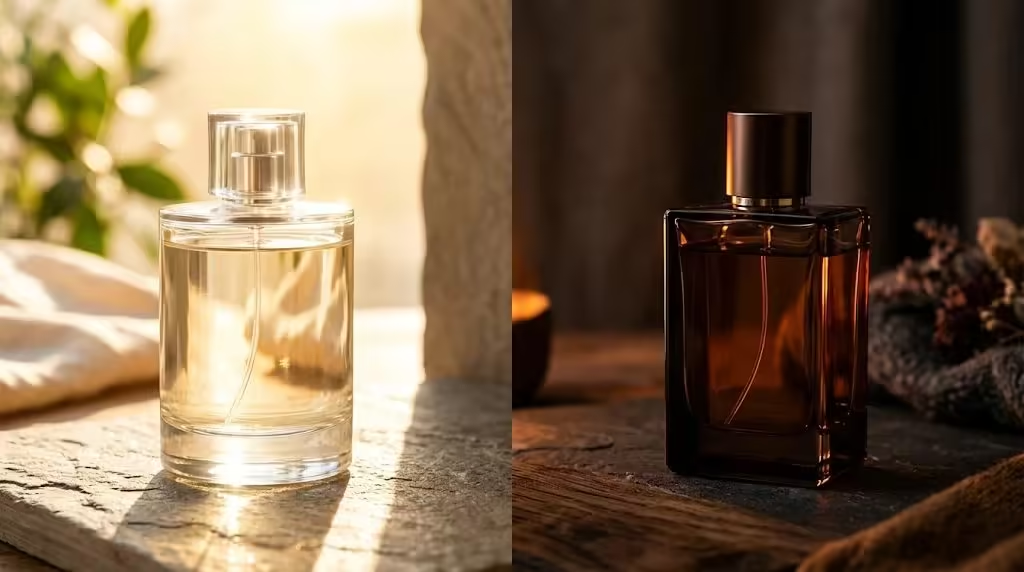
To help you narrow down your search at the perfume counter, it helps to understand the officially recognized sub-families within the amber category. The Fragrantica database and traditional French perfumery categorize these blends to help consumers precisely know what to expect before they spray.
Use this comparison table to identify which style of amber perfume for women best matches your personal aesthetic, professional environment, and daily routine:
| Fragrance Sub-Family | What It Smells Like | Key Accompanying Notes | Best Vibe / Occasion |
|---|---|---|---|
| Amber Floral | Sweet, romantic, and slightly powdery. The heaviness of amber is lifted by blooming flowers. | Jasmine, Rose, Tuberose, Orange Blossom, Ylang-Ylang | Office wear, daytime dates, spring weddings, elegant brunches. |
| Amber Woody | Dry, earthy, and highly sophisticated. Less sweet, focusing on the resinous and forest-like qualities. | Sandalwood, Cedar, Patchouli, Vetiver, Oud | Professional settings, corporate meetings, autumn days, evening events. |
| Amber Spicy | Warm, fiery, and exotic. Smells like a bustling spice market baked in the afternoon sun. | Cinnamon, Cardamom, Clove, Nutmeg, Ginger | Holiday parties, winter nights, making a bold, confident statement. |
| Amber Vanilla (Gourmand) | Edible, creamy, and deeply comforting. Smells like a luxurious dessert without being childish. | Tonka Bean, Caramel, Coffee, Almond, Praline | Cozy nights in, winter dates, extreme cold weather, casual weekends. |
How to Truly Test an Amber Perfume for Women
If you take one piece of advice from this comprehensive guide, let it be this: never buy an amber perfume for women based solely on how it smells on a paper blotter strip at the mall. Paper is cold, dry, and lifeless; amber resins absolutely require human body heat to reveal their true character.
When you spray an amber fragrance on paper, you will only smell the sharp, volatile top notes and perhaps a fleeting hint of the floral heart. The rich, resinous base notes that define the entire perfume simply won’t develop properly without warmth. If you want to dive deeper into the methodology of finding the perfect match, check out The Ultimate Signature Scent Guide: How to Find Your True Fragrance Without the Hype.
To test it correctly, spray it directly onto your clean, unscented wrist. Wait a full 15 minutes for the alcohol and top notes to burn off. Then, smell it again. Wait another two to three hours to experience the heart of the fragrance. Finally, assess the scent at the very end of the day—that lingering, skin-like aroma is the true amber dry-down, and it is what you (and everyone around you) will be smelling 80% of the time you wear it.
Understanding Amber Perfume Concentrations
When shopping, you will notice different abbreviations on the labels, most commonly Eau de Toilette (EDT) or Eau de Parfum (EDP). Because an amber perfume for women relies on heavy molecular base notes, the concentration you choose dramatically impacts how the perfume behaves in the air.
The International Fragrance Association (IFRA) safely regulates the use of perfume materials, but the concentration dictates the final strength. We cover this extensively in our guide on Eau de Parfum vs Eau de Toilette: The Complete Guide to Finding Your Ideal Fragrance Concentration, but here is what it means specifically for the amber category.
Eau de Toilette (EDT)
In an EDT, there is a higher percentage of perfumer’s alcohol and a lower concentration of pure perfume oil (usually 5-15%). This makes the fragrance lighter, more effervescent, and more focused on the top notes. If you want an amber perfume for women to wear in the summer heat or to a strict, close-quarters corporate office, an EDT is your safest bet. It will project beautifully for a few hours before fading cleanly into a soft skin scent.
Eau de Parfum (EDP)
An EDP contains a higher percentage of perfume oils (usually 15-20%) and less alcohol. For amber fragrances, this is almost always the “sweet spot.” The higher oil concentration grounds the fragrance, allowing the thick, syrupy labdanum and vanilla to sit heavily closer to the skin and last much longer. An amber EDP will easily carry you from a morning meeting to late-night drinks without needing a touch-up.
Extrait de Parfum (Pure Perfume)
Extrait is the highest concentration (20-40% oil). A pure amber extrait is a massive, dense powerhouse. Because there is very little alcohol to lift the scent into the air, an extrait sits extremely close to the skin. It won’t fill a room, but it will last well over 24 hours. Extrait is best reserved for intimate date nights and special winter occasions.
Layering Your Favorite Amber Perfume for Women
One of the best-kept secrets in the beauty industry is that amber makes the absolute best foundational base for fragrance layering. If you own an amber perfume for women that feels a little too heavy, too simple, or too linear on its own, you don’t have to banish it to the back of the cabinet. You can easily customize it.
To make it fresher for daytime: Spray your heavy amber perfume first. Wait exactly two minutes to let it settle, then layer a bright, simple citrus scent (like a straightforward bergamot, grapefruit, or neroli EDT) directly over the top. The citrus will add a sparkling, juicy lift, while the amber provides a long-lasting anchor that prevents the citrus from vanishing.
To make it romantic and feminine: Layer a pure, linear rose or jasmine water over your amber base. The resins will deepen the delicate petals, creating a rich, opulent, and highly romantic “floriental” vibe perfect for evening wear.
To make it deeper for winter: If you want to transition your lighter summer amber into the freezing winter months, layer it over a highly scented body lotion or body oil that features sandalwood, patchouli, or dark vanilla. The emollient lotion will trap the fragrance, and the woody notes will amplify the rich base of the perfume, instantly making it feel cozier.
Key Takeaways
- Amber is a concept, not a raw ingredient. It is a “fantasy accord” expertly crafted by perfumers, usually blending labdanum (earthy), benzoin (powdery), and vanilla (sweet).
- It thrives on body heat. Always test an amber perfume for women on your actual skin, never just on a cold paper testing strip, as the heavy resins need your natural warmth to fully bloom.
- You can wear it year-round. Choose lighter, floral, or solar-infused ambers with sea salt for spring and summer, and save the rich, spicy, gourmand ambers for the chill of autumn and winter.
- Concentration dictates behavior. Opt for an Eau de Toilette (EDT) for a lighter, office-friendly sillage, and an Eau de Parfum (EDP) for profound, all-day longevity and richness.
- It is the ultimate layering tool. Amber acts as a perfect anchor for volatile notes; layer bright citrus over it to lighten it up for the day, or layer it over woody lotions to deepen its warmth for the night.
Let’s Keep Exploring
Finding the right amber perfume for women is just one step in curating a beauty and fragrance routine that makes you feel confident, grounded, and completely authentic. If you are tired of the marketing hype and want honest, practical advice, we invite you to explore more of our deep-dive guides here at Golden Hour. Discover how to evaluate scents properly, build a skincare routine that actually respects your skin barrier, and cut through the endless noise of the modern beauty industry.
Frequently Asked Questions
What does an amber perfume for women smell like?
In perfumery, amber smells incredibly warm, sweet, slightly powdery, and deeply resinous. It is typically a careful blend of vanilla, benzoin, and labdanum. The result is a comforting, golden aroma that often features subtle hints of earthiness, leather, or soft spices, depending on the exact formula the perfumer created.
Is amber perfume considered attractive and sensual?
Yes, amber fragrances are universally considered highly attractive and sensual. Because they sit close to the skin and mimic the natural warmth and slight muskiness of the human body, they create an intimate, inviting aura that many people find incredibly alluring, cozy, and comforting.
Can I wear an amber perfume for women in the summer?
Absolutely. To wear an amber perfume for women in the high heat of summer, look for “solar ambers” that incorporate lighter notes like coconut water, sea salt, bergamot, or white florals. These specific variations cut through the heavy, syrupy sweetness, creating a radiant, beachy scent that thrives in the heat without ever becoming cloying.
What is the main difference between amber and vanilla?
Vanilla is a single, specific note derived from the vanilla pod (or synthesized as vanillin), known purely for its creamy sweetness. Amber is a complex, multi-ingredient accord that usually contains vanilla, but expertly mixes it with earthy, leathery resins (like labdanum and benzoin) to create a much deeper, grounded, and more mature scent profile.
Are amber perfumes always incredibly sweet?
Not always. While most ambers have a baseline of sweetness due to the inclusion of vanilla and benzoin, they can be balanced with dry woods, smoky incense, or sharp, fiery spices. An “amber woody” fragrance, for example, will smell significantly drier, more sophisticated, and more earthy than a syrupy sweet “amber gourmand.”
Where does the amber note actually come from?
The amber note in perfume does not come from fossilized amber resin, which is completely odorless. It was invented by 19th-century perfumers (most notably through the historic De Laire Ambre 83 base) by mixing natural plant resins, like rock rose extract, with newly discovered synthetic vanilla molecules to evoke a warm “golden” feeling.
Does amber perfume last a long time on the skin?
Yes, amber perfumes are renowned in the industry for their exceptional longevity. Because they are constructed almost entirely of heavy base notes with large, dense molecular structures, they evaporate very slowly. This allows them to easily linger on the skin for 8 to 12 hours, or even longer on clothing.
What other fragrance notes mix well with amber?
Amber is an incredibly versatile base. It mixes beautifully with bright, zesty citrus (like bergamot or mandarin) for a fresh contrast. It pairs wonderfully with white florals (like jasmine or tuberose) for romantic depth, and it blends seamlessly with spices and woods (like cardamom and sandalwood) for a darker, more mysterious evening profile.