Perfume Basics The Ultimate Guide for Fragrance Beginners
Entering the world of fragrance can feel like learning a new language. Between decoding French terminology, understanding the difference between an eau de toilette and an eau de parfum, and figuring out why a scent you loved on a paper strip smells entirely different on your skin, it is easy to become overwhelmed.
If you have ever stood at a beauty counter feeling confused by fragrance families or wondering how to make your perfume last longer, you are in the right place. Understanding perfume basics is the key to discovering your signature scent, building a collection that suits your lifestyle, and getting the most out of every bottle you purchase.
This comprehensive guide breaks down everything you need to know about fragrance fundamentals. By the end, you will understand how perfumes are formulated, how to communicate your preferences, and how to choose, test, and wear fragrances with absolute confidence.
What is Perfume, Exactly?
At its core, perfume is a meticulously crafted mixture of aromatic compounds (fragrance oils) suspended in a solvent, typically a high-grade cosmetic alcohol and sometimes water.
The alcohol serves a crucial purpose: it keeps the aromatic oils stable in the bottle and acts as a delivery system. When you spray a perfume onto your skin, your natural body heat causes the alcohol to evaporate rapidly. As it evaporates, it carries the scent molecules into the air, creating the fragrance you smell. The concentration of these aromatic oils dictates how strong the perfume is and how long it will last on your skin.
Modern perfumery utilizes a blend of natural ingredients—such as essential oils extracted from flowers, woods, and resins—and synthetic aromachemicals. Synthetics are vital to the industry; they allow perfumers to recreate scents that cannot be naturally extracted (like ocean water or certain fruits), ensure consistency, and protect endangered natural resources like sandalwood and musk.
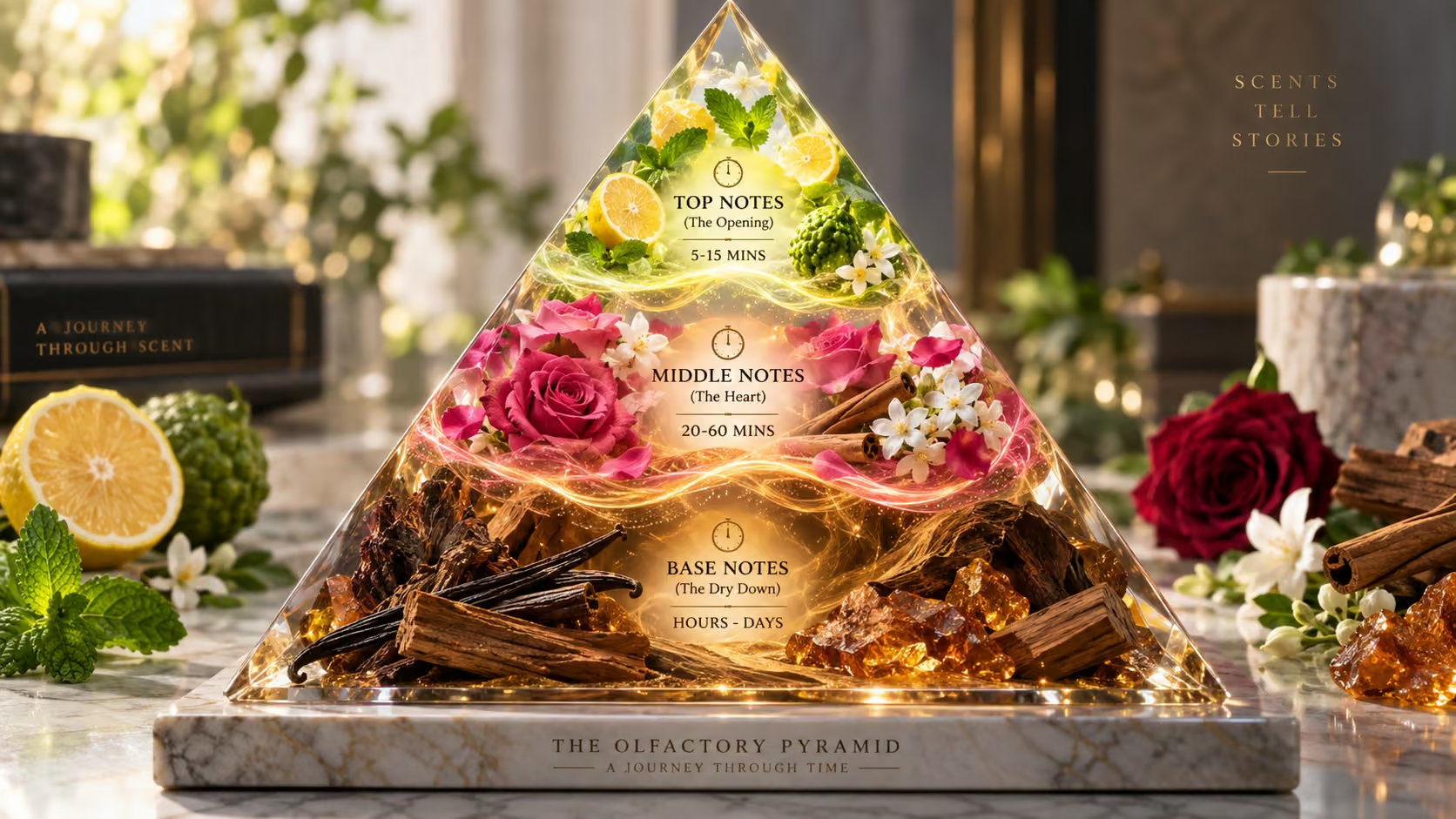
Understanding Fragrance Notes Perfume Basics The Olfactory Pyramid
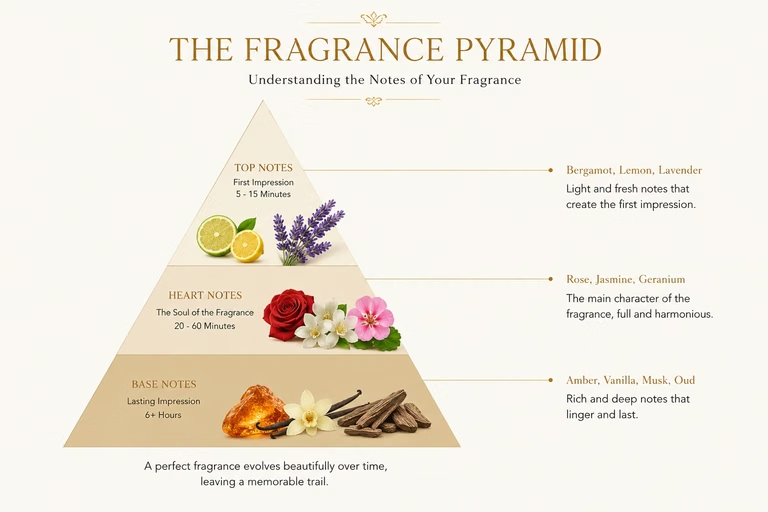
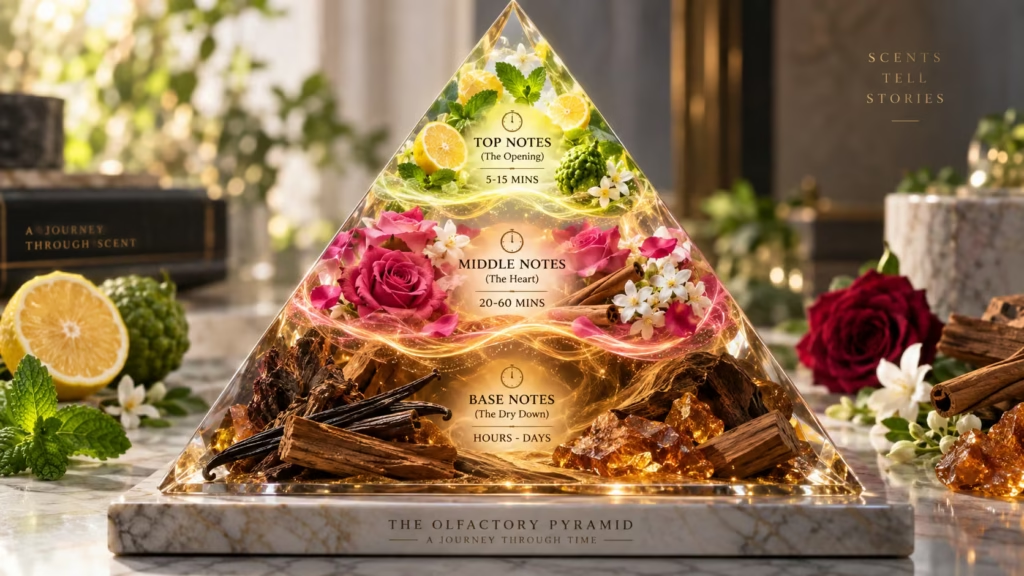
Quick Answer: Fragrance notes are the individual scent layers that make up a perfume. They are structured in a three-part pyramid: top notes (what you smell immediately), middle notes (the core of the fragrance), and base notes (the lingering foundation).
A perfume is not a single, static smell. It is a complex, evolving composition designed to change over time as the ingredients interact with the air and your skin. Perfumers construct this evolution using the olfactory pyramid.
Top Notes (The Opening)
Top notes are your first impression of a fragrance. These molecules are small, light, and evaporate quickly. When you first spray a perfume, the top notes are the vibrant, immediate scents that burst forward.
- Duration: 5 to 15 minutes.
- Common Top Notes: Citrus fruits (bergamot, lemon, grapefruit), light fruits (berries, apple), and fresh herbs (mint, basil, sage).
- Beginner Tip: Never buy a perfume based solely on the top notes. Because they evaporate so quickly, the scent you smell in the first five minutes is not what you will smell for the rest of the day.
Middle Notes (The Heart)
As the top notes fade, the middle notes—often called heart notes—take center stage. These notes form the core personality of the fragrance and serve as a bridge, masking the initial pungency of the base notes until they have had time to mature on your skin.
- Duration: 20 to 60 minutes, sometimes lingering for a few hours.
- Common Middle Notes: Heavy florals (jasmine, rose, ylang-ylang), spices (cinnamon, nutmeg, cardamom), and green or fruity elements.
Base Notes (The Dry Down)
Base notes are the foundation of the perfume. These are large, heavy molecules that evaporate very slowly. They intermingle with the middle notes to create the fragrance’s ultimate theme and are responsible for the perfume’s lasting power on your skin. The phase where the base notes fully emerge is called the “dry down.”
- Duration: Several hours to several days (on clothing).
- Common Base Notes: Woods (sandalwood, cedar), amber, vanilla, musk, patchouli, and resins.
Demystifying Fragrance Families
Quick Answer: Fragrance families are categories used to classify perfumes based on their dominant scent characteristics. The four main families are Floral, Amber (Oriental), Woody, and Fresh.
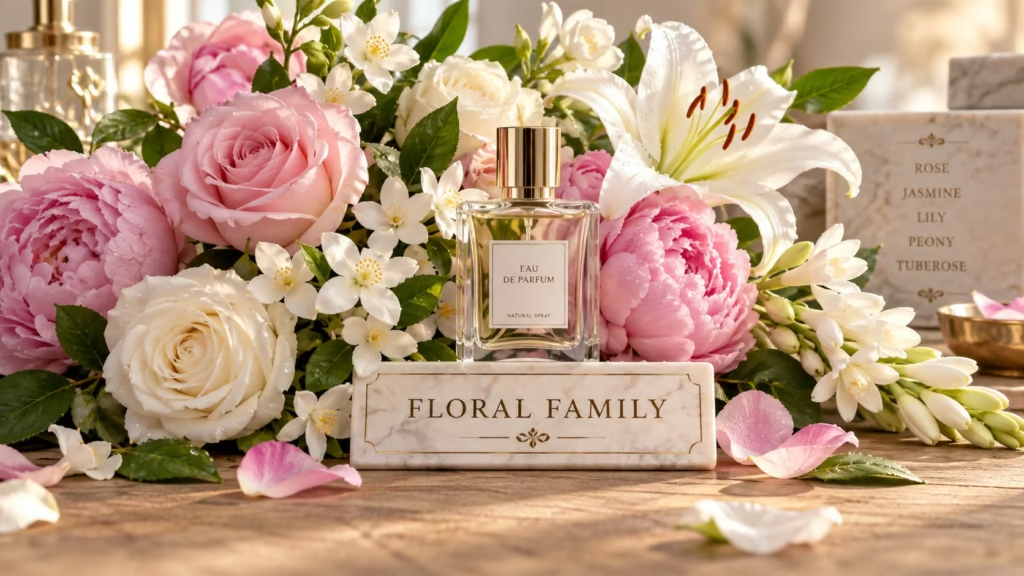
Just as wines are categorized by grape varieties and regions, perfumes are grouped into olfactory families. Knowing which fragrance family you gravitate toward makes navigating the Golden Hour fragrance catalog—or any perfume counter—infinitely easier.
1. Floral
The floral family is the most popular and widely recognized category in perfumery. It can range from the scent of a single flower (a soliflore) to a complex, sprawling bouquet.
- Characteristics: Romantic, feminine, soft, or powdery.
- Sub-families: Fruity-floral, soft floral, floral-amber.
- Common Ingredients: Rose, jasmine, lily, tuberose, iris, peony.
2. Amber (Formerly Oriental)
Rich, warm, and highly sensual, amber fragrances draw heavily from exotic spices, resins, and sweet, deeply aromatic elements. These are typically heavier scents, perfect for evening wear or colder months.
- Characteristics: Warm, spicy, sweet, luxurious, opulent.
- Sub-families: Soft amber, floral amber, woody amber.
- Common Ingredients: Vanilla, myrrh, frankincense, cinnamon, clove, musk.
3. Woody
Woody fragrances are built on the scents of bark, roots, mosses, and forest floors. They are grounding, earthy, and sophisticated, often forming the backbone of traditional masculine and modern unisex fragrances.
- Characteristics: Earthy, dry, warm, smoky.
- Sub-families: Mossy woods, dry woods, aromatic woods.
- Common Ingredients: Sandalwood, cedarwood, vetiver, patchouli, oakmoss, pine.
4. Fresh
The fresh family encompasses bright, uplifting, and clean scents. These are highly versatile, universally appealing, and ideal for daytime, office wear, and summer climates.
- Characteristics: Zesty, aquatic, clean, herbaceous.
- Sub-families: Citrus, aquatic (water), green, fruity.
- Common Ingredients: Bergamot, lemon, oceanic notes, galbanum, fresh-cut grass, green tea.
Perfume Concentrations Explained
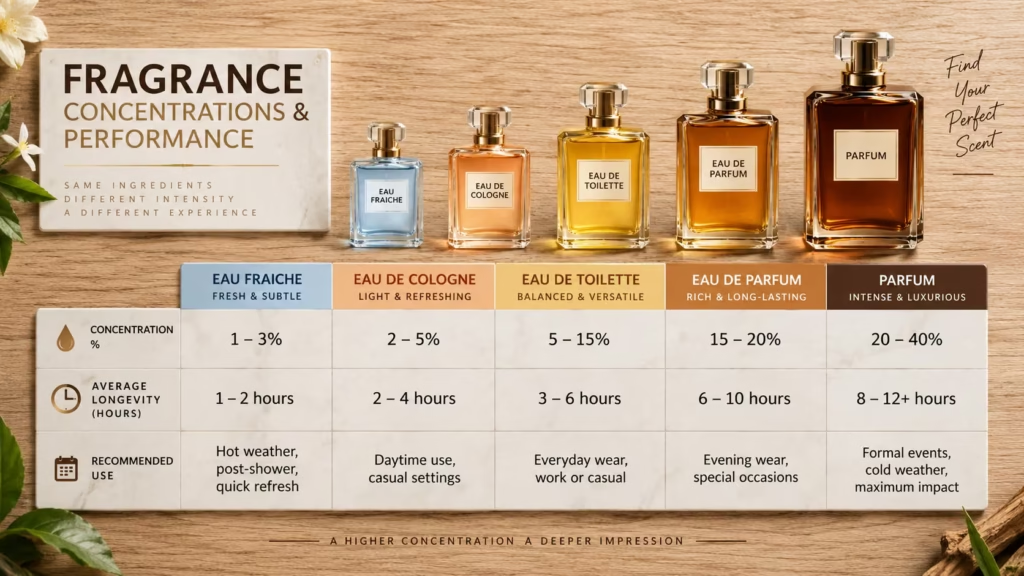
When you see terms like Eau de Parfum or Eau de Toilette on a bottle, they are not just fancy French names. They indicate the concentration of fragrance oil in the alcohol base. This concentration directly impacts how strong the perfume is and how long it will last.
| Concentration | Fragrance Oil % | Average Longevity | Best Used For |
| Eau Fraiche | 1% – 3% | 1 – 2 Hours | A quick post-shower refresh; very light. |
| Eau de Cologne (EDC) | 2% – 5% | 2 – 3 Hours | Hot summer days; typically citrus-heavy. |
| Eau de Toilette (EDT) | 5% – 15% | 3 – 5 Hours | Daily wear, office environments, daytime. |
| Eau de Parfum (EDP) | 15% – 20% | 5 – 8 Hours | All-day wear, evening events, signature scents. |
| Parfum (Extrait) | 20% – 40% | 8 – 12+ Hours | Special occasions; sits close to the skin but lasts all day. |
Note: A higher concentration does not always mean a “better” perfume. An EDT often has brighter, more vibrant top notes, while an Extrait sits heavier and closer to the skin.
Essential Fragrance Terminology for Beginners
To confidently read reviews or ask for recommendations, you need to understand the industry jargon. Here is a glossary of the most important perfume terms:
- Sillage (Pronounced see-yahzh): The invisible trail of scent left behind you when you walk past someone. A fragrance with “heavy sillage” fills the room.
- Projection: How far the scent pushes away from your body while you are standing still. A fragrance with high projection can be smelled from several feet away.
- Longevity: The total amount of time a fragrance remains detectable on your skin.
- Dry Down: The final stage of a perfume’s lifecycle on your skin, where the base notes are most prominent.
- Blind Buy: Purchasing a full bottle of fragrance without ever having smelled it, usually based on reviews or note breakdowns.
- Flanker: A sequel or spin-off to an existing, popular perfume. It usually shares the original name and bottle shape but features a tweaked scent profile (e.g., adding “Intense” or “L’Eau” to the name).
- Gourmand: A sub-category of fragrance featuring “edible” or dessert-like notes such as chocolate, caramel, coffee, cotton candy, or almond.
- Signature Scent: A fragrance that you wear so consistently that it becomes intrinsically associated with your identity by your friends and family.
How to Test Perfume Correctly
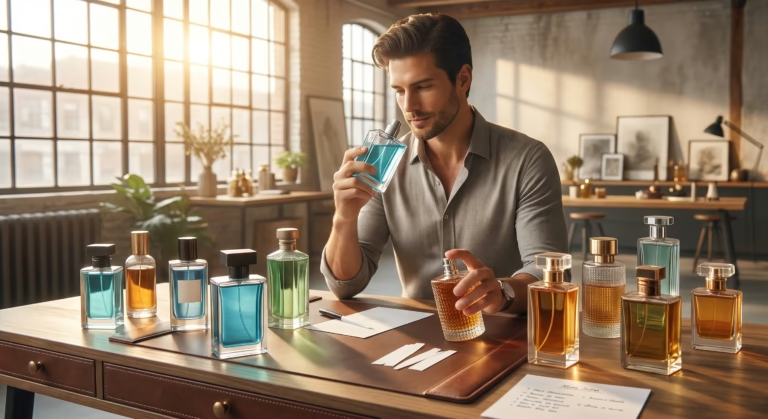
One of the biggest mistakes beginners make is walking up to a counter, spraying five different perfumes on their arms, sniffing them immediately, and buying one. Here is the proper way to evaluate a fragrance:
- Use Paper Blotters First: Spray the fragrance onto a paper tester strip. Wait 10 seconds for the alcohol to evaporate, then smell. This gives you a clear sense of the top notes without committing your skin space.
- Narrow It Down: Select your top two favorites from the paper strips.
- The Skin Test: Spray one favorite on your left wrist and the other on your right wrist.
- Walk Away: Leave the store. Do not buy the perfume immediately. Go about your day and smell your wrists periodically over the next 4 to 6 hours.
- Evaluate the Dry Down: Notice how the scent changes. Does it turn sour on your skin? Does it fade after an hour? Does the dry down give you a headache? If you still love it after 6 hours, it is safe to purchase.
Tip: Ignore the coffee beans on the fragrance counter. To reset your nose and fight olfactory fatigue, simply smell a patch of your own unperfumed skin, such as your inner elbow.
How Skin Chemistry Affects Fragrance
If you have ever bought a perfume because it smelled incredible on a friend, only to find it smells entirely different on you, you have experienced the effects of skin chemistry.
Your skin’s natural pH level, your diet, your body temperature, and your skin’s moisture barrier all interact with the chemical compounds in a perfume.
- Oily Skin: Retains fragrance beautifully. Natural oils trap the scent molecules, slowing down evaporation, meaning perfumes will last longer and project louder.
- Dry Skin: Causes fragrance alcohol to evaporate quickly, significantly reducing a perfume’s longevity. If you have dry skin, you will need to moisturize heavily before applying fragrance.
- Body Temperature: People who naturally run warmer will project fragrances louder, as the heat actively “cooks” the alcohol and pushes the scent into the air.
How to Apply Perfume (And Make It Last Longer)
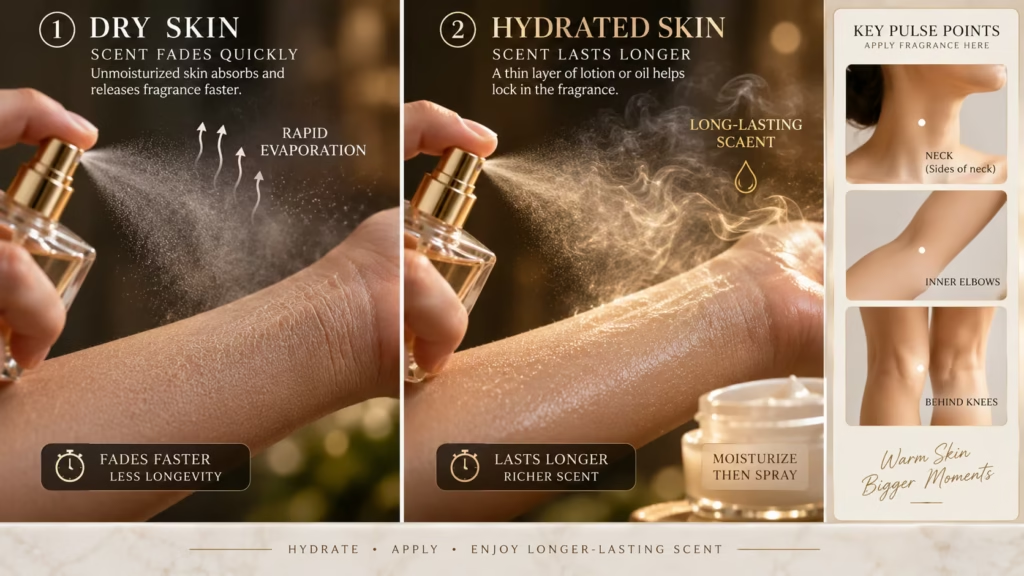
Where you spray matters just as much as what you spray. To maximize the performance, longevity, and projection of your perfume, follow these application rules.
Target the Pulse Points
Pulse points are areas of the body where your veins sit closest to the surface of the skin. These spots emit natural body heat, which helps activate the fragrance and project it outward.
- The Wrists: The most classic application point.
- The Inner Elbows: Excellent for daytime wear, especially when wearing short sleeves.
- The Neck and Behind the Ears: Ideal for projection. When you hug someone or turn your head, the scent will naturally waft toward them.
- Behind the Knees: Heat rises. Spraying the lower half of your body allows the scent to travel upward throughout the day.
The Golden Rule: Do Not Rub Your Wrists
After spraying your wrists, never rub them together. The friction creates heat, which can prematurely burn off the delicate top notes and disrupt the perfume’s carefully constructed olfactory pyramid. Simply spray and let the liquid dry naturally.
Hydration is the Secret to Longevity
Fragrance needs a medium to cling to. If your skin is dry, it will absorb the liquid, causing the scent to vanish quickly. To double the life of your perfume:
- Apply an unscented body lotion or body oil immediately after stepping out of the shower.
- Apply a tiny dab of Vaseline (petroleum jelly) to your pulse points.
- Spray your perfume directly over the moisturized areas. The fragrance molecules will bind to the lipids in the lotion, anchoring the scent to your body for hours.
Common Beginner Fragrance Mistakes to Avoid
- Over-spraying: You can easily become “nose-blind” to your own perfume after a few minutes, leading you to think the scent has vanished. Do not keep spraying. Two to four sprays are usually plenty for an EDP.
- Improper Storage: Keep your perfumes out of the bathroom. Humidity, extreme temperature fluctuations, and direct sunlight will break down the chemical bonds of the fragrance oils, causing the perfume to expire or smell like vinegar. Store your bottles in a cool, dark place, like a bedroom drawer or closet.
- Buying Based on Gender Marketing: Fragrance has no gender. While marketing often categorizes florals as “feminine” and woods as “masculine,” you should wear whatever scent makes you feel confident. Many of the world’s most popular fragrances are entirely unisex.
- Ignoring the Weather: Heat amplifies fragrance. A heavy, spicy amber perfume that smells cozy and comforting in winter can become suffocating and cloying in the humid summer heat. Reserve heavy scents for the cold, and stick to fresh, citrus, or aquatic notes in the summer.
Building Your First Fragrance Collection
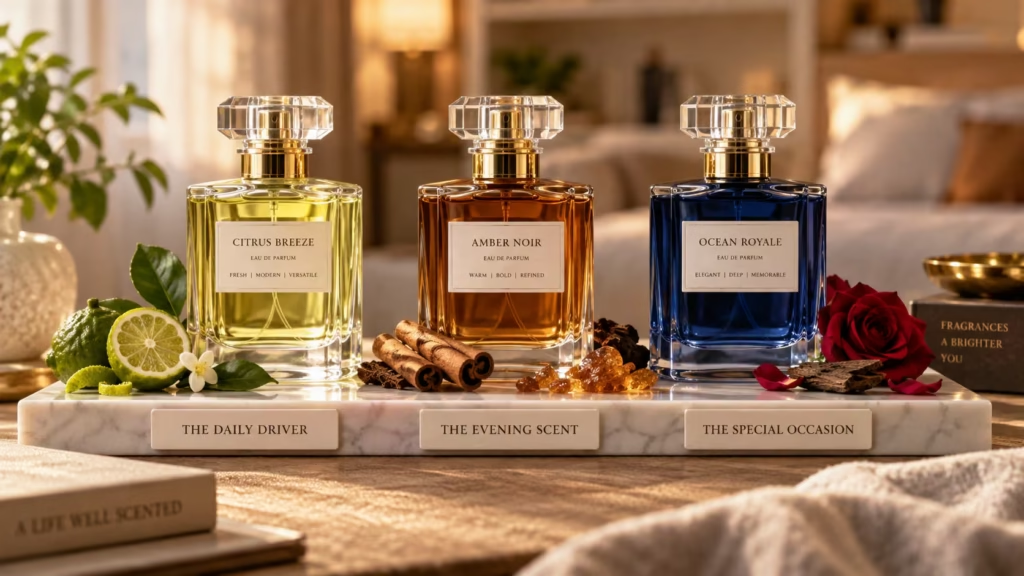
You do not need fifty bottles to have a complete fragrance wardrobe. For beginners, a well-rounded collection only requires three distinct categories to cover every possible scenario.
- The Daily Driver (The Signature Scent): This should be a versatile, inoffensive, mass-appealing fragrance suitable for the office, running errands, or casual lunches. Look for Fresh, light Woody, or soft Floral EDT concentrations.
- The Evening/Date Night Scent: This is your confidence booster. It should be richer, darker, and more alluring. Look for Amber, Gourmand, or spicy Woody EDP concentrations with strong sillage and longevity.
- The Special Occasion/Weekend Scent: This is a wild card slot for a fragrance that brings you pure joy. It might be a niche fragrance, an unusual scent profile, or a high-concentration Parfum reserved for weddings, holidays, or days when you want to make a bold statement.
To further your fragrance journey, explore our comprehensive Fragrance Fundamentals Guide to discover curated recommendations, in-depth brand spotlights, and advanced perfumery concepts to help you refine your palate.
5. FAQ Section
What is the difference between Eau de Toilette and Eau de Parfum?
The difference lies in the concentration of fragrance oil. Eau de Toilette (EDT) typically contains 5–15% fragrance oil and lasts 3–5 hours, making it ideal for daytime wear. Eau de Parfum (EDP) contains 15–20% fragrance oil, resulting in a deeper, richer scent that lasts 5–8 hours and is better suited for evening or all-day wear.
How many sprays of perfume should I use?
For most Eau de Parfums, 2 to 4 sprays are sufficient. Focus on your pulse points, such as the neck and wrists. If you are using a lighter Eau de Toilette or body mist, you can apply 4 to 6 sprays. Always adjust based on the setting; use fewer sprays in enclosed spaces like an office.
Why does perfume smell different on me than on a tester paper?
Perfume smells different on paper because paper lacks natural body heat, skin oils, and pH levels. Your skin’s unique chemistry interacts with the fragrance molecules, altering the way the notes develop and project. Always test a fragrance on your own skin before purchasing.
Does perfume expire?
Yes, perfume can expire. Most fragrances have a shelf life of 3 to 5 years. Exposure to heat, humidity, and direct UV light accelerates the degradation of the fragrance oils. If a perfume has expired, it will typically darken in color and develop a sour, metallic, or vinegar-like odor.
Where is the best place to store perfume?
The best place to store perfume is in a cool, dark, and dry environment. A bedroom drawer, a closet shelf, or its original box are ideal locations. Avoid storing perfume in the bathroom, as the fluctuating heat and humidity from showers will quickly degrade the formula.
What is a blind buy in fragrance?
A “blind buy” refers to purchasing a fragrance without having smelled it first. Buyers usually base their decision on reviews, note breakdowns, or brand reputation. While exciting, blind buying is risky for beginners, as skin chemistry can drastically alter how a perfume smells in person.
Why can’t I smell my own perfume after an hour?
You are likely experiencing olfactory fatigue, also known as “nose blindness.” Your brain naturally filters out constant, non-threatening stimuli, including the scent you are wearing, so you can detect new smells in your environment. Even if you cannot smell it, people around you likely still can.
Should I spray perfume on my clothes or skin?
Perfume is designed to interact with the heat and natural oils of your skin to develop properly. Spraying on skin allows the olfactory pyramid to unfold. You can spray perfume on clothes to increase longevity, but the scent will remain highly linear and could potentially stain delicate fabrics like silk.