The Complete Guide to Perfume & Fragrance Fundamentals Explained
Navigating the world of scent can feel like learning a new language. You are constantly bombarded with terms like “eau de parfum,” “sillage,” and “heart notes,” often without clear explanations. Whether you are building your first collection or looking to refine your signature scent, understanding perfume and fragrance fundamentals is the key to making informed, confident choices.
This comprehensive guide breaks down the science and art of perfumery. We will explore how fragrances are composed, decode the terminology on the bottles, and provide actionable advice on how to choose, wear, and store your scents. Let us demystify the fragrance counter so you can discover scents that truly resonate with your personality.
What Are Perfume and Fragrance?
Perfume and fragrance are terms often used interchangeably, but they refer to the aromatic compounds created to impart a pleasant scent to the body or living spaces. At its core, a fragrance is a carefully crafted blend of essential oils, aroma compounds, fixatives, and solvents.
The primary solvent in most modern perfumery is alcohol, which helps to dilute the concentrated oils and allows the scent to lift and evaporate beautifully off your skin. The specific ratio of these aromatic oils to the alcohol base determines the strength, longevity, and categorization of the Fragrance Fundamentals you purchase. Understanding this balance is the first step in mastering fragrance selection.
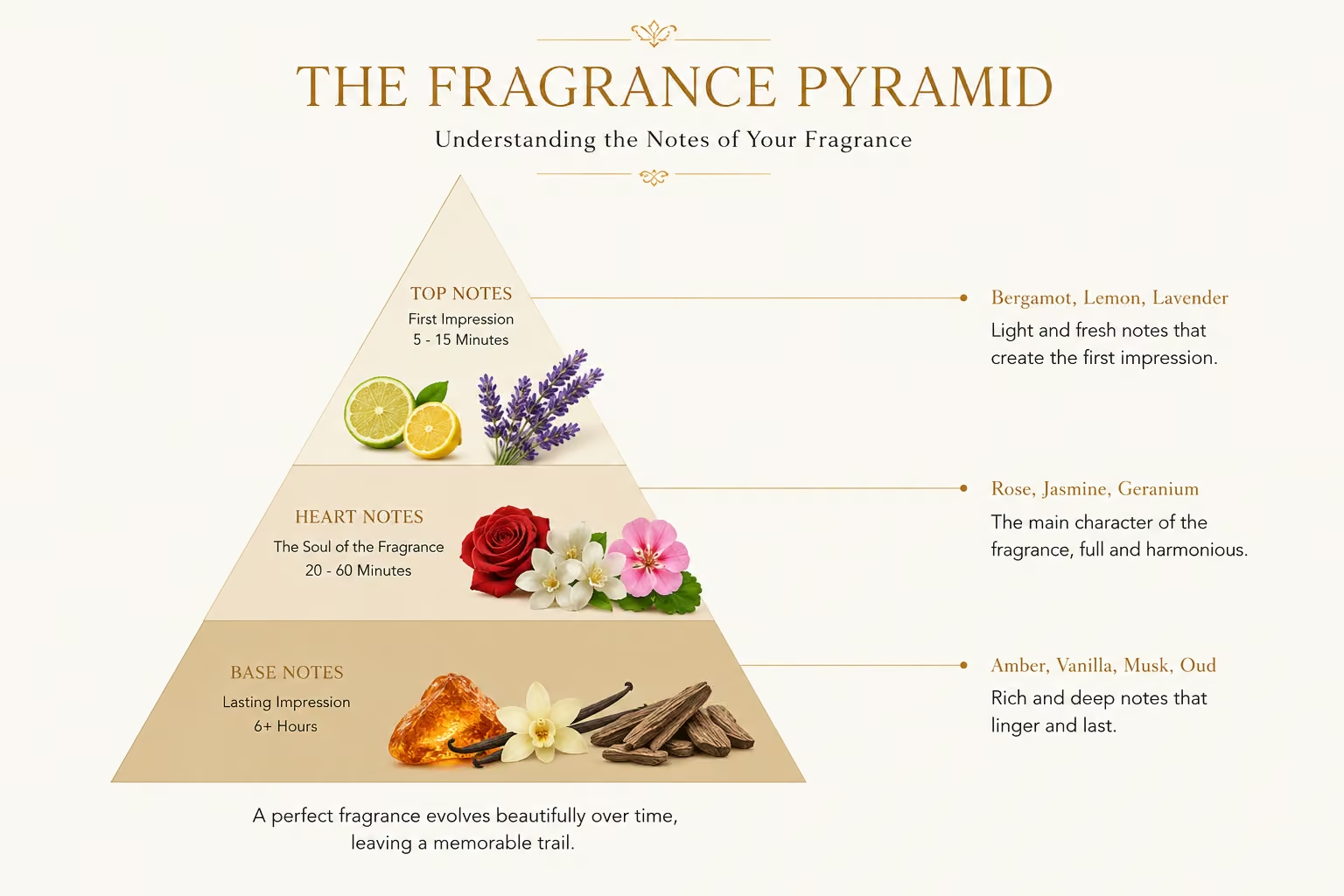
The Fragrance Fundamentals Pyramid Understanding Notes
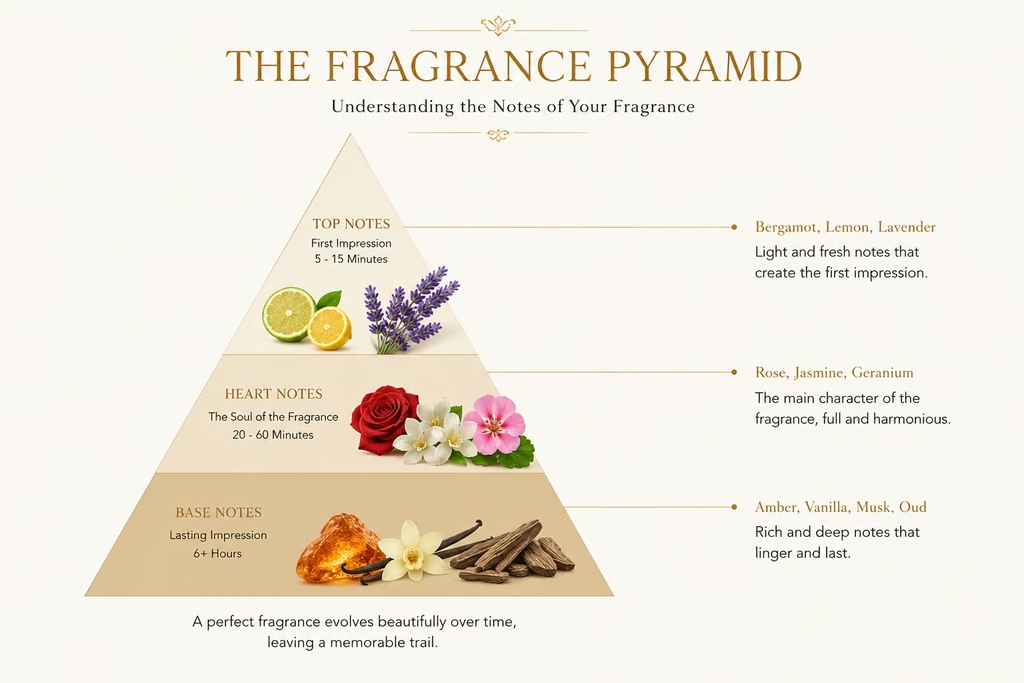
Most traditional fragrances are not static. They evolve over time, revealing different scents at different stages. This evolution is structured using the concept of a fragrance pyramid, which divides a scent into three distinct categories known as notes.
Top Notes
Top notes are the initial scents you experience immediately upon spraying a perfume. They are constructed from lighter, smaller molecules that evaporate quickly. Their primary purpose is to provide the first impression and seamlessly transition the wearer into the heart of the Fragrance Fundamentals. Common top notes include vibrant citrus (lemon, bergamot), light fruits (grapefruit, berries), and fresh herbs. Expect these notes to linger for the first 15 to 30 minutes of wear.
Middle (Heart) Notes
As the top notes fade, the middle notes emerge. Often referred to as heart notes, these form the core foundation of the fragrance, making up the majority of the scent profile. They act to mask the initial, sometimes sharp impression of the base notes, allowing them time to mature on the skin. Heart notes are typically well-rounded and complex, featuring florals (rose, jasmine), spices (cinnamon, cardamom), or green elements. They generally last for several hours.
Base Notes
Base notes are the heavy, large molecules that evaporate slowly, providing depth and solidity to a perfume. These notes blend with the middle notes to create the main theme of the fragrance. They are the scents that linger on your skin long after the top and heart notes have disappeared. Common base notes include woods (sandalwood, cedar), musk, vanilla, amber, and patchouli. A high-quality base can easily last 12 to 24 hours on the skin or clothing.
Exploring the Main Fragrance Families
To categorize the vast array of scents available, experts use Fragrance Fundamentals families. Identifying which family you prefer makes navigating product descriptions and discovering new favorites much easier.
| Fragrance Family | Description | Common Ingredients | Best Suited For |
| Floral | The most popular family, ranging from single flower notes to complex bouquets. | Rose, jasmine, lily, peony | Spring wear, daytime, elegant occasions |
| Fresh | Uplifting, airy, and zesty scents reminiscent of ocean breezes or cut grass. | Bergamot, lemon, aquatic notes, green leaves | Summer, gym, everyday office wear |
| Woody | Earthy, warm, and grounding scents characterized by rich depth. | Sandalwood, cedar, vetiver, patchouli | Evening wear, autumn/winter, formal events |
| Amber (Oriental) | Exotic, warm, and spicy scents known for their sweetness and sensuality. | Vanilla, musk, cinnamon, cardamom | Date nights, winter, making a bold statement |
Perfume Concentration Explained: Parfum vs. EDT vs. EDP
One of the most confusing aspects of buying a fragrance is understanding the letters and terms printed under the name. These terms indicate the perfume concentration—the percentage of pure fragrance oil diluted in alcohol. This concentration dictates how long the scent will last and how intense it will be.
- Parfum (Extrait de Parfum): This is the highest concentration, typically containing 20% to 30% fragrance oil. It is incredibly rich, sits close to the skin, and can last upwards of 12 hours. Because of the high oil content, it is often the most expensive option but is excellent for sensitive skin due to lower alcohol content.
- Eau de Parfum (EDP): Eau de parfum features a concentration of 15% to 20% fragrance oil. It is the most common and versatile category, offering a perfect balance of noticeable projection and longevity (usually 4 to 8 hours) without being overwhelmingly intense or prohibitively expensive.
- Eau de Toilette (EDT): With a concentration of 5% to 15%, an EDT is lighter and fresher than an EDP. It focuses heavily on top notes and typically lasts between 3 to 5 hours. EDTs are highly popular for daytime, summer, or office wear.
- Eau de Cologne (EDC): Containing only 2% to 5% fragrance oil, EDC is extremely light and designed for a quick, refreshing burst of scent. It usually fades within an hour or two and is often applied generously.
When browsing collections like those at Golden Hour, checking the concentration will instantly help you determine if a scent fits your lifestyle needs.
Decoding Performance: Longevity, Projection, and Sillage
Understanding a fragrance’s performance is crucial for managing expectations and choosing the right scent for the right occasion.
What is longevity?
Longevity refers to the total duration a Fragrance Fundamentals remains detectable on your skin after application. It is primarily influenced by the perfume’s concentration and the dominance of base notes.
What is projection?
Projection describes how far a Fragrance Fundamentals pushes out into the air around you. A scent with high projection can be smelled by others from across a room, while low projection sits intimately close to the skin.
What is sillage?
Sillage (pronounced see-yazh) is the invisible scent trail you leave behind as you walk through a room. While projection is stationary, sillage is the dynamic aura that lingers in your wake.
How to Choose a Perfume That Fits You
Selecting a signature scent is a highly personal journey. Rather than buying blindly based on popularity, use these steps to find a fragrance that aligns with your identity.
- Identify your preferred fragrance family: Look at the scents you already gravitate toward in body washes, candles, or teas. Do you prefer citrus, woodsy, or floral aromas?
- Test on paper first: Spray the Fragrance Fundamentals onto a paper blotter at a distance of a few inches. Wait a few seconds for the alcohol to evaporate, then smell. This gives you a clear idea of the top notes.
- Test on skin: Fragrances interact differently with everyone’s unique body chemistry and pH balance. What smells incredible on a blotter might change entirely on your wrist. Apply to your skin and wait at least an hour to experience the heart and base notes.
- Limit your testing: Avoid olfactory fatigue by testing no more than three or four fragrances at a time. Smelling coffee beans between sniffs is a myth; instead, smell the crook of your un-perfumed elbow to reset your nose.
- Consider the context: Ask yourself where you plan to wear the scent. A heavy amber fragrance might be perfect for a winter evening but overpowering in a tight office space.
How to Apply Perfume to Make It Last Longer
Even the most expensive parfum will fade prematurely if applied incorrectly. Proper application techniques maximize the longevity and projection of your Fragrance Fundamentals.
- Target pulse points: Apply perfume to areas where your veins sit closest to the skin, such as your wrists, the base of your throat, behind your earlobes, and your inner elbows. These warm areas help naturally diffuse and project the scent.
- Do not rub your wrists together: This is a common mistake. Rubbing creates friction and heat, which breaks down the delicate molecules of the top notes and alters the fragrance’s intended development.
- Moisturize first: Fragrance evaporates rapidly on dry skin. Apply an unscented lotion or a matching body oil before spraying your perfume to give the oils a hydrated surface to cling to.
- Spray your clothes: Fabrics hold onto fragrances significantly longer than skin. However, test on a hidden area first, as high-oil concentrations or dark-colored liquids can stain delicate fabrics like silk.
Proper Perfume Storage: Protecting Your Scents
Perfumes are delicate chemical compositions that degrade when exposed to the wrong environments. Proper storage ensures your investment remains pristine for years.
Keep them away from direct sunlight: UV rays quickly break down fragrance molecules, altering the color and scent profile. Keep your bottles in their original boxes or inside a dark cabinet.
Avoid drastic temperature changes: The bathroom is the worst place to store perfume. The constant fluctuation of heat and humidity from showers destroys the integrity of the Fragrance Fundamentals.
Store in a cool, dry place: A bedroom dresser or a dedicated climate-controlled cabinet is ideal. A stable, cool temperature preserves the top notes and prevents the alcohol from evaporating prematurely.
Designer vs. Niche Fragrances: What is the Difference?
As you explore the world of perfume and fragrance, you will inevitably encounter the debate between designer and niche houses.
Designer Fragrance Fundamentals are created by major fashion or luxury brands. They are widely accessible, heavily marketed, and formulated to appeal to a broad audience. They offer reliable quality and mass appeal, making them excellent, safe choices for everyday wear or gifting.
Niche fragrances are produced by dedicated perfume houses whose primary focus is scent creation. They often prioritize rare, high-quality ingredients and unique, artistic compositions over mass-market appeal. Niche scents are typically produced in smaller batches, are harder to find, and cater to enthusiasts looking for a highly distinct signature scent. Both have their place in a well-rounded fragrance wardrobe, and platforms like Golden Hour champion the discovery of quality across the spectrum.
Finding Your Signature Scent
Understanding the fundamentals of perfume and fragrance empowers you to see beyond the marketing and focus on what truly matters: how a scent makes you feel. By familiarizing yourself with Fragrance Fundamentals families, understanding concentrations, and practicing proper application and storage, you elevate your daily routine into a refined ritual.
Take your time exploring, trust your own nose, and allow your Fragrance Fundamentals wardrobe to evolve alongside your personal style.
FAQ Section
What is the difference between perfume and fragrance?
The term Fragrance Fundamentals is a broad category encompassing any pleasant-smelling compound, including candles and body mists. Perfume specifically refers to a liquid mixture of essential oils, fixatives, and solvents formulated explicitly to be worn on the skin.
What is eau de parfum?
Eau de parfum (EDP) is a fragrance concentration containing 15% to 20% perfume oil mixed with alcohol and water. It typically lasts between four to five hours on the skin, making it a popular choice for everyday wear due to its balance of longevity and price.
How do I make my perfume last longer?
To make perfume last longer, apply it directly to hydrated skin. Use an unscented body lotion before spraying pulse points like your wrists and neck. Avoid rubbing the fragrance in, and consider lightly misting your clothing, as fabric holds scent longer than skin.
Why does perfume smell different on me than on a friend?
Fragrance molecules interact uniquely with an individual’s skin chemistry, which is influenced by factors like diet, skin type (oily or dry), pH levels, and natural body odor. This causes the same perfume to project and smell slightly different from person to person.
Does perfume expire?
Yes, perfume can expire. Most fragrances have a shelf life of three to five years. However, if stored correctly away from direct sunlight, heat, and humidity, a high-quality perfume can maintain its original scent profile for much longer.
What is a fragrance note?
A Fragrance Fundamentals note is an individual scent element that makes up a perfume. They are categorized into top notes (the initial smell), middle or heart notes (the core theme), and base notes (the lingering, deep foundation of the fragrance).
What does sillage mean in perfume?
Sillage is the French word for “wake.” In perfumery, it refers to the invisible trail of scent that lingers in the air behind a person after they have walked past. High sillage means the scent leaves a strong, lingering presence.
Should I store my perfume in the fridge?
While a fridge provides a dark, cool environment, it is not recommended for everyday storage. Extreme cold can damage delicate fragrance notes, and the constant temperature shift when taking it in and out of the fridge can degrade the scent faster.
Can I wear a winter fragrance in the summer?
You can, but heavy winter fragrances (like ambers or woods) project much more strongly in high heat, which can become cloying or overwhelming. It is generally better to wear lighter, fresher citrus or aquatic scents during the warmer months.